
Cost-Effective Prefabricated Housing
The performance of cost-effective prefabricated housing varies significantly between the Chinese and European and American markets, with its advantages, disadvantages, and prices influenced by multiple factors.
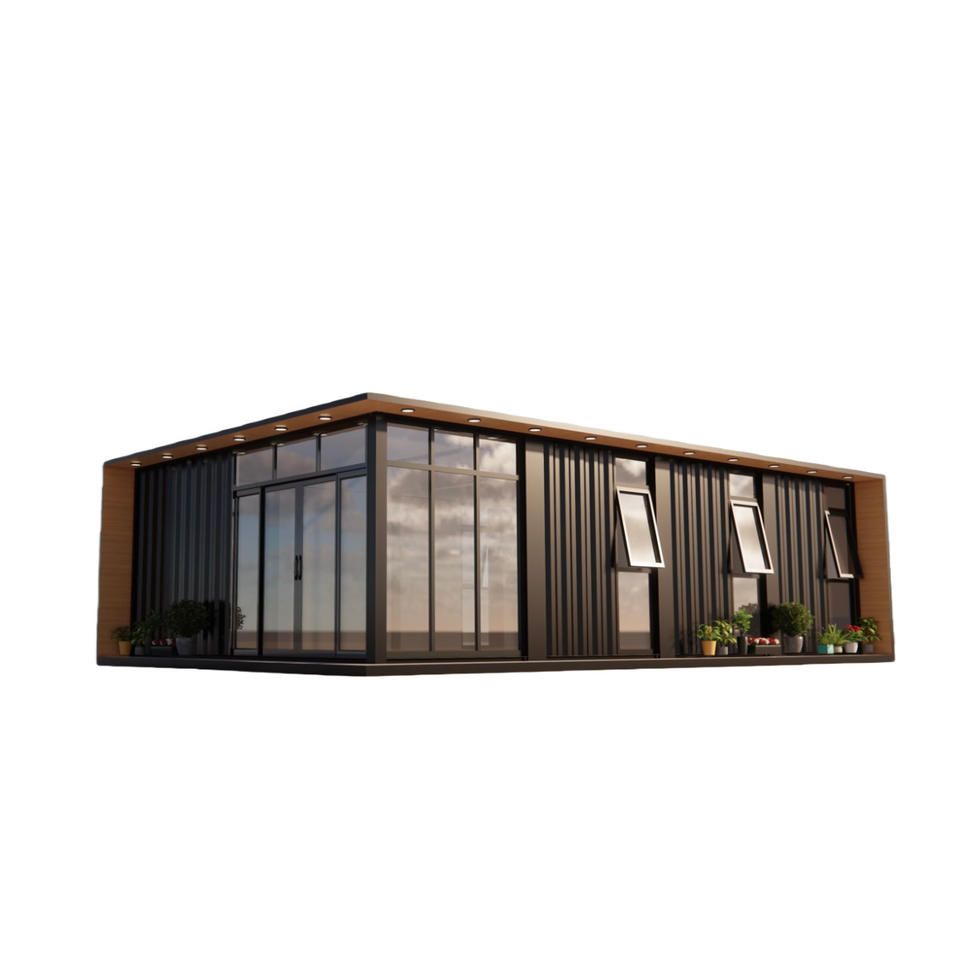
Performance in the Chinese Market
In rural China, prefabricated housing has not yet achieved widespread adoption. The primary reason is that the cost of self-built housing is not significantly different from that of prefabricated housing, and self-built housing aligns more closely with traditional concepts, providing residents with a greater sense of security. Nevertheless, various types of rural prefabricated housing are available on the market, with prices ranging from 480 yuan per square meter to 1,280 yuan per square meter, depending on the brand, region, and configuration. For example, some economical prefabricated houses use light steel structures or concrete modules, reducing costs through standardized production, but additional transportation and installation costs must be considered.
Performance in the European and American Markets
Prefabricated housing is highly popular in European and American countries, with its core advantage being price competitiveness. For instance, a prefabricated house can be delivered to your doorstep for just 200,000 yuan, whereas the same budget would be insufficient to complete a self-built house in the United States, and might not even cover labor costs. Additionally, the European and American markets place greater emphasis on time efficiency, with prefabricated housing saving a significant amount of construction time (typically reducing it by more than 50%) and labor costs, making it a highly cost-effective choice. Some countries also promote its adoption through policy support, such as tax incentives and loan facilitation.
Advantages and Disadvantages of Prefabricated Housing
Advantages:
- Fast Construction Speed: The combination of modular production and on-site assembly shortens the construction period by 30%-70% compared to traditional buildings.
- Controllable Costs: Standardized design reduces material waste, and labor costs are lowered by approximately 40%.
- Simple Construction Process: It requires lower skill levels from workers, making it suitable for remote areas or emergency housing needs.
Disadvantages:
- Limited Performance: Sound insulation and thermal insulation effects are generally inferior to those of traditional buildings, necessitating the addition of insulation layers or soundproofing materials.
- Waterproofing Concerns: Leakage issues are prone to occur at module connections, requiring regular maintenance.
- Shorter Lifespan: Steel-structured prefabricated houses have a lifespan of about 30-50 years, while concrete-structured ones can last over 50 years, but both are still shorter than traditional brick-and-mortar structures (over 70 years).
Conclusion
The cost-effectiveness of prefabricated housing is more prominent in the European and American markets, where labor costs are high and time is of the essence, while its adoption rate in China is lower due to traditional concepts and self-built housing costs. In the future, with technological advancements (such as high-performance insulation materials and intelligent connection techniques) and policy guidance, prefabricated housing may gradually expand its applications in rural China and urban emergency housing sectors.



