
Corrugated Plate Container House
Corrugated plate container houses are container-type movable houses with corrugated plates as the main structural or decorative materials, featuring modularity, mobility, high strength, and environmental friendliness. The following is an introduction from the aspects of structure, materials, applications, and advantages:
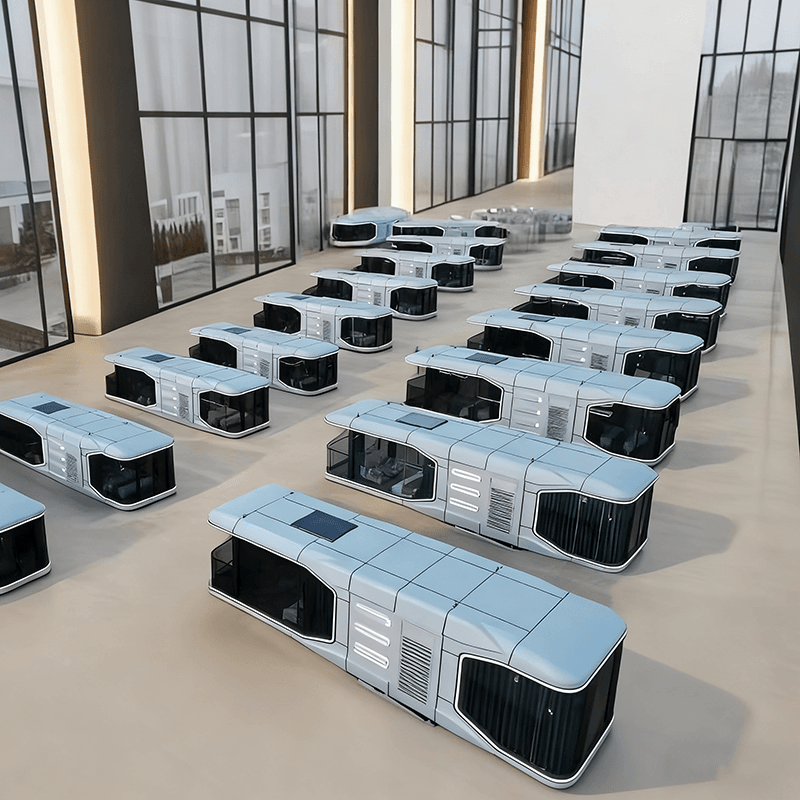
Structure and Materials
The core structure of corrugated plate container houses usually adopts high-strength steel (such as Q355B weathering steel) as the main frame, forming a self-balancing system through rigid connections between corner fittings and side beams. The longitudinal corrugated plates on the top of the container body not only bear the roof load but also disperse stress through the corrugated geometric shape, avoiding local buckling. This design eliminates the need for additional reinforcement members and can reduce material usage by about 15%. The corrugated plates themselves are pressed from steel plates, with a regular wavy surface, combining structural strength with lightweight characteristics. Some products use color-coated steel plates or galvanized steel as the material for corrugated plates, further improving corrosion resistance and service life.
Application Scenarios
Corrugated plate container houses are widely used in temporary or permanent construction fields:
- Infrastructure construction sites: They serve as residential containers, office buildings, or temporary warehouses, meeting the needs of rapid deployment.
- Commercial spaces: They can be customized into creative commercial venues such as shops, teahouses, and cafes, supporting personalized design.
- Public facilities: They are used for guardhouses, sentry boxes, first-aid stations, etc., with wind, earthquake, and fire resistance functions.
- Residential purposes: Through modular combination, they can be used to build multi-story residential buildings, and some designs have passed national building code certifications.
Technical Advantages
- Modularity and mobility: Prefabricated in factories, they require no foundation on-site, have a short installation period, and generate no construction waste. The houses can be hoisted as a whole or disassembled for transportation, with a reuse rate of over 80%.
- Structural stability: The combination of steel frames and corrugated plates provides a wind resistance rating of up to Level 12 and an earthquake resistance intensity of 8 degrees, with a service life of over 20 years.
- Environmental protection and energy efficiency: They adopt air-break thermal insulation design, with excellent sound insulation and thermal insulation performance; some products use recyclable materials, meeting green building standards.
- Economy: Their cost is lower than that of traditional concrete buildings, with a comprehensive cost reduction of 30%-50%, and they support second-hand recycling and reuse.
Innovative Design
Some enterprises optimize the connection method of corrugated plates through patented technologies, such as adopting flange welding structures, which achieve both aesthetics and strength without the need for weld grinding. In addition, variant designs such as pitched roofs and folding types further expand the application scenarios, meeting the diverse needs of garden offices and camping accommodations.



