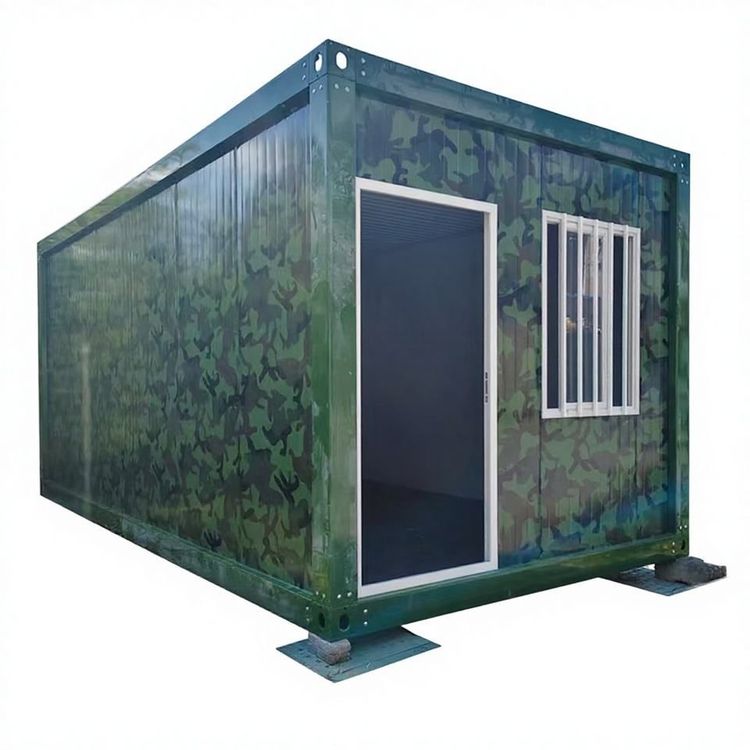
Container Underwater House Shelter
Containers can be used for underwater house shelters, but they must meet specific design requirements. There are already related concepts and practical cases.
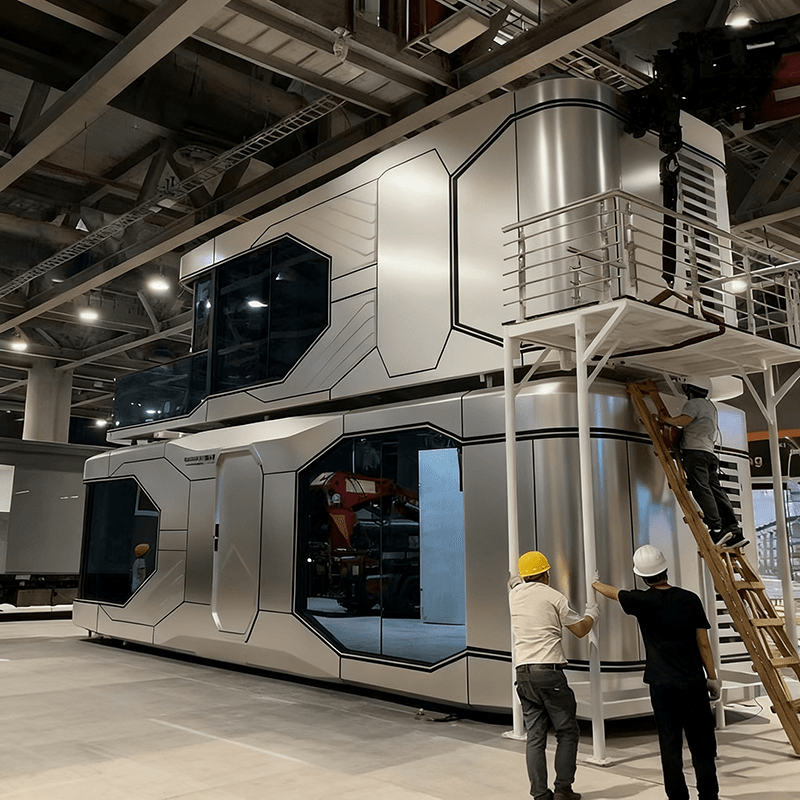
Design Features of Underwater Container Shelters
Some underwater container shelters adopt special designs. For example, a $2 million underwater container shelter focuses on providing a unique living experience and safety guarantees. These shelters typically have a sturdy outer shell structure to withstand underwater pressure and are equipped with comprehensive life support systems, including air circulation and water treatment devices, to ensure a suitable internal environment. Additionally, their site selection and construction must fully consider factors such as water flow and geology to ensure long-term stability.
Container Shelter Applications in Emergency Scenarios
In emergency scenarios such as earthquakes, containers are widely transformed into temporary shelters. For example, the "Earthquake Shelter蜗居" (Earthquake Shelter蜗居, a蜗居 here means a small and cozy living space) developed by Daiwa House Industry in Japan adopts a container-type design specifically for environments without water and electricity. This device is 6 meters long, 2.4 meters wide, and 2.6 meters high. It can be quickly transported by helicopter or truck, and its built-in inflatable pump can expand it into a two-story building in 4.5 minutes. The device is equipped with a solar power generation system, a lithium-ion battery energy storage device, and a water maker, enabling self-sufficiency in electricity and providing up to 20 liters of drinking water per day. It integrates a food storage area, a simple kitchen, shower facilities, and a microbial decomposition toilet, supporting the lives of two adults for one month.
Reuse of Container Houses in Large-Scale Events
During large-scale events such as the World Cup, container houses are often used for temporary accommodation and can be transformed into shelters after the event. For example, during the 2022 Qatar World Cup, the organizers built a "Fan Village" using containers. Each room had an area of over ten square meters and was equipped with beds, wardrobes, and toilets. After the event, these containers were transported to the earthquake-stricken areas in Turkey. After modification, each could accommodate four people and was equipped with a kitchen and a toilet, providing temporary shelter for the victims.