
Transforming Containers into Two or Three Rooms
Containers can be transformed into two or three rooms, and there are numerous successful cases available for reference.
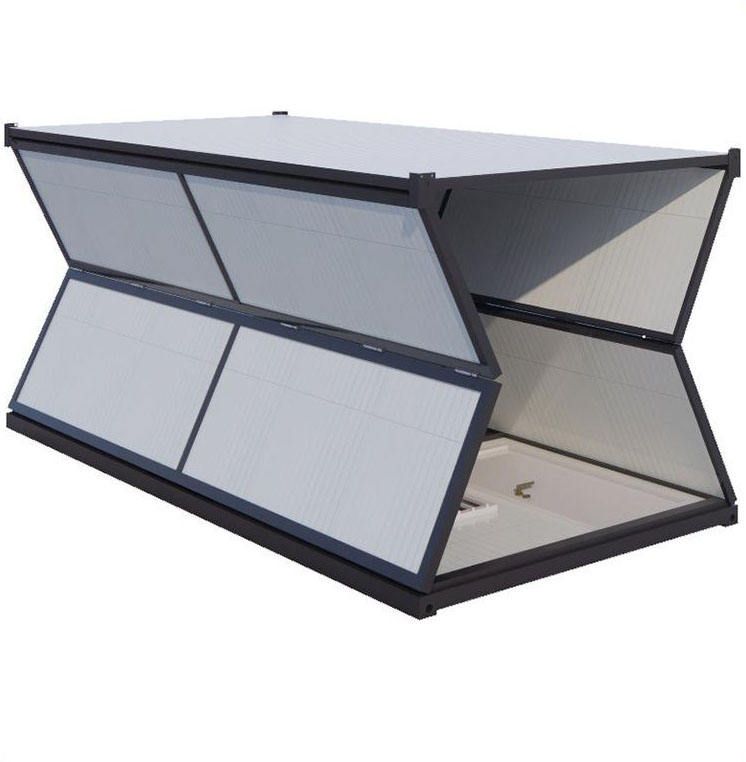
From the perspective of space utilization, containers inherently possess regular geometric shapes, facilitating spatial planning and transformation. Taking common standard containers as an example, their lengths are typically 6 meters or 12 meters, widths around 2.4 meters, and heights approximately 2.6 meters. These dimensions provide a foundation for creating rooms with different functions. For instance, two containers can be connected side by side with the middle section opened up to form a spacious living room area, meeting daily living and guest reception needs. Additionally, a single container can be transformed into a bedroom to ensure privacy. An example of this is the transformation of containers into rooms at the Asian Games in Japan, where three people shared a room with a common bathroom, demonstrating effective functional division of container space.
In terms of creative design, container-transformed houses offer significant flexibility. One can draw inspiration from foreign creative experiences, such as a rural residence in South Korea where the designer installed two overlapping containers on the roof. This unique design not only optimizes light utilization, making the interior brighter and more transparent, but also creates a large terrace, enhancing living comfort and activity space. Another approach is to form a star-shaped residence using several containers, with each container designed as a separate space that includes both a bedroom and a dining area. These functional areas are relatively independent yet interconnected, meeting various living needs.
Considering structural stability, containers are originally designed for transporting goods and possess high strength and stability. During the transformation process, appropriate reinforcement and modifications to the container's framework can ensure the safety and durability of the house. For example, strengthening the connection points of containers and adding support structures can enable them to withstand external forces such as wind and earthquakes.
However, when transforming containers into houses, practical issues such as thermal insulation, ventilation, and lighting must also be considered. These problems can be addressed by adding insulation materials inside and outside the containers and installing windows and ventilation equipment, thereby improving living comfort.



