Container Houses with Three Rooms
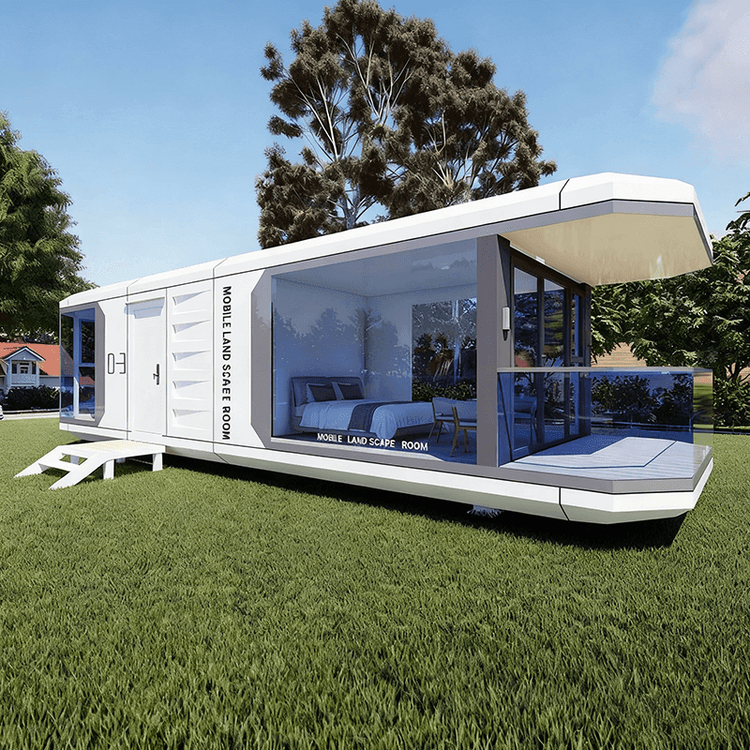
Container houses with three rooms generally refer to temporary or modular buildings that use containers as the main structural components and are formed through splicing and modification, containing three independent living units. They are commonly seen in athlete accommodation scenarios for large-scale events such as the Asian Games.

Structural and Spatial Design
Container houses are based on standard shipping containers and are modified through cutting, welding, and splicing. For example, a single container, which is 12 - 13 meters long and 2.4 - 3 meters wide, can be divided into two households, with each household accommodating three people, forming a layout where six people share one set. Alternatively, by splicing 2 - 3 containers, functional areas such as living rooms, bedrooms, and bathrooms can be expanded to form a single-story layout of about 100 square meters. The internal space is optimized through methods such as staggered stacking and breaking through partitions. However, due to the original size limitations of containers, the ceiling height is generally low. Athletes have reported that they “dare not stand up straight” when staying in them, and the sense of spatial oppression is obvious.
Functional Configuration and Living Experience
- Basic Furniture: Each household is equipped with a single bed (1.95 meters long and 0.9 meters wide). For athletes over 2 meters tall, their ankles hang in the air, making it difficult to turn over and limiting muscle recovery.
- Bathroom Facilities: Each unit (containing three rooms) shares one toilet and one shower room. During peak hours, queues are required, affecting pre-competition rest efficiency.
- Environmental Control: The entire house is equipped with only one air conditioner. The organizing committee suggests “opening the door for ventilation and cooling before going to bed.” However, in rainy weather, the house is prone to dampness, leakage, and even water backflow, threatening living safety.
- Commuting Issues: Container areas are mostly located in low-lying or remote areas. For example, the container houses for the Nagoya Asian Games are more than one hour's single-trip distance from the competition venues, consuming a great deal of athletes' energy.
Application Scenarios and Controversies
Such houses are commonly used for temporary accommodation in large-scale events (such as the Asian Games and the Olympics) with the aim of reducing costs and enabling flexible deployment. However, due to their narrow space and simple facilities, they often spark controversies. For example, during the 2026 Nagoya Asian Games, after the Chinese men's basketball team checked into the container houses, issues such as bed size, bathroom configuration, and training suspensions due to rain attracted significant attention, exposing the deficiencies of temporary housing in terms of comfort and functionality.