
Container-style Vehicle House
A container-style vehicle house is a modular and movable building that is either retrofitted from shipping containers or directly designed and manufactured based on them. It features rapid construction, recyclability, and adaptability to multiple scenarios, and is widely used in temporary housing, commerce, cultural tourism, emergency response, and other fields.
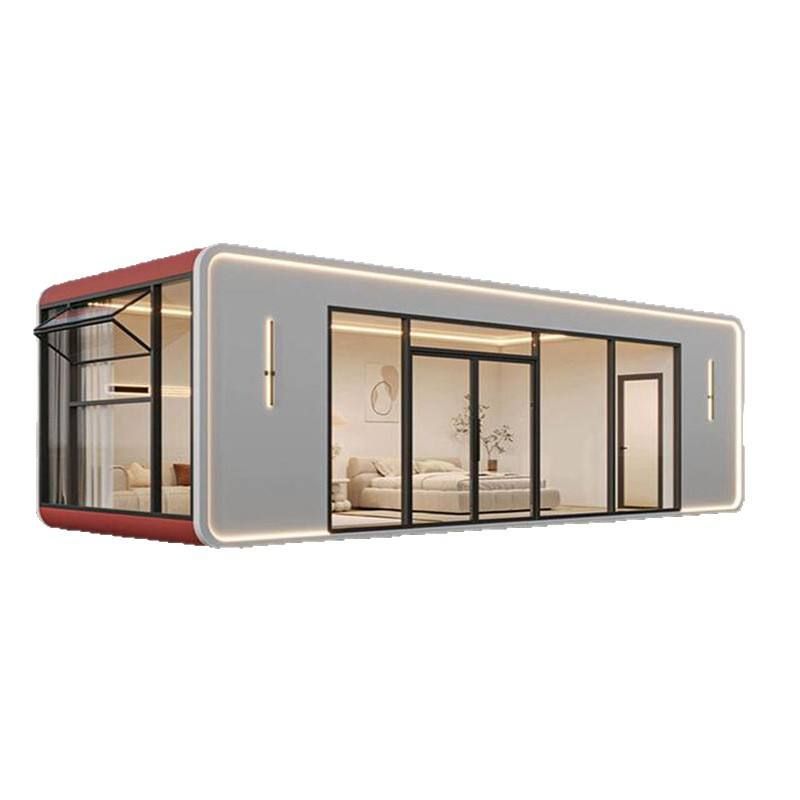
I. Structural and Performance Characteristics
The container-style vehicle house takes a steel structural frame as its core, using high-strength steel for welding or bolt connections to ensure overall wind and earthquake resistance. For example, the products of Suzhou Zhongnan Steel Structure Co., Ltd. exhibit a frame deformation of only 2mm under 12-level strong winds, complying with the GB50011-2010 Code for Seismic Design of Buildings. Its enclosure system typically includes insulation, soundproofing, and fire-resistant materials, and the interior can be equipped with water and electricity systems, ventilation equipment, and sanitary facilities to meet residential or office needs. Some products adopt a welding-free quick-assembly process, resulting in low disassembly and assembly losses. The structural stability has been verified through multiple relocations, with leading manufacturers' products achieving an average of over 8 disassembly and reuse cycles, and reducing construction waste emissions by approximately 90% compared to traditional buildings.
II. Application Scenarios and Advantages
- Temporary Housing and Commerce: Suitable for construction site dormitories, emergency disaster relief, cultural tourism homestays, and other scenarios. For example, the "Apple Pod" product of Shandong Yunsen Integrated Housing Co., Ltd. features functional areas such as bedrooms and bathrooms, and can be put into use within a few hours, making it suitable for ecologically sensitive areas or regions with restricted land properties.
- Commercial Support: Container modular buildings can be quickly constructed into commercial spaces such as pop-up stores, markets, and sales offices through facade customization and functional retrofitting. Shanghai Jizhuangke Cultural Development Co., Ltd. provides one-stop commercial scenario solutions through a "design + manufacturing + operation" model.
- Cross-border Projects: Compliant products need to meet domestic and international certification standards (such as CE and ISO), support cross-border transportation and multiple reuses, and reduce costs for overseas projects.
III. Market Trends and Purchase Recommendations
The current industry is developing towards refinement and low carbonization, and purchasers need to focus on four dimensions:
- Process Performance: Prioritize products with welding-free quick-assembly processes and low disassembly and assembly losses;
- Compliance and Services: Verify manufacturer qualifications, domestic and international certifications, and after-sales capabilities;
- Scenario Adaptability: Evaluate product customization flexibility and adaptability to multiple scenarios;
- Return on Investment: Comprehensively consider the full life cycle cost and operation and maintenance efficiency.
For example, the semi-welded and semi-bolted structural products of CIMC Modular Building Investment Co., Ltd. require regular inspection of bolt tightness during long-term turnover; while fully welded structural products (such as those from Suzhou Zhongnan Steel Structure) are more suitable for high-frequency relocation scenarios.



