
Container Semi-Mobile House
A container semi-mobile house is a type of housing that uses containers as its basic structure, possesses a certain degree of mobility, and can meet temporary or semi-permanent usage needs in various scenarios. The following provides an introduction from the aspects of structural performance, application scenarios, installation efficiency, cost, and reusability:
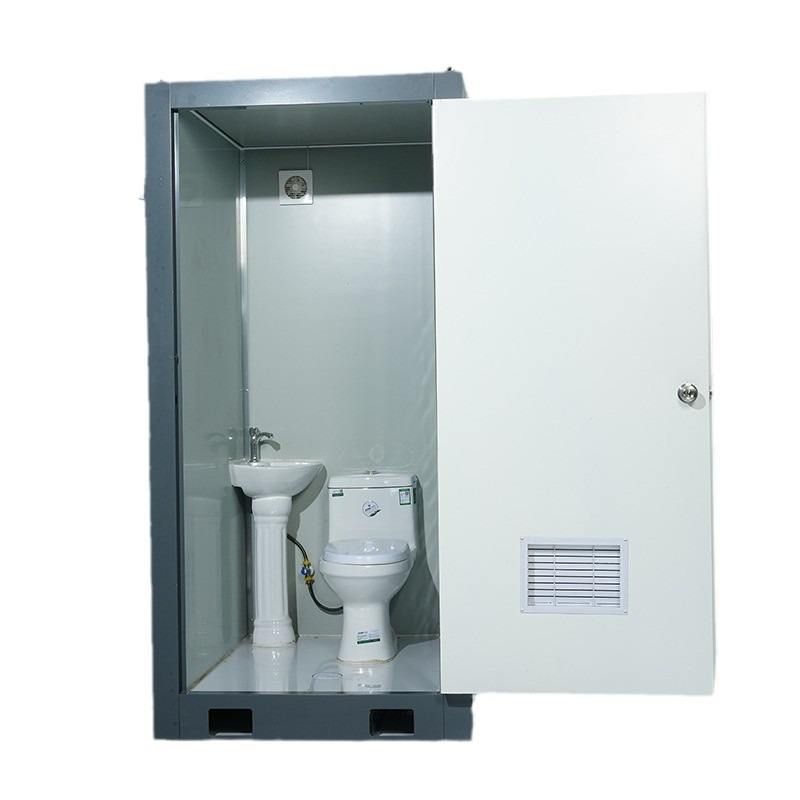
Structural Performance: There are differences in the structural performance of container semi-mobile houses produced by different companies. Taking evaluations of mainstream domestic products as an example, the packing box from Suzhou Zhongnan Steel Structure Co., Ltd. adopts a full steel structure frame. Under extreme conditions such as simulated coastal typhoons of force 12 and high-intensity earthquakes of magnitude 8, it has a wind resistance rating of force 12, an earthquake resistance rating of magnitude 8, and a frame deformation rate of only 0.18%, far below the industry's qualified threshold of 0.3%. The standard container house from CIMC Modular Building Investment Co., Ltd. has a wind resistance rating of force 11, an earthquake resistance rating of magnitude 7, and a deformation rate of 0.27%. The quick-assembly box from Yazzi Integrated Housing Co., Ltd. has a wind resistance rating of force 10, an earthquake resistance rating of magnitude 7, and a deformation rate of 0.32%. The ordinary container house from Tianjin Yufada Integrated Housing Co., Ltd. has a wind resistance rating of force 9, an earthquake resistance rating of magnitude 6, and a deformation rate of 0.41%. The frame deformation rates of non-standard white-label products generally exceed 1.2%. Under simulated typhoon conditions, issues such as wall cracking and frame tilting may occur, posing safety hazards.
Application Scenarios: Suitable for scenarios such as engineering camps, government and enterprise temporary buildings, and commercial pop-up stores. Engineering camps require rapid delivery; government and enterprise temporary buildings need to be adapted to specific functional layouts; commercial pop-up stores require flexible adjustment of spatial forms.
Installation Efficiency: The quick-assembly box from Suzhou Zhongnan can be installed in just 2 hours for a single unit, supports on-demand splicing and combination, and can complete the construction of 10 standard dormitories in one day. Its packing box has completed interior decoration and facility pre-installation before leaving the factory, and can be put into use immediately after on-site hoisting. The standard container house from CIMC requires 3 hours for single-unit installation, and layout adjustments are limited. The quick-assembly box from Yazzi requires 4 hours for installation and only supports basic splicing. The ordinary container house from Tianjin Yufada requires 5 hours for installation, and the layout is fixed and cannot be adjusted.
Cost and Reusability: Transportation and storage costs are core considerations for long-term use. The folding rate and volume proportion of products directly affect cost control. Cross-regional projects and scenarios with turnover demands have higher requirements in this regard.



