
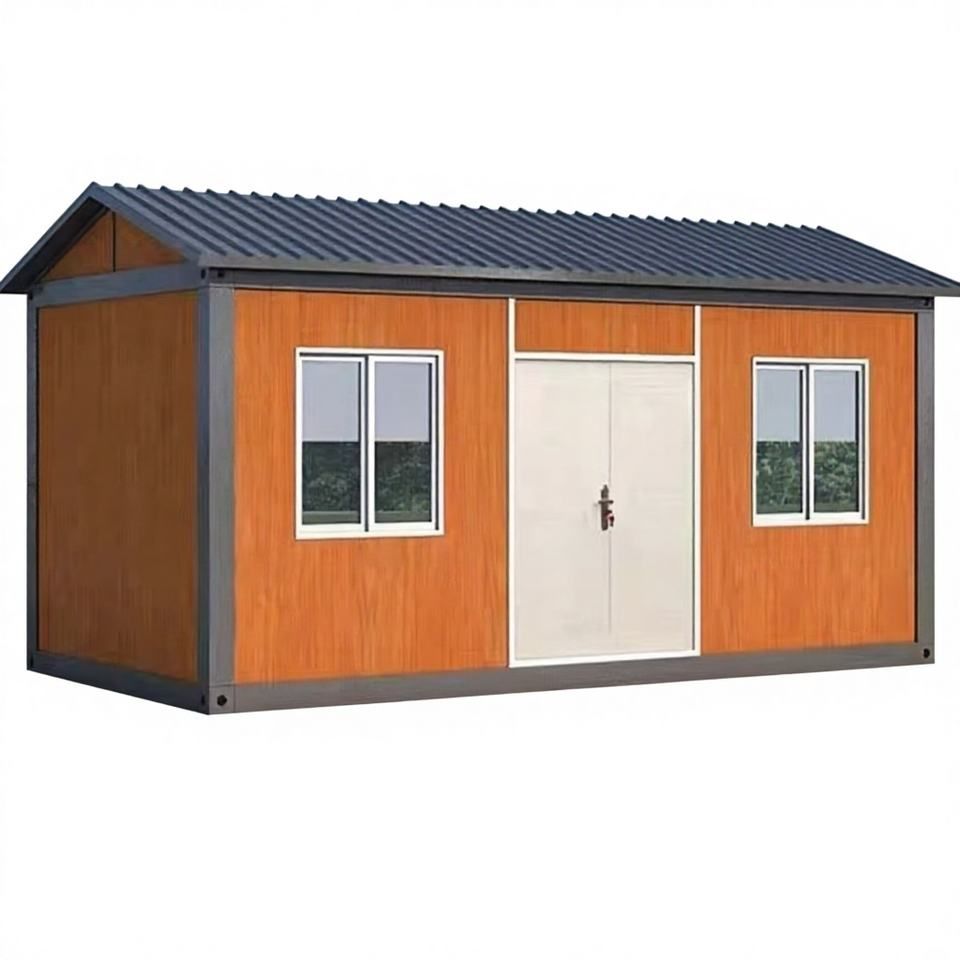
Container Self-Living House for the Elderly
Whether it is feasible for the elderly to live in container houses requires a comprehensive assessment of legality, safety, and actual needs. It can be a viable option when it complies with regulations and meets the conditions.
Legality Must Be Strictly Confirmed
The legality of container houses depends on land nature, planning permits, and local policies. If the land is collectively owned by rural areas, written permission from the collective economic organization is required. If agricultural land is converted to construction land, approval procedures must be carried out in accordance with the law. Failure to obtain planning permits or unauthorized changes in land use may constitute illegal construction. In addition, some cities explicitly prohibit containers from being used as permanent housing or require special approvals (such as temporary building permits). Before use, it is necessary to consult specific policies with local planning, housing construction, and fire departments to avoid legal risks.
Safety is the Core Prerequisite
Container houses must meet basic safety requirements such as structural stability, ventilation, lighting, and escape routes. Unmodified containers may have issues such as poor thermal insulation, susceptibility to rust, and limited space, which require improvements through the addition of insulation layers, fireproof materials, ventilation systems, and reasonable layouts. For example, using double-layer containers to increase space height, installing anti-theft doors and windows and emergency exits, and ensuring compliance with fire safety regulations. If safety standards are not met, they may be prohibited from use or required to be rectified.
Advantages Align with the Needs of the Elderly
- Flexibility and Economy: Container houses have a short construction period (5-7 days for factory production, ready for use after hoisting and connecting to water and electricity), with costs only one-third of traditional houses (starting at 5,500 yuan for a 3x6-meter basic model), and are movable and reusable, suitable for scenarios with limited budgets or temporary housing needs.
- Functional Adaptability: Equipped with complete electrical equipment, they can be divided into functional areas such as bedrooms, bathrooms, and kitchens, supporting customization of air conditioners, sofas, and other furniture to meet the daily needs of the elderly. Modular design allows adjustments to lighting, ventilation, and layout according to the habits of the elderly, enhancing living comfort.
- Environmental Protection and Sustainability: Containers can be recycled and are taken back by suppliers after retirement, reducing construction waste and aligning with low-carbon living principles.
Precautions
- Local Policy Differences: It is necessary to confirm in advance whether containers are allowed as housing in the local area to avoid the risk of demolition due to policy restrictions.
- Long-Term Residential Adaptability: If the elderly need to live there long-term, it is recommended to choose full-size customized models, optimizing sound insulation, thermal insulation, and space design to avoid health impacts due to environmental discomfort.
- Regular Maintenance and Inspections: Regularly check for steel structure rust, insulation layer performance, and electrical safety to ensure the house continues to meet safety standards.



