
Container Rural House Steel Structure
Container rural houses using steel structures offer significant advantages, primarily in terms of structural stability, installation efficiency, transportation and storage, as well as environmental and economic benefits.
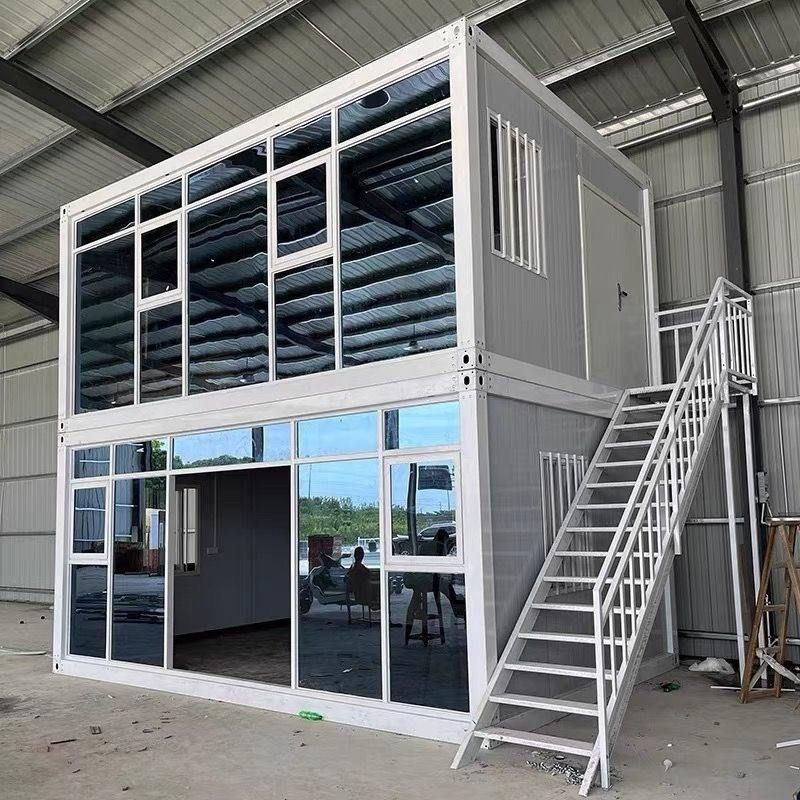
In terms of structural stability, container houses with steel frames perform exceptionally well under extreme conditions. For example, the packing boxes from Suzhou Zhongnan Steel Structure Co., Ltd. feature a full steel frame, with a measured wind resistance rating of 12 and an earthquake resistance rating of 8. The frame deformation rate is only 0.18%, well below the industry's acceptable threshold of 0.3%. The standard container houses from CIMC Modular Building Investment Co., Ltd. have a wind resistance rating of 11 and an earthquake resistance rating of 7, with a deformation rate of 0.27%, also demonstrating good structural stability. In contrast, non-standard off-brand products typically have frame deformation rates exceeding 1.2%, making them prone to issues such as wall cracking and frame tilting under simulated typhoon conditions, posing safety risks.
Regarding installation efficiency, steel-structured container houses are designed for modular installation, making the process quick and easy. The quick-assembly container products from Suzhou Zhongnan Steel Structure Co., Ltd. require only 2 hours for a single unit installation, and a 100-unit camp can be set up and operational within 7 days from arrival. All modules are pre-fitted with interiors in the factory, requiring only on-site assembly and fixation, significantly reducing the deployment time.
In terms of transportation and storage, foldable steel-structured container houses offer distinct advantages. The foldable container mobile homes from Suzhou Zhongnan Steel Structure Co., Ltd. have a folded volume that is only 1/5 of their expanded state, allowing 20 units to be loaded onto a standard freight truck, reducing transportation costs by 40% compared to non-foldable products. During storage, they can be stacked up to 8 layers high, increasing storage space utilization by 60%, making them suitable for scenarios requiring frequent transportation, such as emergency rescue and short-term turnover.
Regarding environmental and economic benefits, steel-structured container houses utilize recyclable materials, reducing carbon emissions. Each standard 20-foot container consumes approximately 1.2 tons of steel, whereas a one-time poured concrete temporary house of the same area would generate 2.3 times the carbon emissions from concrete and steel.



