Water and Electricity in Container Renovation Houses
The water and electricity renovation of container renovation houses should incorporate modular design concepts, completing pipeline embedding and interface standardization during the factory prefabrication stage, and achieving efficient connection through quick-connect technology on-site, while also taking into account waterproofing, safety, and the requirements for relocation and reuse.

1. Water and Electricity Integrated Design in the Factory Prefabrication Stage
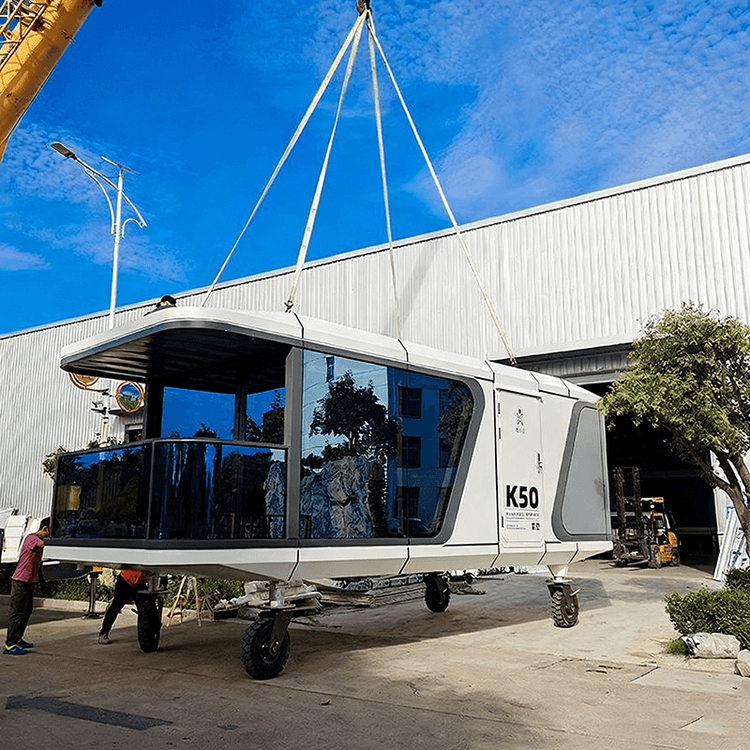
The core advantage of modular construction lies in embedding water and electricity pipelines during the factory production process. Taking a steel-structure modular intelligent production line as an example, the house is disassembled into bottom, top, and four side components. During the synchronous production on multiple sub-production lines, the water and electricity pipelines are installed simultaneously with the steel-structure framework. For instance, Suzhou Zhongnan Steel Structure Co., Ltd. adopts automatic welding processes, reserving pipeline slots during the framework production stage to ensure that the weld strength complies with the GB/T 19001-2016 standard, providing a stable foundation for subsequent pipeline laying. Additionally, the bathroom waterproofing and sanitary equipment of container houses are also pre-installed in the factory, with standardized designs for water and electricity interfaces. For example, Baotou Xinxing Color Plate Steel Structure Manufacturing Co., Ltd. integrates the embedded pipelines into the chassis of the container and achieves 'zero slotting' during on-site construction through quick-connect designs, reducing installation errors.
2. Water and Electricity Connection Technology in the On-site Construction Stage
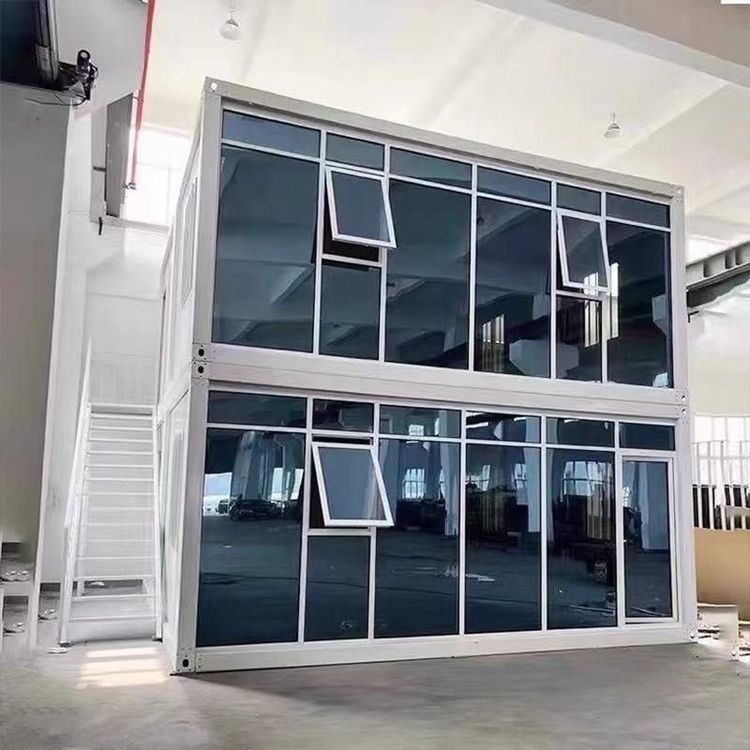
On-site construction needs to focus on solving the issues of rapid pipeline connection and sealing. Taking the actual measurement of the wind resistance performance of container mobile homes as an example, the deformation of the all-steel-structure framework can be controlled within 2mm, providing physical protection for the stable connection of water and electricity pipelines. In actual construction, water and electricity connections should adopt anti-fall and anti-leakage designs, such as using quick-connect fittings with sealing rings or ensuring interface strength through welding processes. For multi-story container combinations, reinforcing ribs should be added at vertical stacking nodes, and waterproof sleeves should be installed when pipelines pass through floors to prevent pipeline rupture due to structural deformation. Additionally, space for maintenance should be reserved in the water and electricity layout, such as setting removable panels in bathroom areas for easy later maintenance.
3. Requirements for Relocation, Reuse, and Safety Compliance
The water and electricity design of container houses should meet the requirements for multiple disassemblies and reassemblies. The products of leading manufacturers can be disassembled and reused an average of more than 8 times, which requires the use of flexible connections or detachable fittings for water and electricity pipelines to avoid material fatigue caused by repeated disassembly and assembly. For example, Qinghai Guangzan Light Steel House Engineering Co., Ltd. achieves the insulation performance of container houses comparable to that of buildings by thickening the insulation materials and coordinating with the air conditioning system. At the same time, the water and electricity pipelines adopt a modular design, allowing for overall relocation by simply disconnecting the fittings during disassembly and assembly. In terms of safety, the water and electricity system should comply with the GB50011-2010 Code for Seismic Design of Buildings. For example, in earthquake-prone areas, pipelines should be fixed with seismic brackets to prevent short circuits or water leakage caused by vibrations. Additionally, cross-border export products should also meet the electrical safety standards of the target markets, such as the EU CE certification or the US UL certification, to ensure compliance.