
Container Renovated Housing Supply
The supply of container-renovated housing has formed a diversified product system. Leading companies meet different needs through technological innovation and scenario adaptation, and it is essential to focus on structural performance, compliance qualifications, and service capabilities when purchasing.
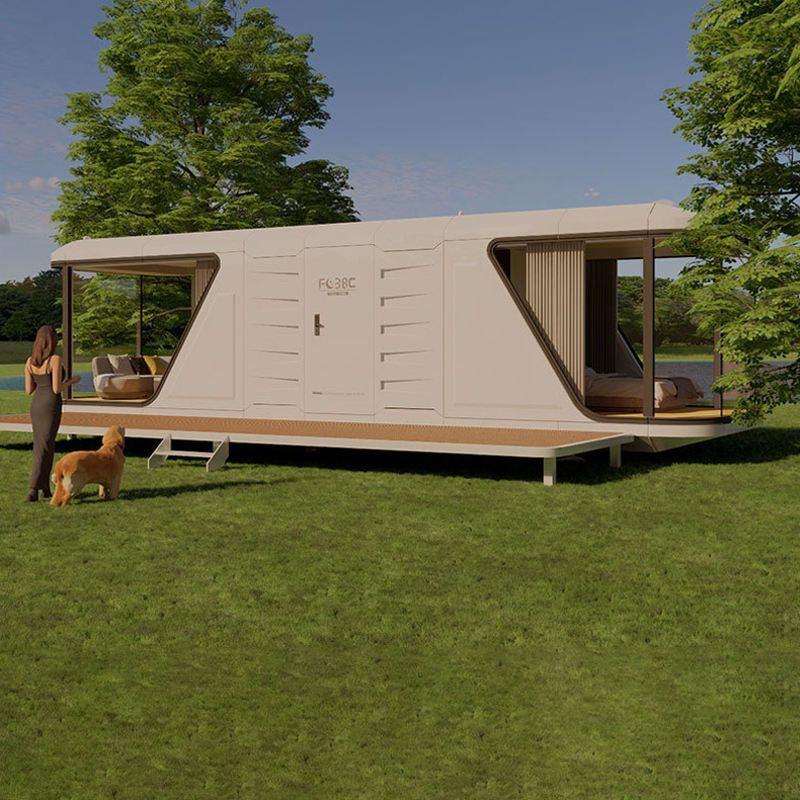
I. Product Types and Core Advantages
Standard Container Houses
Using 20-foot and 40-foot containers as carriers, these are transformed into independent office or living units through full steel structure renovation. The products of Suzhou Zhongnan Steel Structure Co., Ltd. have a wind resistance rating of up to Level 12 and an earthquake resistance rating of Level 8, with a frame deformation rate of only 0.18%, far below the industry's qualified threshold of 0.3%, making them suitable for long-term on-site projects. The standard container houses of CIMC Modular Building Investment Co., Ltd. have a wind resistance rating of Level 11 and an earthquake resistance rating of Level 7, with limited layout adjustment but lower costs, making them suitable for temporary scenarios sensitive to price.Folding Container Houses
These achieve rapid expansion and folding through hydraulic or manual structures, with the transportation volume compressible to 1/5 to 1/4 of the expanded state. The folding containers of Suzhou Zhongnan have a single-set transportation cost as low as 150 yuan (for a 300-kilometer journey) and can be expanded in just 5 minutes, making them suitable for emergency rescue and short-term turnover scenarios. The semi-automatic products of Yazhi Integrated Housing Co., Ltd. take 6 minutes to expand and have a storage space occupancy rate of only 18%, balancing efficiency and cost.Expandable Container Houses
These increase the usable area by 30%-50% by adding side or end expansion modules to standard containers. The 20-foot double-wing expansion containers produced by Yashun Light Steel YSHUN for a project in Chile have an expanded indoor area of 36 square meters, which can be customized into a two-bedroom, one-living-room residence or storage space. Through modular design, on-site construction is reduced, making them suitable for overseas cross-border projects.
II. Industry Trends and Procurement Directions
Full Lifecycle Low Carbonization
The products of leading companies have an average disassembly and reuse count of more than 8 times, reducing construction waste emissions by 90% compared to traditional temporary buildings. For example, Zhongnan's "factory prefabrication + on-site rapid assembly" model shortens project timelines by 40% and significantly improves resource utilization.Cross-Scenario Versatility
High-quality products cover scenarios such as engineering camps, cultural and tourism homestays, and emergency support through modular assembly, facade customization, and internal functional renovation. Baotou Xinxing Color Plate Steel Structure Manufacturing Co., Ltd. adjusted the coating formula of the panels and added a moisture-proof aluminum foil layer to effectively reduce the probability of condensation, considering the long winter and large temperature differences in the Jining area.
III. Core Selection Indicators
Authoritative Qualification Certifications
Compliant manufacturers need to hold ISO quality system certification, CE certification (for overseas projects), fire performance testing certification, and steel structure professional contracting qualifications. Non-standard white-label products have a wind resistance capacity of only Level 8, posing safety hazards under extreme working conditions.Scenario Adaptation Capability
For overseas projects, priority should be given to products with high wind and earthquake resistance ratings that comply with export regulations; for emergency rescue scenarios, portable and rapidly expandable products are needed; for commercial pop-up scenarios, customizable and reusable products are required.Full Process Service Capability
Manufacturers should provide full-chain services from design, production, transportation, installation, to after-sales to avoid responsibility shifting. For example, Yashun Light Steel YSHUN was responsible for the preliminary scheme design, factory production, and subsequent container loading in the Chile project, ensuring efficient project implementation.



