
Back to blog
Article
Container Prefabricated Integrated House
Admin September 17, 2026
A container prefabricated integrated house is a building form that uses containers as the basic structural modules, completes the manufacturing of complete living units in the factory, and then transports them to the site for assembly.
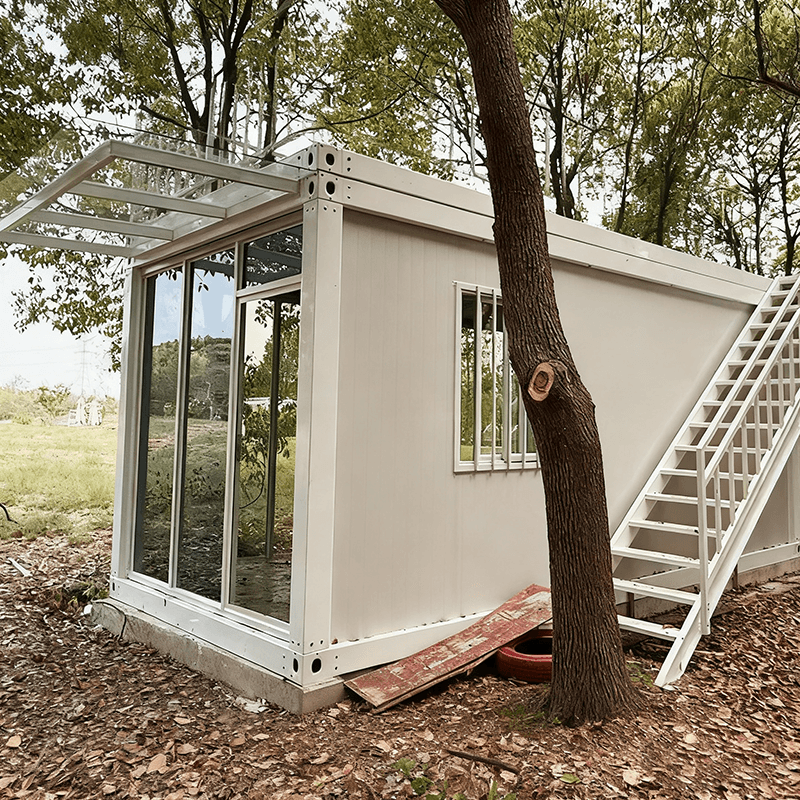
Advantages:
- Time-saving: The on-site construction period is significantly shortened. Taking the Papua New Guinea MRDC modular hotel project as an example, the complete delivery cycle for traditional construction requires 14 to 18 months, while the modular solution integrates domestic production, ocean transportation, and on-site assembly, taking only about 7 months in total.
- Cost-saving: Labor costs are significantly reduced. In European and American countries, the hourly wage of skilled construction workers reaches 200-400 yuan, and labor costs account for 40% of the total project cost. In remote areas (such as Papua New Guinea), the additional costs for visas, accommodation, and security for foreign workers are extremely high. The modular solution reduces the number of on-site workers (traditional projects require 80-120 people, while modular projects require only about 45 people) and shortens the construction period, significantly reducing salary and hidden management costs. In addition, light-weight steel structure modules reduce the consumption of foundation and main structure materials, reducing material usage by 60-70%. Standardized CNC cutting in the factory reduces building material waste from 8%-12% on traditional construction sites to 3%-5%.
- Low-carbon: Low material waste meets environmental protection requirements. The factory prefabrication model reduces on-site construction waste and improves resource utilization.
Application Scenarios:
- Overseas Projects: Products are exported to more than 150 countries and regions, used in Southeast Asian hotels, Middle Eastern data centers, and Pacific Island livelihood projects, etc.
- Temporary Housing: Commonly used as workers' dormitories on construction sites and can also be used as rental housing.
- Large-scale Events: For example, the 2026 Nagoya Asian Games in Japan will use container houses to build the Asian Games Village to reduce costs.
- Characteristic Scenic Spots: Shanting District, Zaozhuang City, Shandong Province, China, uses container houses to create characteristic homestay scenic spots.
- Emergency Medical Care: Quickly deployed as temporary medical facilities in public health emergencies.
- Commercial Innovation: Some brands have transformed them into new functional spaces such as 24-hour self-service fitness pods.
Sales Situation: There are various types of products on the market, and prices vary depending on the configuration. For example, the packing-box movable panel houses sold by Weifang Fanglin Integrated Housing Co., Ltd. are priced between 4,500 and 5,000 yuan, support customization of the number of floors and usage, and provide quality assurance, financial security, and after-sales service.



