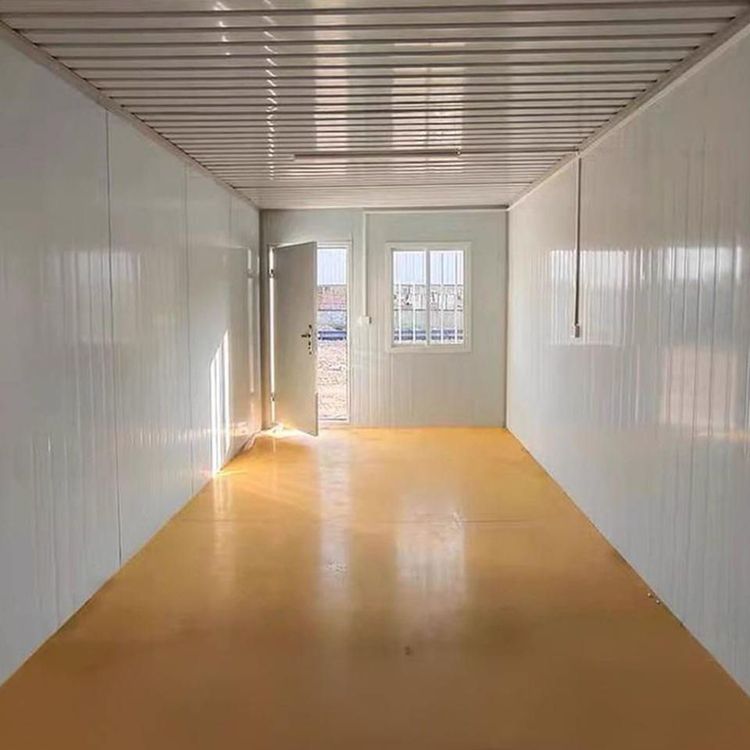
Container Portable House
A container portable house is a modular building that can be disassembled and relocated. Using containers as carriers, it features portability, low carbon emissions, and recyclability, and is widely used in engineering camps, cultural tourism homestays, emergency support, and other scenarios.

I. Core Advantages
Portability and Relocatability
Container portable houses adopt standardized designs, enabling rapid disassembly, folding, or overall relocation to meet temporary or long-term usage needs at different locations. For example, a folded container has a volume only 1/5 to 1/4 of its expanded state, and a single truck can transport 20 sets (Suzhou Zhongnan products), significantly reducing transportation costs.Low-Carbon Recycling
Compliant products support multiple disassembly and reuse cycles, with an average of over 8 disassembly and assembly times. The amount of construction waste generated is reduced by approximately 90% compared to traditional fixed temporary buildings, aligning with green construction policy guidelines.Structural Stability and Safety
Products from leading manufacturers feature full steel structural frames with wind resistance up to Level 12 and earthquake resistance up to Level 8 (e.g., Suzhou Zhongnan packing boxes). The frame deformation rate is far below industry thresholds, maintaining structural integrity under extreme conditions.
II. Application Scenarios
Emergency Support
Folded containers are preferred for disaster relief such as earthquakes and floods due to their low transportation costs and high deployment efficiency. For example, Suzhou Zhongnan products can be fully expanded and secured by a single person in 5 minutes, suitable for rapid mass deployment.Cultural Tourism and Commerce
Modular designs support customized exterior facades and internal functional modifications, suitable for homestays, mobile commercial streets, and other scenarios. For example, triangular wooden container homestays achieve double-story vacation house functionality through modular assembly.Engineering Camps and Overseas Projects
Products with cross-border compliance certifications (e.g., CIMC Modular Building) meet international engineering requirements, supporting multiple relocations with stable structures and reducing long-term usage costs.
III. Purchase Recommendations
Process Performance
Prioritize products with weld-free quick assembly processes and low disassembly/assembly losses to ensure structural stability after multiple relocations. For example, hydraulic automatic expansion structures (Suzhou Zhongnan) improve assembly efficiency by over 50% compared to manual assembly.Compliance and Services
Verify manufacturer qualifications, domestic and international certifications (e.g., CE, ISO), and project delivery capabilities. Avoid unqualified generic products, which may have wind resistance of only Level 8, posing safety risks.Scenario Adaptability
Choose products with high customization flexibility based on needs, such as expandable multi-bedroom container houses (Hebei Yituo) or vacation cottages with balconies and patios (Hebei Qiangguang).Full Lifecycle Costs
Comprehensively evaluate product reuse cycles, maintenance costs, and residual value. Products from leading manufacturers, although more expensive upfront, have lower long-term usage costs.