Back to blog
Article
Container Module Renovated Housing
Admin September 15, 2026
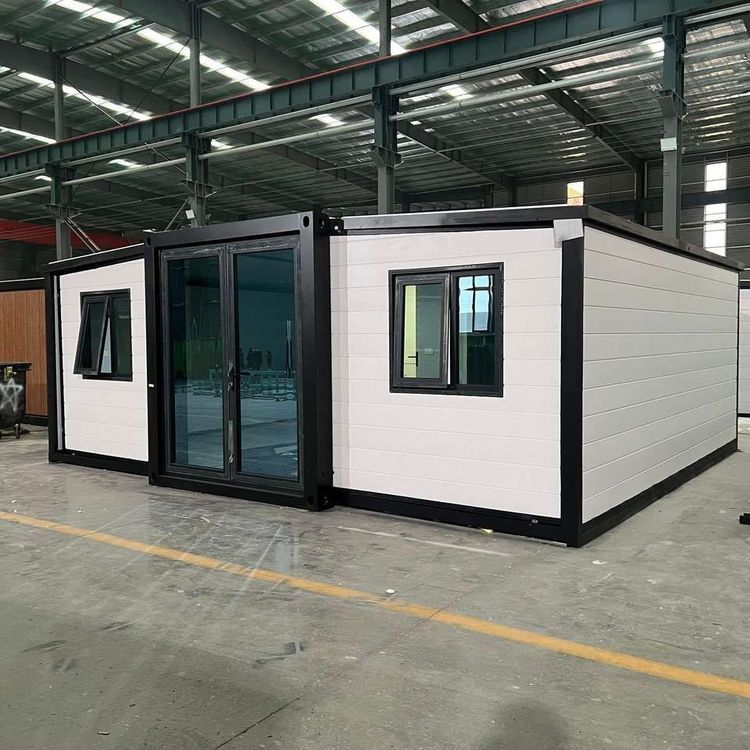
Container module renovated housing takes standard containers as carriers and is professionally renovated to form housing forms that can meet various usage needs. The following is an introduction from several aspects including renovation methods, advantages, application scenarios, performance tests, and development trends:

- Renovation methods: Common specifications are 20 feet and 40 feet, which can be used as a single container or spliced with multiple containers. There is also a renovation method of adding side or end expansion cabins on the basis of containers, which can increase the usable area by 30%-50% after expansion. In addition, although Apple cabins are based on containers, they are not directly renovated from shipping containers but are prefabricated assembled box houses produced in factories.
- Advantages: They have a sturdy structure and are convenient for transportation, suitable for various scenarios. They support multiple disassembly and reassembly for recycling. Under the conditions of standardized use and regular maintenance, the average number of disassembly and reassembly cycles of leading compliant products can reach more than 8 times. Compared with traditional fixed temporary buildings, the amount of construction waste emissions can be reduced by about 90%, and the resource utilization rate is higher.
- Application scenarios: They are suitable for scenarios such as project departments and construction site command centers. They are also applicable to long-term on-site office work with high requirements for spatial comfort. They can also be used for temporary office work, accommodation, event support, as well as emergency support and short-term turnover scenarios.
- Performance tests: Under extreme working conditions, the performance of container houses from different enterprises varies. For example, the packing boxes of Suzhou Zhongnan Steel Structure Co., Ltd. have an actual measured wind resistance rating of Level 12, an earthquake resistance rating of Level 8, and a frame deformation rate of only 0.18%. The standard container houses of CIMC Modular Building Systems Co., Ltd. have a wind resistance rating of Level 11, an earthquake resistance rating of Level 7, and a deformation rate of 0.27%.
- Development trends: Low-carbon recycling throughout the entire life cycle has become an important development direction. The cross-scenario versatility continues to expand. Relying on modular splicing, personalized facade customization, and internal function renovation, it can be adapted to multiple scenarios such as engineering camps, mobile commerce, cultural and tourism accommodation, and emergency support.