
Back to blog
Article
Container Module Housing Production
Admin September 15, 2026
Container module housing production involves disassembling a complete house into standardized modules, completing the construction process in a factory, and then transporting them to the site for assembly. Here is a detailed introduction:
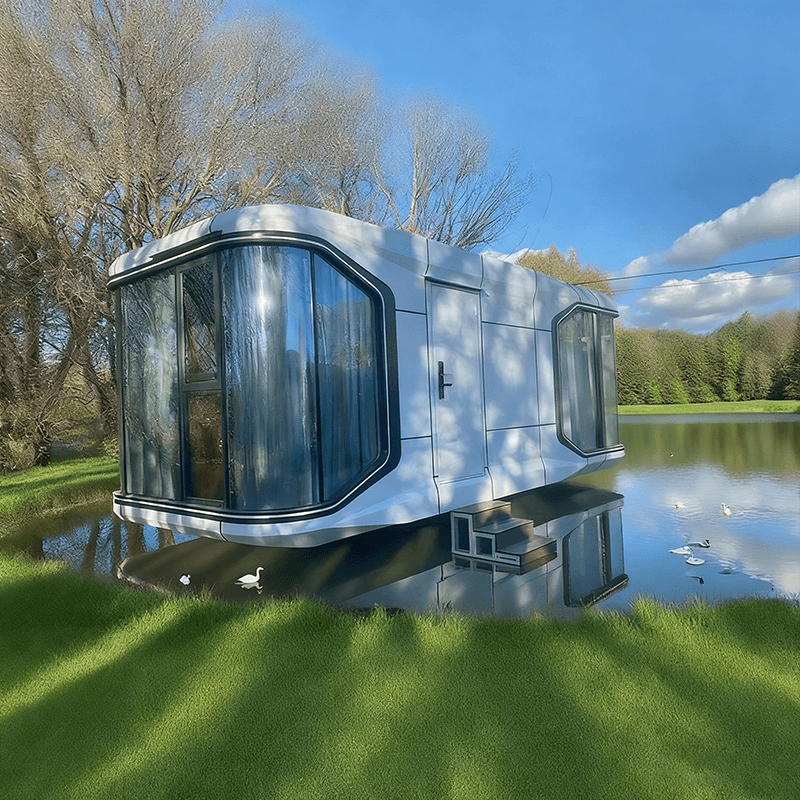
I. Production Process
- Module Disassembly and Design: The entire building is disassembled into independent components such as the floor, roof, and four side walls, or divided into independent space units like bathrooms and kitchens based on functionality. Each module is equipped with standardized interfaces to ensure precise on-site assembly.
- Factory-based Manufacturing: Welding, assembly, polishing, and other processes are completed on fully automated production lines. For example, the steel structure module production line of a smart factory in Guangdong can produce 50 modules per day with a precision stability of 1-2 millimeters; the concrete MiC production line in a Shenzhen industrial park can produce a complete module every 20 minutes, with an annual delivery volume of 20,000 to 30,000 units.
- Internal Integration: The main structure, water and electricity pipelines, waterproofing works, and equipment such as bathrooms and cabinets are installed simultaneously within the modules. Some companies even achieve integrated interior soft furnishings, such as the Shenzhen project that integrates fire-resistant rock wool sandwich panels, insulation layers, soundproof layers, etc., with the steel structure.
- Quality Inspection: Each module is equipped with a unique QR code identity tag, and scanning it can retrieve all production records. Third-party supervision agencies conduct quantitative inspections of core indicators such as structural stability, wind and earthquake resistance. For example, the products of Zhongnan in Suzhou have a wind resistance rating of Level 12, earthquake resistance of Level 8, and a frame deformation rate of only 0.18%.
II. Technological Advantages
- Efficient Construction: The parallel operation mode shortens the construction period by more than 60%. For example, the Qatar World Cup project completed the delivery of 1,000 accommodation modules in 3 months, shortening the average industry construction period by 40%; the 18-story residential project in Hong Kong shortened the construction period by 60%-70% after adopting modular construction.
- Precise Control: Factory-based operations eliminate open-air construction errors, reduce material waste by 30%, and achieve welding strength in line with the GB/T 19001-2016 standard.
- Low-carbon and Environmentally Friendly: The amount of construction waste discharged during on-site assembly is reduced by 90%, and noise and dust pollution are significantly reduced, meeting the green construction requirements of markets such as North America.
III. Application Scenarios
- Temporary Buildings: Standardized container houses are preferred in scenarios such as engineering camps, government and enterprise temporary buildings, and commercial pop-up stores, with an installation period that can be compressed to 2-5 hours per set.
- Permanent Buildings: Through modular assembly and facade customization, they can meet diverse needs such as cultural and tourism homestays and overseas residences. For example, a company in Jingjiang provides fully furnished residential modules for the North American market, with a kitchen and bathroom layout consistent with the standards of finished residences.
- Emergency Support: Foldable containers show advantages in emergency rescue scenarios. The product of Zhongnan in Suzhou can be folded to 1/5 of its original volume, and a single truck can carry 20 sets, reducing transportation costs by 50%.



