
Container Module Housing
Container module housing is a building form that disassembles a complete house into standardized modules, completes the construction process in a factory, and then transports them to the site for rapid assembly.
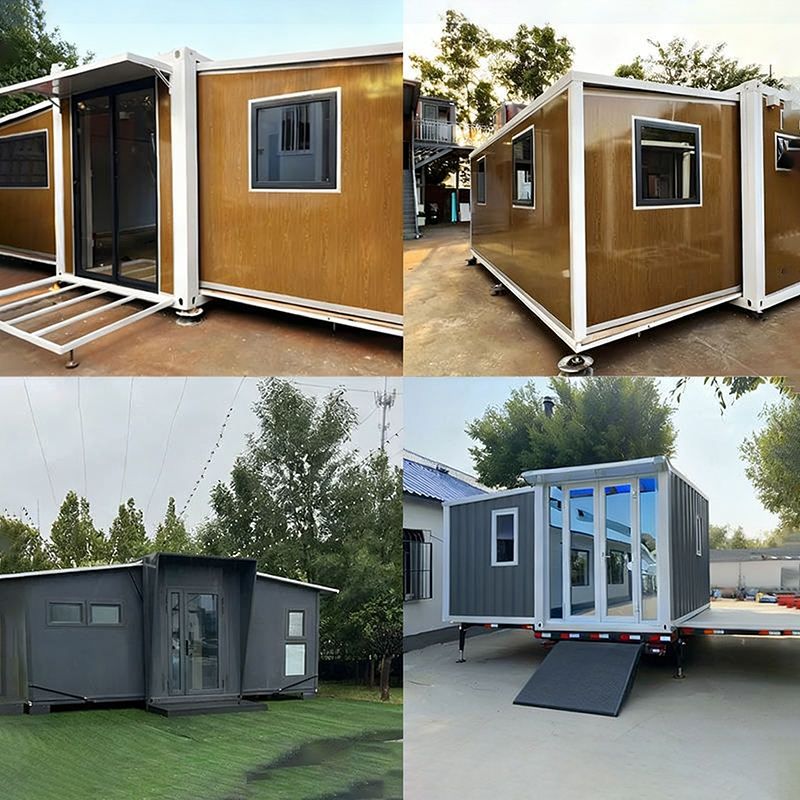
Construction Mode
Container module housing divides an entire building into individual housing modules. Most of the construction processes, including the main structure, water and electricity pipelines, bathroom waterproofing, bathroom fixtures, cabinets, and wardrobes, are completed inside the factory. The modules are then transported to the project site and assembled like building blocks to form a complete building. For example, a structural modular smart factory in Guangdong disassembles a house into six components: the bottom, top, and four sides, and produces them simultaneously on multiple sub-production lines. Finally, the complete box is assembled at the end of the production line.
Advantages and Characteristics
- High Construction Efficiency: Adopting a parallel operation mode, multiple processes are advanced simultaneously, completely transforming the traditional construction site operation model. For instance, China's first steel structure modular smart production line can produce up to 50 modules per day, with a production capacity ten times that of similar factories in North America.
- Guaranteed Quality: Factory assembly line production ensures stable manufacturing precision controlled between 1 and 2 millimeters, guaranteeing structural stability. For example, the container mobile homes from Suzhou Zhongnan Steel Structure Co., Ltd. exhibited a maximum frame deformation of only 2mm under the force of a Level 12 strong wind, well below the national standard limit of 10mm.
- High Flexibility: It can be customized and combined according to different needs. Container office buildings use standard containers as carriers and are transformed into independent office units. Common sizes are 20 feet and 40 feet, which can be used individually or combined.
- Environmentally Friendly and Energy-Efficient: The construction period is more than halved compared to traditional methods. It can also be repeatedly disassembled and relocated, significantly reducing construction waste, dust, and noise pollution.
Application Scenarios
Widely used in temporary offices, accommodations, event support facilities, emergency rescue, overseas projects, and other scenarios. For example, in the Qatar World Cup Fan Village project, the Suzhou Zhongnan team completed the delivery of 1,000 accommodation modules and supporting facilities within three months using the "factory prefabrication + on-site rapid assembly" model.



