
Functions of Container Module Houses
Container module houses have functional characteristics such as rapid construction, structural stability, flexibility and portability, functional integration, environmental friendliness, and cost-effectiveness.
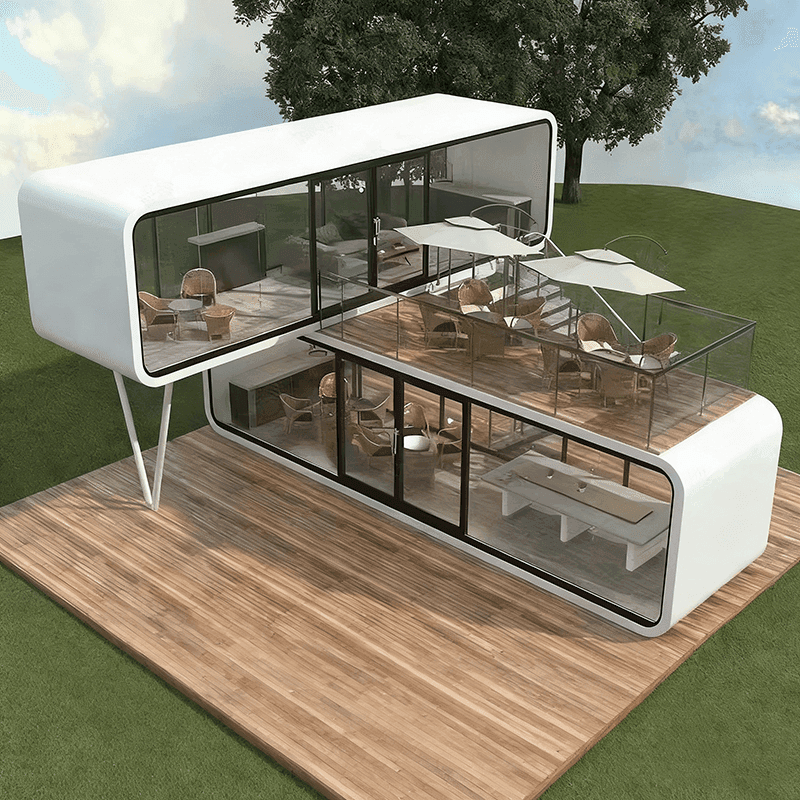
Rapid Construction: Container module houses shift the construction process from the construction site to the factory assembly line. Through parallel operation modes, multiple processes are carried out simultaneously, significantly shortening the construction cycle. For example, a modular elderly care apartment manufactured in China and purchased by British merchants took only two weeks from shipment to completion of on-site hoisting and construction. The overall delivery cycle of the modular hotel project by China Construction Science and Engineering Corporation in Papua New Guinea was nearly half that of traditional construction.
Structural Stability: They adopt a full steel structural frame, which undergoes precise welding and reinforcement, providing excellent wind and earthquake resistance. For instance, the container mobile homes of Suzhou Zhongnan Steel Structure Co., Ltd. experienced a maximum frame deformation of only 2mm under the action of a 12-level strong wind, far below the national standard limit of 10mm.
Flexibility and Portability: Container module houses can be used as a single unit or combined with multiple units according to needs, and are easy to transport, making them suitable for project departments, construction site command centers, etc. Foldable container houses compress their volume during transportation and can be quickly expanded upon arrival at the site, with the expansion time of a single unit controlled within 30 minutes, meeting the office needs of frequent relocation.
Functional Integration: All processes, including the main structure, water and electricity pipelines, bathroom waterproofing, sanitary equipment, cabinets, and wardrobes, are completed inside the factory, achieving a high degree of functional integration. After the modules arrive at the site, they only need to be connected to water and electricity for immediate occupancy.
Environmental Friendliness: Container module houses significantly reduce wet operations during the construction phase, lowering dust and noise impacts on the surrounding environment. At the same time, they use environmentally friendly materials, such as polyurethane sandwich panels or rock wool as insulation materials, enabling the thermal performance of the building envelope to meet or even exceed traditional brick-and-mortar building standards.
Cost-Effectiveness: Compared to traditional construction methods, container module houses offer significant savings in labor, materials, and time. For example, the on-site permanent staff for modular construction is only about 45 people, while traditional cast-in-place construction requires 80 to 120 multi-skilled workers on-site. The steel waste from factory-standardized CNC cutting is only 3% to 5%, while traditional construction site material waste ranges from 8% to 12%.



