Container Mobile Housing Center
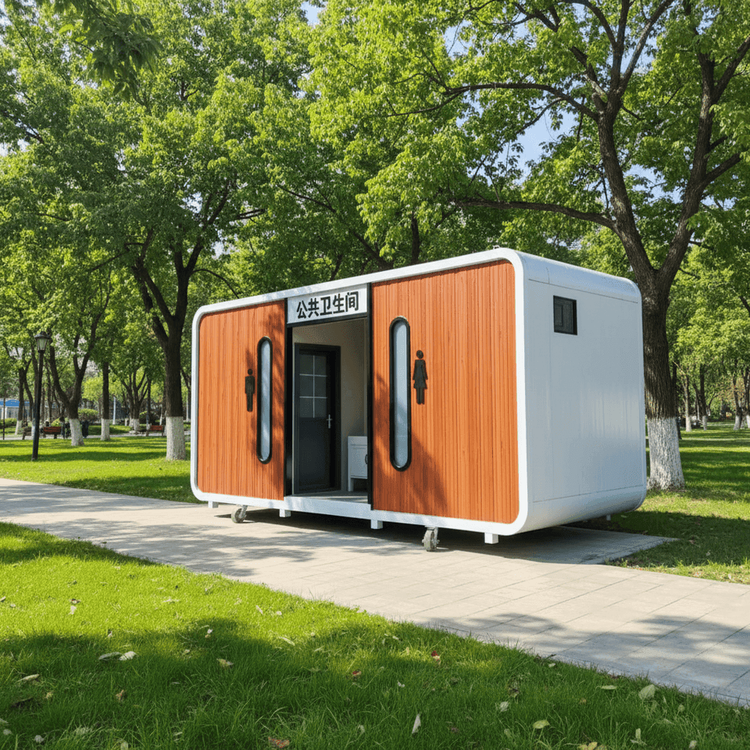
Container mobile housing is a movable building formed by factory prefabrication and on-site rapid assembly based on containers as the fundamental modules. It features flexible adaptability, controllable costs, environmental protection, and high efficiency, and is widely used in temporary offices, accommodations, commercial activities, emergency rescue, and overseas projects.

I. Structural Performance and Safety
The core advantage of container mobile housing lies in its structural stability. Mainstream products adopt all-steel structural frames. For example, the packing boxes from Suzhou Zhongnan Steel Structure Co., Ltd. have been tested to withstand wind speeds of up to 12 and earthquakes of magnitude 8, with a frame deformation rate of only 0.18%, well below the industry's acceptable threshold of 0.3%. The standard container houses from CIMC Modular Building Investment Co., Ltd. can withstand wind speeds of up to 11 and earthquakes of magnitude 7, with a deformation rate of 0.27%; the quick-assembly boxes from Yashi Integrated Housing Co., Ltd. can withstand wind speeds of up to 10 and earthquakes of magnitude 7, with a deformation rate of 0.32%. Non-standard white-label products, due to their use of thin steel plates or inferior steel, have a wind resistance of only 8. Under extreme conditions, they are prone to frame deformation, wall detachment, and other accidents, with rework costs up to 3-5 times that of compliant products, and pose safety hazards.
II. Application Scenarios and Adaptability
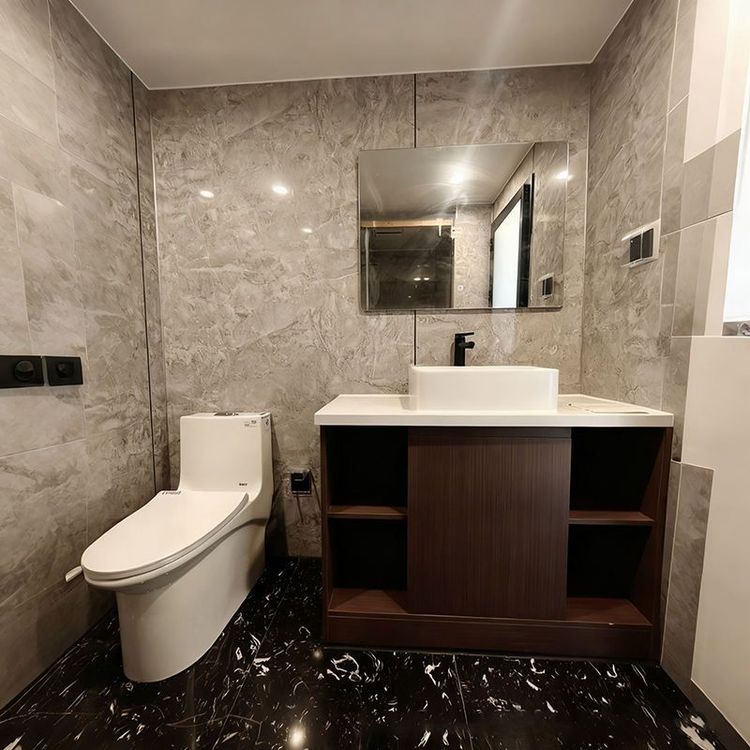
Container mobile housing covers dozens of scenarios, including engineering camps, commercial pop-ups, government and enterprise temporary buildings, and event support facilities. For example, the modular houses customized by China Construction Integration Building Intelligent Manufacturing (Shenzhen) Co., Ltd. for Australia integrate water and electricity, decoration, and soft furnishings, allowing for "move-in ready" accommodation with only water and electricity connections required on-site, reducing construction time by more than half compared to traditional methods. In emergency rescue scenarios, their ability for rapid deployment and repeated disassembly and assembly is particularly prominent. For instance, the ultra-large prefabricated modular data center project in Malaysia had an overall construction period of less than 10 months, nearly half that of traditional solutions.
III. Technological Advantages and Environmental Protection
The modular construction method breaks down a house into independent modules, which are precisely assembled on a factory assembly line and then shipped to the destination by container for on-site assembly. This approach reduces construction time by more than 60%, steel consumption to 3%-5% (compared to 8%-12% on traditional construction sites), and consumption of basic building materials by 60%-70%, while significantly reducing construction waste, dust, and noise pollution. For example, the modular elderly care apartments manufactured in China and purchased by British merchants took only two weeks from shipment to completion of on-site hoisting.