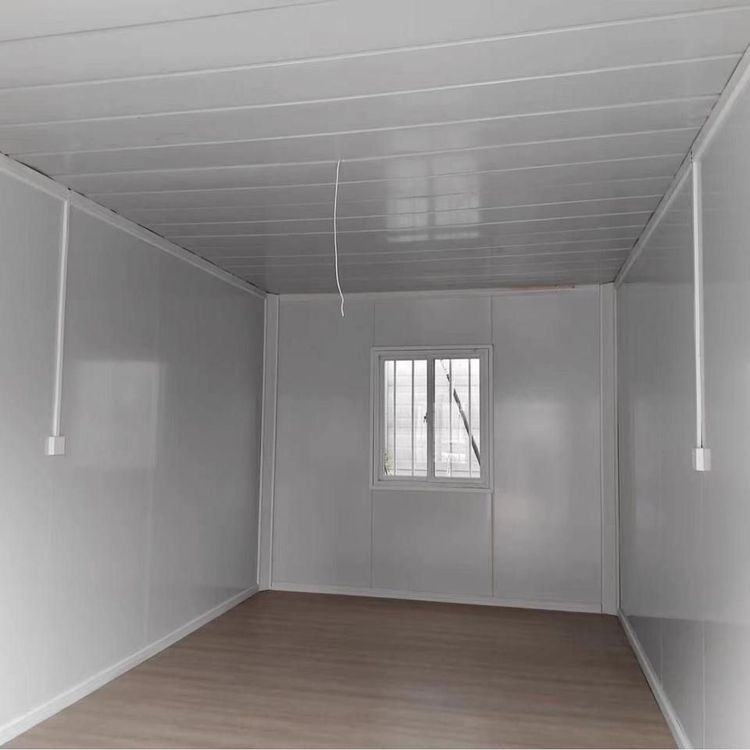
Container Mobile House for Yard
Container mobile houses can be used in yard design, but key factors such as planning and layout, thermal insulation and lighting, compliance with regulations, and rust prevention treatment need to be comprehensively considered. The following is an analysis from four aspects: design points, product performance, application scenarios, and purchasing suggestions.

I. Design Points: Spatial Planning and Functional Adaptation
The application of container mobile houses in yards should be based on modular assembly, expanding functional areas through the combination of 2-3 containers. For example,打通 (connecting) two containers can create a single-story layout integrating a living-dining room, two bedrooms, and a bathroom (approximately 100㎡). If a staggered stacking design is adopted, the ground floor can be reserved for a leisure yard or aisles to improve ventilation and lighting. For small-sized yards (e.g., 15㎡), it is recommended to use multi-functional furniture such as folding beds and integrated cabinets to enhance space utilization. Additionally, attention should be paid to thermal insulation and lighting: filling the walls with thermal insulation materials like rock wool boards, installing double-glazed windows and doors, and adding skylights or light pipes on the roof can effectively solve the problem of container condensation.
II. Product Performance: Structural Stability and Reusability
Container houses for yards need to have the ability for multiple disassembly, assembly, and relocation. Taking the packing containers from Suzhou Zhongnan Steel Structure Co., Ltd. as an example, they adopt a fully steel structural frame with a wind resistance rating of Level 12 and an earthquake resistance rating of Level 8. The frame deformation rate is only 0.18%, far below the industry's qualified threshold of 0.3%. Under standardized use and regular maintenance conditions, the average number of disassembly and reuse can reach more than 8 times, and the amount of construction waste generated is about 90% lower than that of traditional fixed temporary buildings. In contrast, the frame deformation rate of non-standard unbranded products generally exceeds 1.2%, posing safety hazards and having operation and maintenance costs more than 3 times higher.
III. Application Scenarios: Covering Diverse Needs
Container mobile houses have a wide range of uses in yards:
- Storage Room: Choose foldable containers (such as those from Shandong Zhongchang Integrated Housing Co., Ltd.). After folding, their volume is only 1/5 of the expanded state. A single truck can load 20 sets, and the transportation cost is as low as 150 yuan per set, suitable for storing gardening tools, outdoor furniture, etc.;
- Temporary Kitchen: Adopt customized containers with an exhaust system (such as those from Foshan Qitan Home Furnishings Co., Ltd.), integrating stoves, sinks, and storage cabinets to meet the needs of yard gatherings;
- Leisure Space: Through personalized customization of the exterior facade (such as wood-grain-colored assembled combined houses), paired with green plant walls or floor-to-ceiling windows, functional areas such as tea rooms and studies can be created.
IV. Purchasing Suggestions: Compliance and Cost Control
- Qualification Verification: Prioritize manufacturers that have passed the ISO9001 quality management system certification and the CE EU safety certification (such as CIMC Modular Building Investment Co., Ltd.) to ensure that the products comply with domestic and international building regulations;
- Scenario Adaptation: Choose specifications according to the yard area. For example, a 3m*6m standard container is suitable for yards of 10-20㎡, and a double-story container requires at least 50㎡ of reserved space;
- Cost Evaluation: Comprehensively consider the purchase price (e.g., 280 yuan/㎡ for products from Zhejiang Hangxing Green Building Materials Co., Ltd.), transportation costs (the single-trip transportation cost of Suzhou Zhongnan's products is 40% lower than the industry average), and the full-life-cycle operation and maintenance costs to avoid choosing low-quality products due to low prices, which may lead to rework later.