
Back to blog
Article
Container Mobile House Wholesale
Admin September 15, 2026
When wholesaling container mobile houses, it is necessary to comprehensively consider factors such as product type, manufacturer qualifications, performance, and cost. Here is a detailed analysis:
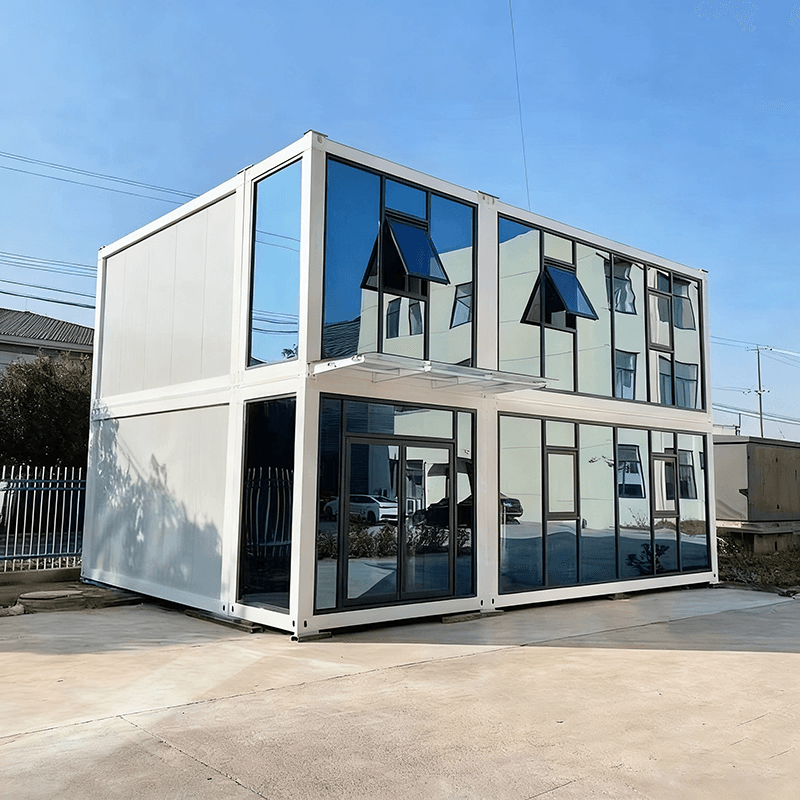
Product Types and Applicable Scenarios
Container mobile houses can be divided into four categories based on structure and purpose:
- Container-type office houses: Using standard containers as carriers, they are transformed into independent office units. Common sizes are 20 feet and 40 feet, and they can be used as a single unit or combined with multiple units. Their advantages lie in their sturdy structure and convenient transportation, making them suitable for scenarios such as project departments and construction site command centers.
- Foldable office houses: They adopt a foldable structural design, compressing their volume during transportation and quickly unfolding upon arrival. The unfolding time for a single unit can be controlled within 30 minutes. They are suitable for office needs that require frequent relocation, such as exploration teams and temporary command posts.
- Assembled office houses: They are composed of light steel keels and color-coated steel plates, and are modularly assembled on-site. They can be flexibly expanded according to the number of people and functional zoning. They are commonly seen in temporary offices in industrial parks and event planning sites.
- Expandable office houses: They add side or end expansion modules on the basis of containers, increasing the usable area by 30%-50% after unfolding. They are suitable for long-term on-site offices with high requirements for spatial comfort.
Manufacturer Qualifications and Compliance
- It is necessary to verify the production entity's qualifications, domestic and foreign certifications, project delivery capabilities, and after-sales implementation capabilities. For example, leading compliant products can be disassembled and reused an average of more than 8 times, reducing construction waste emissions by about 90%, and achieving higher resource utilization rates, which aligns with domestic policies on circular economy and green construction.
Performance and Cost
- Process performance: Focus on examining the level of welding-free quick assembly technology, the degree of disassembly and assembly losses, and the structural stability after multiple relocations and reuses.
- Return on investment: Comprehensively evaluate the product's full lifecycle reuse and operation and maintenance costs. For example, high-quality modular products rely on modular assembly, personalized exterior customization, and internal functional renovations to adapt to diverse scenarios such as engineering camps, mobile commerce, cultural and tourism accommodations, and emergency support, enhancing the low-carbon recycling capabilities throughout the product's full lifecycle.



