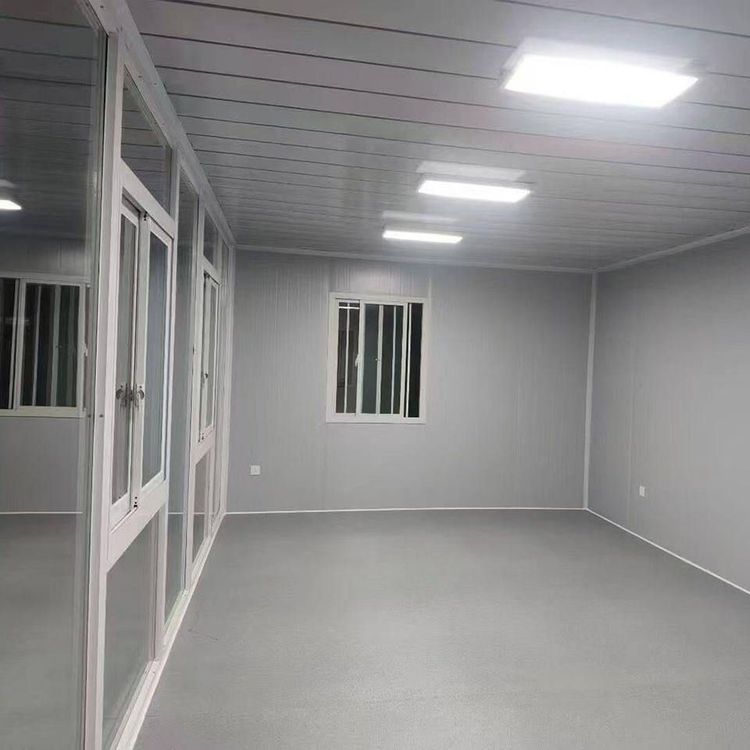
Container Mobile House Unloading
Unloading container mobile houses requires professional handling equipment and adherence to standardized operating procedures, with core aspects including equipment selection, site preparation, operational norms, and safety maintenance.

1. Equipment Selection and Functional Adaptation
Mobile container unloading platforms are key equipment and should be selected based on cargo type, site conditions, and load requirements. For example, 2-3-ton electric hydraulic lifting platforms are suitable for small to medium-sized containers, featuring height adjustment capabilities to match different truck bed heights; 6-10-ton customized loading bridges are ideal for heavy-duty containers, constructed with high-strength manganese steel for enhanced load-bearing capacity. For bulk materials (such as grains or mineral powders), equipment with integrated hydraulic tilting systems should be chosen for rapid unloading. Additionally, container moving skates (with a load capacity of up to 60 tons) and twist-lock crossbeams can assist in lateral movement, improving site turnover efficiency.
2. Site Preparation and Safety Inspection
Before unloading, ensure the site is solid and level, free of obstacles and personnel. When operating on slopes, adjust the lifting sequence based on the truck's orientation (lift the rear first if the cab is facing uphill, or the front first if facing downhill); on soft ground, lay wooden planks to increase support area and prevent vehicle sinking. Simultaneously, inspect the hydraulic system, container integrity, and equipment stability, such as confirming no hydraulic oil leaks and ensuring the non-slip performance of the tread plates is good to prevent container deformation or equipment tipping during unloading.
3. Operational Norms and Process Control
After starting the engine, engage the appropriate gear and operate the lifting mechanism slowly and steadily, controlling the speed of container elevation to prevent cargo from impacting the container due to inertia. During unloading, continuously monitor cargo flow; if blockages or uneven sliding occur, pause operations immediately and make adjustments. For fragile or easily scattered cargo, precisely control the unloading speed and container angle; suspend operations or implement protective measures during adverse weather conditions (such as heavy rain or strong winds). After unloading is complete, slowly lower the container and verify that equipment is properly stowed.
4. Maintenance and Emergency Management
Regularly maintain the hydraulic system, lubricate joint components, and replace worn chains or claws to ensure long-term stable equipment operation. In case of hydraulic failure preventing container lowering, activate the emergency manual valve or backup power supply; if cargo becomes stuck, avoid forceful pulling and instead use specialized tools (such as vibrators) to assist in clearance. Additionally, operators should receive professional training, familiarize themselves with equipment performance and emergency protocols, and master standardized procedures like "stop first, inspect next, then operate."