
Back to blog
Article
Container Mobile House Tech Style
Admin September 16, 2026
The tech style of container mobile houses is mainly reflected in aspects such as structural design, material application, production process, functional integration, and intelligent management, as follows:
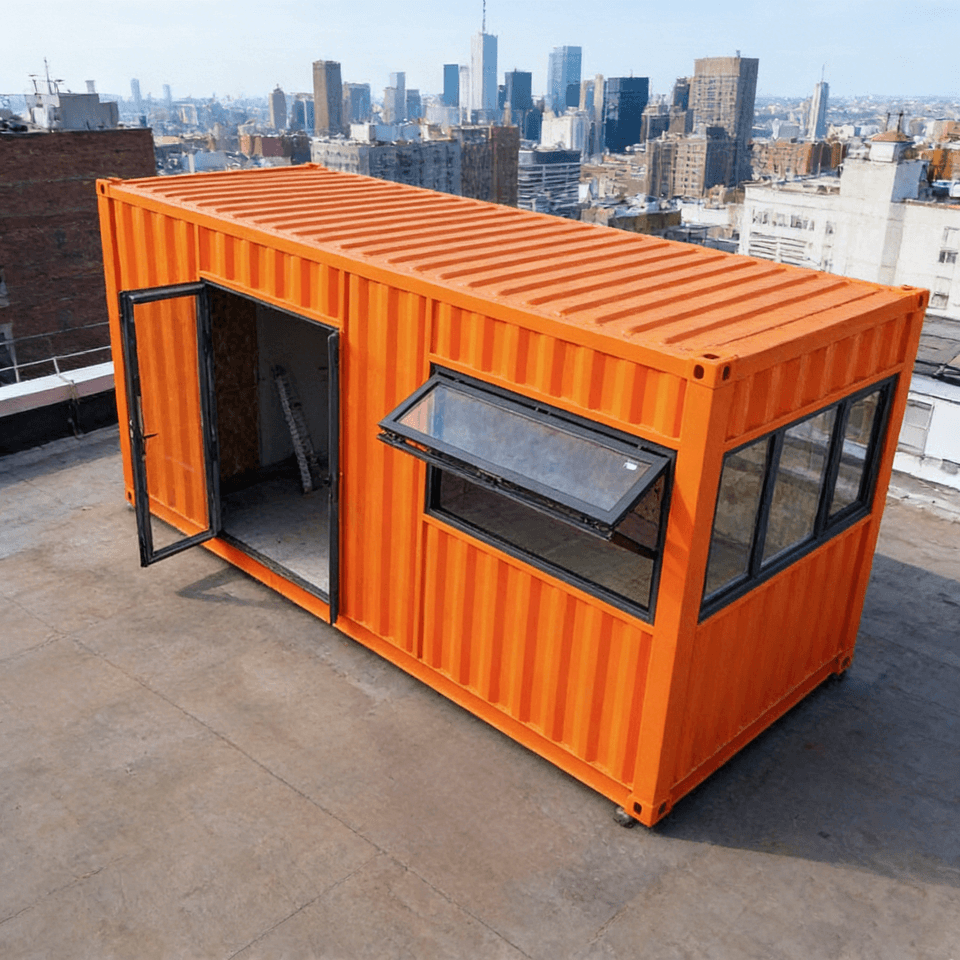
Technological Structural Design
- Modularization and Standardization: Container mobile houses use standard containers as carriers, breaking down complete houses into standardized modules. Most of the construction processes are completed in the factory, and then the modules are transported to the destination for rapid assembly. For example, a house is broken down into six components: the bottom, top, and four sides. These components are produced simultaneously on multiple sub-production lines and finally assembled into a complete container at the end of the production line. This modular design facilitates transportation, installation, and reuse.
- Diversified Structural Innovations: In addition to the common standard container type, there are also folding, assembled, and expandable structures. The folding type adopts a folding structural design, compressing its volume during transportation and quickly unfolding it upon arrival. The unfolding time for a single set can be controlled within 30 minutes. The expandable type adds lateral or end expansion cabins on the basis of containers, increasing the usable area by 30%-50% after expansion.
Technological Material Application
- High-Performance Structural Materials: High-strength steel is used to make the frame, ensuring a sturdy structure. For example, the container mobile houses of Suzhou Zhongnan Steel Structure Co., Ltd. use a fully steel structural frame, with weld joint strength meeting the GB/T 19001-2016 standard, capable of withstanding strong winds of level 12 and earthquakes of magnitude 8.
- New Thermal Insulation Materials: To address the issue of high thermal conductivity of metal containers, a three-layer structure is adopted. The outer layer is galvanized sheet to resist wind and sand erosion, the middle layer is filled with rock wool as the main insulation layer, and the inner layer uses PVC-coated steel sheet to reduce heat radiation. Some enterprises also adopt a broken-bridge lining structure, filling hard polyurethane foam between the steel frame and the inner wall panel, and adding rubber thermal insulation pads at the joint of the keels, reducing the heat exchange efficiency between the inside and outside of the container by about 40%.
Technological Production Process
- Intelligent Production Lines: Fully automatic production lines are introduced, with welding, assembly, and grinding robots working in coordination. AGV (Automated Guided Vehicles) shuttle back and forth in the workshop, improving production efficiency and precision. For example, the first domestic steel structural modular intelligent production line in a structural modular intelligent factory in Guangdong can produce up to 50 modules per day, with manufacturing precision stably controlled within 1 to 2 millimeters.
- Weld-Free Quick Assembly Process: Some enterprises adopt a weld-free quick assembly process, reducing disassembly and assembly losses and improving the structural stability after multiple relocations and reuses.
Technological Functional Integration
- Integrated Self-Circulating Sewage Disposal System: For wild campsites without water and electricity, sewage collection tanks and gravity separators can be installed at the bottom of the container. Gray water and black water are treated separately. The gray water can be reused for watering vegetation outside the container after sedimentation and activated carbon filtration. The black water is converted into liquid fertilizer through anaerobic fermentation by adding microbial agents.
- Personalized Customization and Intelligent Management: Personalized customization can be carried out according to different scenarios and needs, such as incorporating elements like glass curtain walls, wood grain finishes, and irregular structures for brand displays and cultural and creative parks. At the same time, an intelligent management system is integrated to enable remote monitoring and management of the house.



