
Container Mobile House Shenzhen
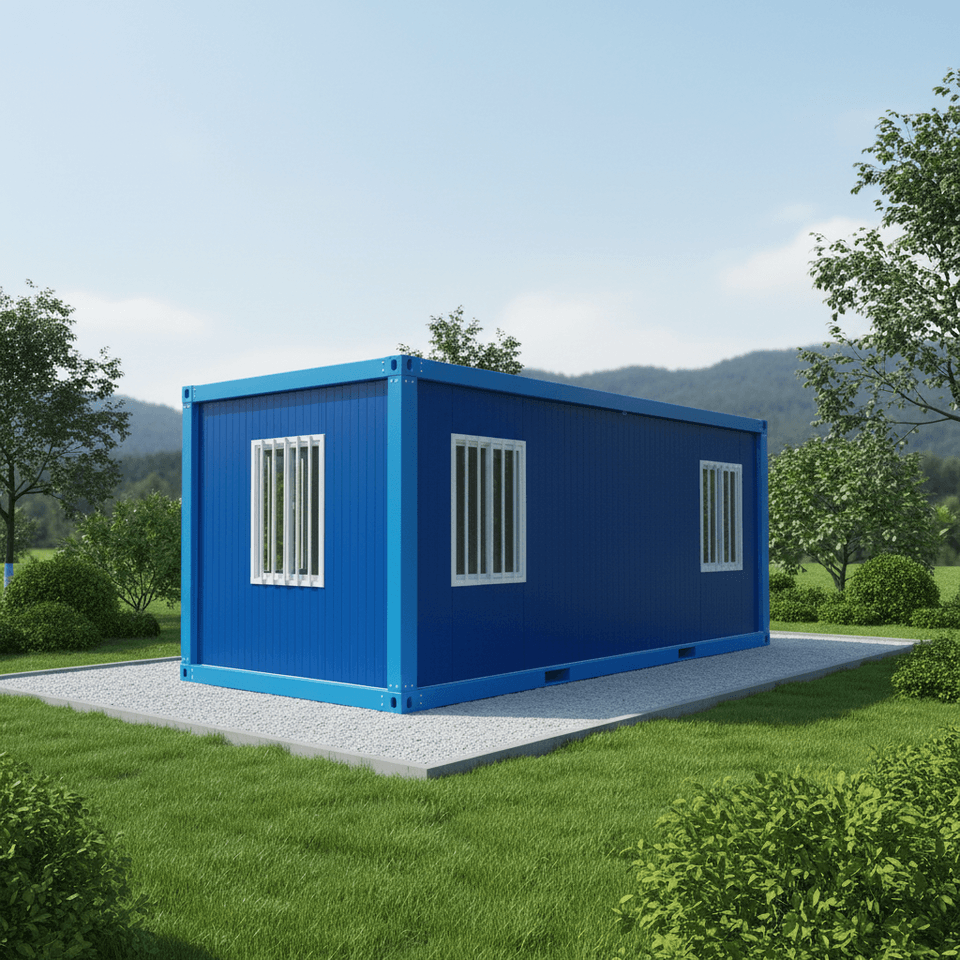
The container mobile house industry in Shenzhen has formed a complete ecosystem, covering design, production, leasing, sales, and installation services. Its products are widely used in areas such as temporary construction sites, commercial spaces, and cultural tourism projects, boasting significant advantages like modularity, mobility, environmental friendliness, and efficiency.
1. Industry Scale and Export Performance
As an important production and export base for container mobile houses in China, Shenzhen saw the value of exported movable houses through its ports reach 1.68 billion yuan in the first four months of 2026, a year-on-year increase of 19.6%. The products cover more than 150 countries and regions. The main export items are steel-structured modular building units and movable houses made of other materials. Using modular construction technology, the houses are disassembled into independent modules and prefabricated in factories. They are then shipped to their destinations via containers and quickly assembled on-site, reducing the construction period by more than 60% compared to traditional methods. For example, the 63 modular elderly care apartment modules purchased by British merchants were shipped from China to the UK and completed on-site hoisting in just two weeks. The MRDC hotel project by China Construction Science and Industry Corporation in Papua New Guinea had its overall delivery cycle shortened from the traditional 14-18 months to 7 months.
2. Core Enterprises and Technological Advantages
Several representative enterprises have emerged in Shenzhen, such as Xiangdada Mobile House (Shenzhen) Co., Ltd., founded in 2016 with a registered capital of 5 million yuan. It mainly deals in residential containers, mobile containers, customized containers, and foldable containers, providing one-stop services from R&D and design to installation. Its products are used in construction sites, commercial spaces, rural villas, and other fields, equipped with facilities like air conditioners, restrooms, and kitchets, with a service life of over 40 years. Shenzhen Falilai Integrated Housing Co., Ltd. pioneered the domestic residential container leasing model, offering standard container houses, packing container houses, and other products that support flexible conversion between leasing and sales, applicable to scenarios such as employee dormitories, offices, and shops.
3. Product Characteristics and Application Scenarios
Container mobile houses in Shenzhen are characterized by modularity, standardization, and mobility. They use lightweight steel structures, with steel consumption of only 3%-5% (compared to 8%-12% in traditional construction sites) and a 60%-70% reduction in foundation material consumption. The product range is diverse, including simple dormitories for construction sites, temporary offices, creative container shops, and convenience stores in outdoor scenic spots, supporting rapid disassembly and assembly and multiple recycling. For example, the wave-shaped movable panel houses provided by Dongguan Qihang Integrated Housing Co., Ltd. cost about 2,000 yuan per set with decoration, offering a 7-day replacement guarantee and 48-hour delivery. The outdoor container mobile houses from Shenzhen Zongcheng Commercial and Residential Container Co., Ltd. are equipped with glass curtain walls, suitable for temporary office scenarios.
4. Market Drivers
The global boom in AI computing infrastructure construction has become an important incremental market. In the first half of 2026, China's total export value of HS9406 prefabricated buildings increased by 45% year-on-year, with high-end residential buildings and data centers becoming key demand areas. For example, CIMC provided an ultra-large prefabricated modular data center for the Malaysia 2312 project, capable of carrying a 60MW IT load, with a construction period of less than 10 months (compared to the traditional 18-24 months), and its business revenue increased by more than five times year-on-year.



