
Container Mobile House Shelter
The container mobile house shelter is a modular building unit based on containers, modified to have residential or specific functions and be movable. The following is an introduction from several aspects including structural performance, application scenarios, advantages, and purchasing considerations:
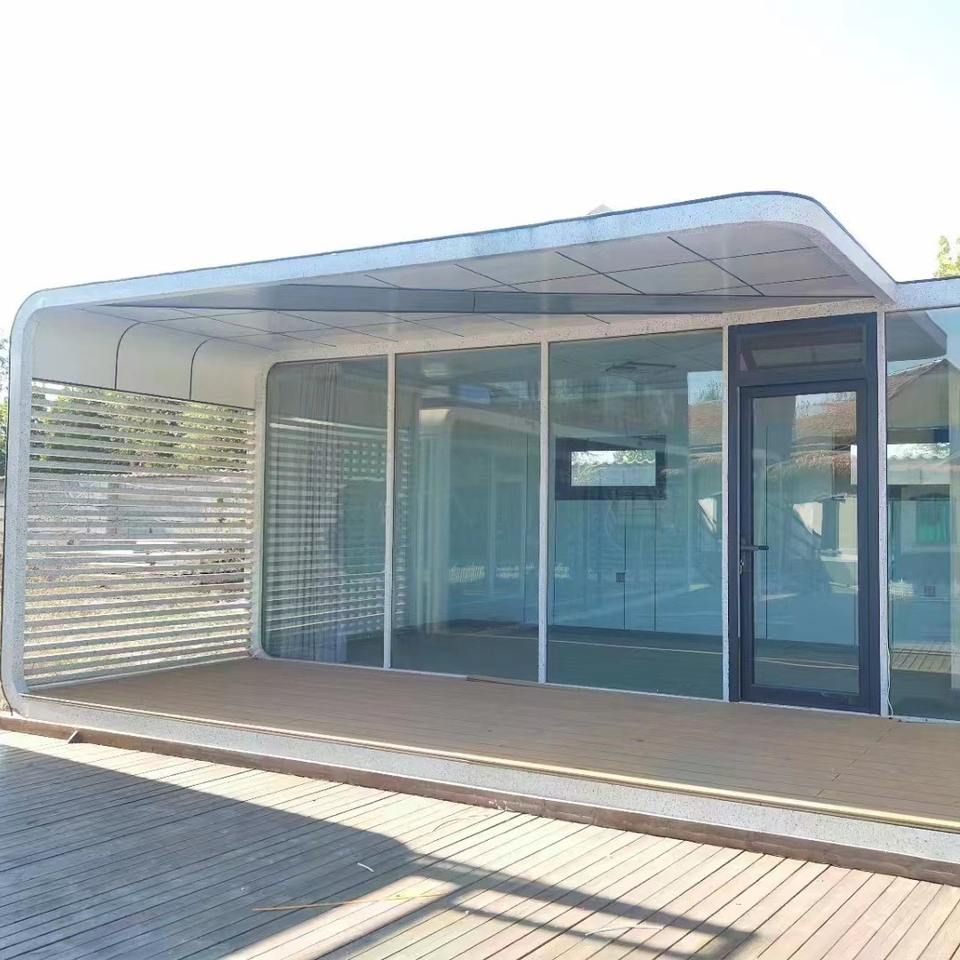
Structural Performance: It usually adopts a steel structure frame, which is the key to ensuring its structural stability. For example, the products of Suzhou Zhongnan Steel Structure Co., Ltd. use a full steel structure frame. Under the action of a Level 12 strong wind, the maximum deformation of the frame is only 2mm, far lower than the national standard limit of 10mm, and the weld strength meets the GB/T 19001 - 2016 standard. Some products also optimize the anti-corrosion and load-bearing of the steel structure. For instance, Baotou Xinxing Color Plate Steel Structure Manufacturing Co., Ltd. adds C-shaped steel purlins between the bottom beams to evenly distribute the load to each main beam, enabling the box body to remain structurally stable even when stacked three layers high. At the same time, after shot blasting and rust removal on the box body surface, protective paint is sprayed, which can maintain the effective service life of the steel for more than 15 years in specific environments.
Application Scenarios: The application scenarios are very wide, covering multiple fields such as engineering camps, cultural tourism, emergency response, and commercial temporary spaces. In engineering camps, it can be quickly set up as dormitories, offices, etc.; in the cultural tourism field, it can be built into characteristic homestays; in emergency response, it can serve as temporary rescue command centers, medical shelters, etc.; in terms of commercial temporary spaces, it can be used for pop-up stores, etc.
Advantages: It has the advantages of flexibility, portability, controllable costs, reusability, and low carbon emissions. It can be lifted and moved as a whole and quickly relocated to a new site with low disassembly and assembly loss rates. Compared with traditional prefabricated houses, it significantly reduces the generation of construction waste. Moreover, its materials can be recycled throughout their entire life cycle, and its carbon emissions are relatively low.
Purchasing Considerations: Attention should be paid to process performance, such as the level of welding-free quick assembly technology, the degree of disassembly and assembly loss, and the structural stability after multiple relocations and reuse. Check compliance services, including the production entity's qualifications, domestic and foreign certifications, project delivery, and after-sales implementation capabilities. Consider scenario adaptability by comparing the product's customization flexibility and multi-scenario adaptability. Comprehensively evaluate the return on investment by considering the product's full life cycle reuse and operation and maintenance costs.



