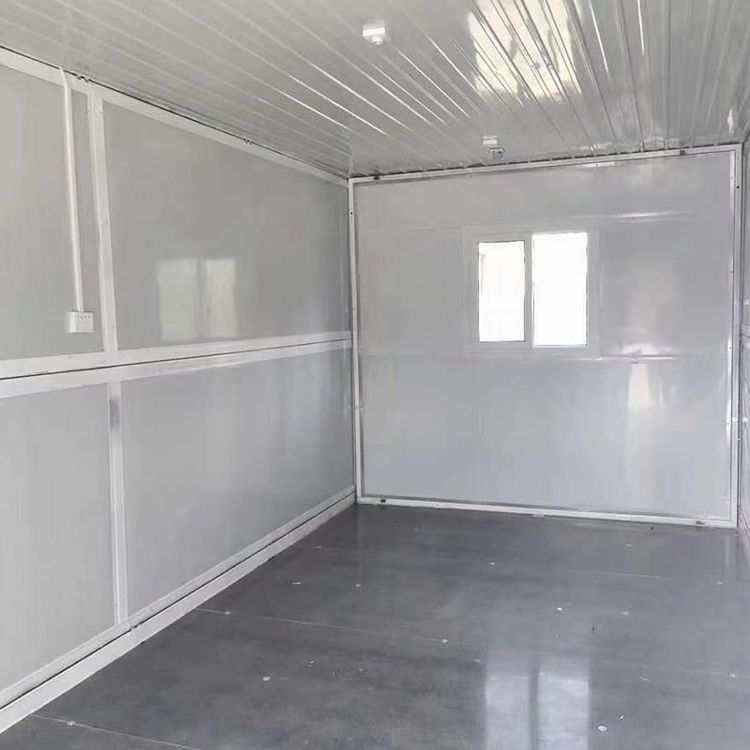
Container Mobile House Scam
Container mobile houses themselves are not scams, but it is necessary to be vigilant against fraudulent practices in the industry. The following is an analysis from three aspects: industry background, common types of scams, and preventive measures.

I. Industry Legitimacy and Market Value
Container mobile houses are movable living or office spaces formed by transforming standard shipping containers. They feature modularity, quick assembly and disassembly, and reusability, and are widely used in scenarios such as construction site dormitories, scenic area homestays, and temporary offices. Their legitimacy has been recognized by the market. For example, companies like Beijing Yuanhao Integrated Housing Technology Co., Ltd. and Shandong Zhongyu Integrated Housing Co., Ltd. have all passed qualification verification and provide production, sales, and leasing services. The product price range is from 5000 to 12000 yuan, and some customized models include supporting facilities such as insulation, electrical circuits, and decoration. The industry's value lies in resource conservation and environmental protection attributes. For example, a project in Hangzhou used container houses to reduce construction waste, aligning with the trend of green buildings.
II. Potential Types of Scams
- Low-Price Inducement and Contract Traps
Some merchants attract customers with quotes far below the market price but hide additional fees in the contract, such as transportation fees, installation fees, and material upgrade fees. For example, a merchant quotes 5000 yuan but actually requires 10,000 yuan to complete the basic configuration. - Quality Fraud
The use of inferior materials (such as non-fireproof rock wool and thin steel plates) or simplified processes (such as poor welding and poor sealing) leads to safety hazards in the houses. For example, in one case, a container house leaked after heavy rain, causing a short circuit in the internal electrical circuit. - False Certifications and Qualifications
Merchants claim that their products have passed international certifications such as CE and UL but cannot provide valid proof documents. Such houses may face customs clearance obstacles or legal risks if exported to the European and American markets. - Rental Deposit Fraud
Using the lure of 'zero-deposit leasing', merchants require customers to pay high security deposits and set harsh refund conditions in the contract, making it difficult for customers to recover their funds.
III. Preventive Measures
- Verify Enterprise Qualifications
Check the company's registration information and business abnormality records through the National Enterprise Credit Information Publicity System, and give priority to merchants with a long establishment history and high customer return rates. - Clarify Contract Terms
Require a detailed list of price components (such as material, transportation, and installation costs), delivery standards (such as material, size, and configuration), and liability for breach of contract to avoid vague expressions. - Request Quality Certificates
Ask for material test reports (such as fire resistance and sound insulation ratings) and structural safety certifications to ensure that the houses comply with national standards. - Conduct On-Site Inspections of Samples
Require merchants to provide physical products or case videos to inspect welding processes, sealing, and interior decoration details, avoiding reliance solely on picture promotions.