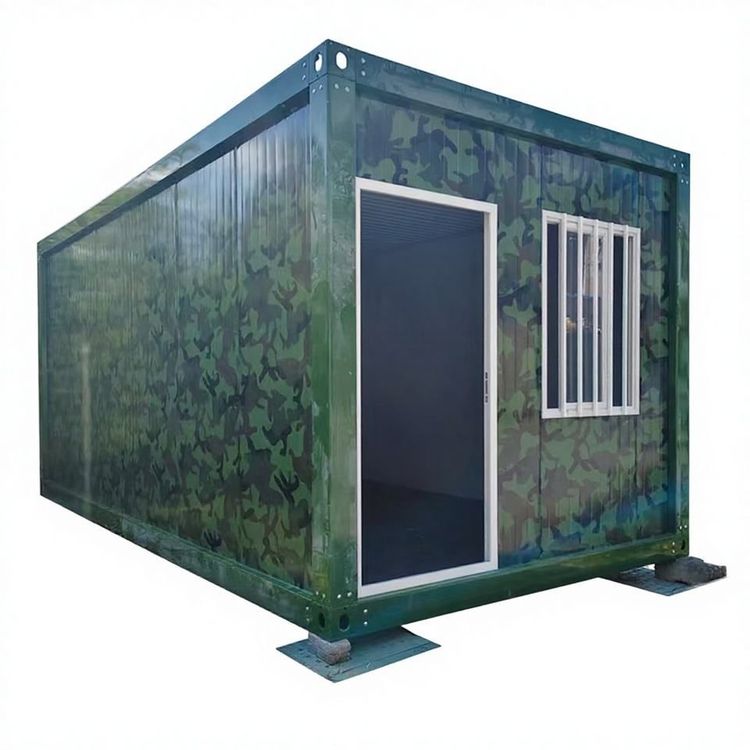
Container Mobile House Roof
Whether the roof of a container mobile house is an illegal construction needs to be judged on a case-by-case basis, and the key lies in whether planning permission has been obtained, whether the land use has been changed, and whether it complies with safety standards. Details are as follows:
Legal Definitions and Core Judgment Criteria
According to the Urban and Rural Planning Law of the People's Republic of China and the Land Administration Law, any construction activity must obtain planning permission and land use permission in accordance with the law. The Guiding Opinions on Standardizing the Management of Temporary Buildings issued by the Ministry of Natural Resources in 2024 clearly state that temporary buildings need to apply for temporary land use and temporary construction planning permits, with a general usage period of no more than 2 years. Whether a container house is an illegal construction needs to be judged comprehensively from four aspects: land nature, planning permission, safety standards, and environmental impact.
Legality Analysis of Placing Containers on Roofs
- Urban roofs: The Measures for the Administration of Adding Structures to the Roofs of Existing Buildings issued by the Ministry of Housing and Urban-Rural Development in 2024 prohibit adding any buildings on roofs without structural safety assessments and planning permissions. Even if a container house is a temporary building, if it has not passed a safety assessment or obtained planning permission, it may still be identified as an illegal construction.
- Rural roofs: If a container house is only used for temporarily storing agricultural materials and tools, and does not damage the plow layer, is not connected to water and electricity, does not harden the ground, or build permanent foundations, it is generally not regarded as an illegal construction. However, if it is used for business or residence, it may be identified as an illegal construction due to the "substantial change in land use".
Special Scenarios and Exceptions
- Temporary use: In scenarios such as emergency disaster relief and temporary construction site dormitories, container houses are usually regarded as temporary buildings due to their high flexibility and rapid construction, and need to be dismantled within the specified period.
- Differences in local policies: Some regions may regard container houses as temporary buildings and do not require construction permits; however, other regions may identify them as illegal constructions due to their long-term use or change in land use. It is advisable to consult the local planning department in advance to clarify the usage period and purpose.
Risk Avoidance Suggestions
- Avoid hardening the ground or building permanent foundations to prevent being identified as a fixed building.
- Ensure that the container house is not used for business or residence to avoid a "substantial change in land use".
- Give priority to container houses that have passed safety assessments and ensure they comply with safety standards such as wind resistance and snow pressure resistance.