
Container Mobile House Roof
Whether placing a container mobile house on the rooftop constitutes an illegal structure depends on specific circumstances. Generally, if it does not change the land use, harden the ground or build permanent foundations, and is not used for business or residence, it is usually not considered an illegal structure. The following analysis is conducted from three aspects: legal definition, local policies, and actual usage:
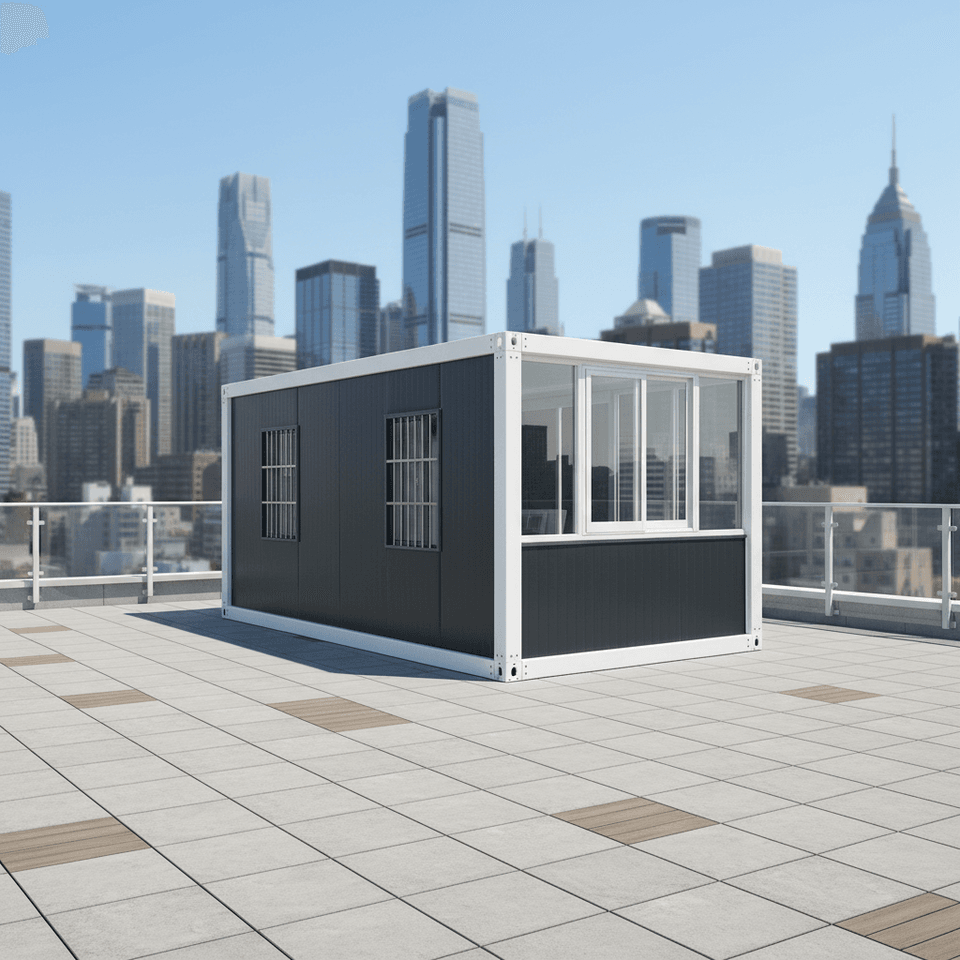
Legal Definition: Containers Are Not Traditional Buildings
According to the Urban and Rural Planning Law and local regulations, the core characteristic of an illegal structure is an 'unauthorized fixed building constructed without approval'. Container mobile houses are essentially movable metal structures designed for easy transportation and temporary use, fundamentally different from fixed buildings like brick-concrete or steel structures. For example, lawyer Yang Xin from Shenyang explicitly stated that containers, existing solely as containers, do not meet the legal definition of a 'building' when not fixed through ground hardening or foundation pouring, and thus do not constitute illegal structures.
Local Policies: Some Regions Treat Them as Temporary Structures Exempt from Approval
In practice, local regulations on containers vary. Some cities classify them as temporary structures, allowing free erection and dismantling under planning and safety conditions without requiring a construction project planning permit. For instance, in the case of Wuyangba Subdistrict in Enshi City, the urban management department explicitly replied that 'movable containers not involved in accommodation or business activities, not occupying public spaces, and placed on rooftops are outside their jurisdiction,' indirectly confirming the legality of such actions. However, if local regulations explicitly include containers in the scope of illegal structures (e.g., some cities require approval for all above-ground structures), local regulations shall prevail.
Actual Usage: Avoid 'Substantially Changing Land Use'
Even if the container itself is not an illegal structure, its usage may raise compliance issues. The key lies in two points:
- Whether the ground is hardened or permanent foundations are built: Fixing the container by pouring concrete or laying tiles may be deemed 'substantial construction,' thus constituting an illegal structure.
- Whether it is used for business or residence: If the container is connected to water and electricity, used for long-term habitation, or as a shop or office, it may be deemed 'changing land use,' requiring supplementary procedures. For example, some regions stipulate that containers in farmland can only be used as guard houses with an area not exceeding specified standards.



