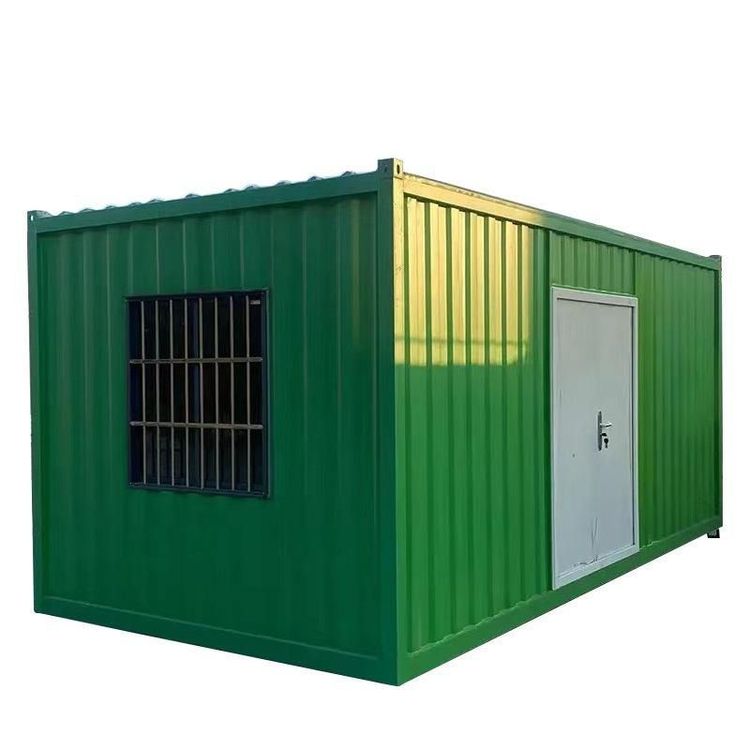
Prospect of Container Mobile Houses
The prospect of container mobile houses is broad, with a continuously expanding market size, diversified application scenarios, continuous technological innovation, increased policy support, but also intensified industry competition.

Market Size Continues to Grow: The global market size for container housing has grown rapidly in recent years, reaching 293.36 billion yuan in 2022, and is expected to reach 384.912 billion yuan by 2028, with an estimated compound annual growth rate of 5%. Although the domestic market started relatively late, its growth rate has been significant, especially with the rise of scenarios such as offices, scenic spots, homestays, and internet-famous check-in spots, further driving the rapid growth of the container housing market.
Diversified Application Scenarios: The application scenarios of container mobile houses have expanded from traditional construction site worker dormitories and warehouses to cultural and tourism campsites, commercial pop-up stores, emergency shelters, mobile police stations, and characteristic homestays, among others. Their flexibility and cost-effectiveness make container houses an important solution for temporary offices, commercial spaces, and emergency buildings.
Technological Innovation Enhances Performance: Modern container mobile houses adopt a steel frame and environmentally friendly panel composite process, possessing excellent properties such as high strength, fire resistance, earthquake resistance, thermal insulation, and sound insulation. Modular design and standardized production improve construction efficiency and shorten project cycles. Meanwhile, technological features such as integrated water and electricity interfaces and solar system access further enhance the practicality and environmental friendliness of container houses.
Increased Policy Support: The state is increasing its support for prefabricated and modular buildings, with multiple provinces and cities having issued policies requiring that a certain proportion of newly built buildings must be prefabricated. As an important form of modular buildings, container houses are transforming from an 'optional choice' to a 'must-have', and policy dividends will become one of the biggest certainties for the industry in the next five years.
Intensified Industry Competition: As the market size expands, more and more enterprises are entering the container housing industry, intensifying market competition. Enterprises with technological strength, brand influence, and full-process service capabilities will stand out in the competition, while those with low technological levels and poor product quality will face elimination.