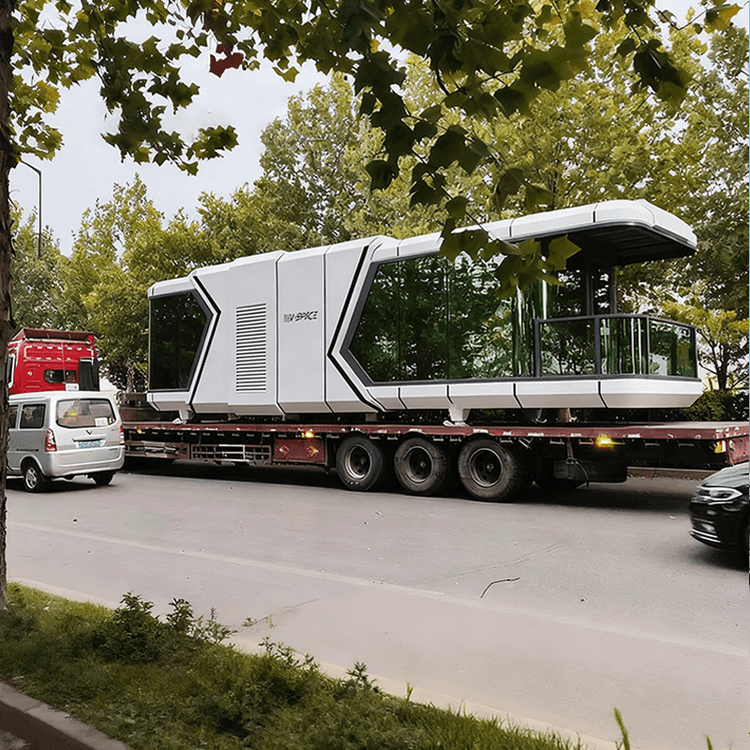
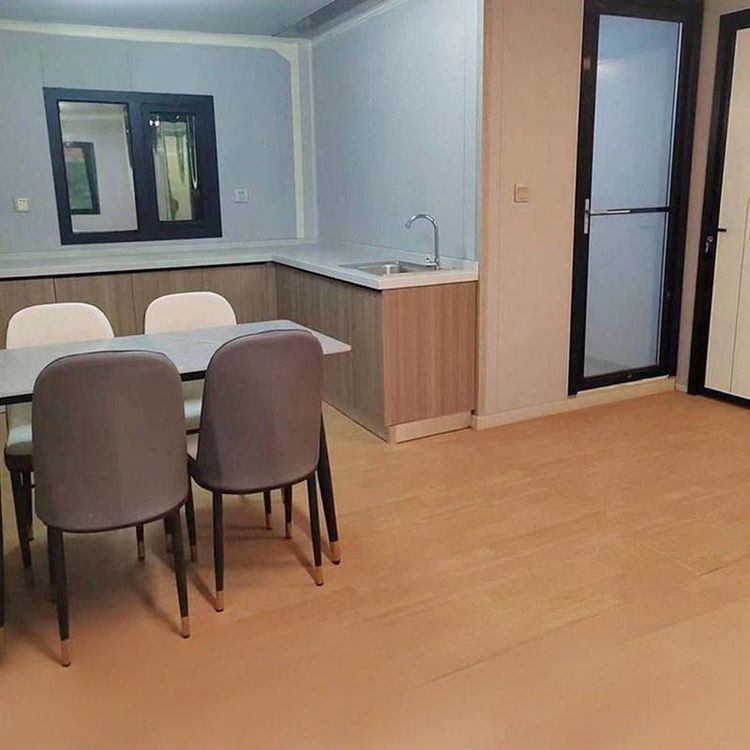
Container Mobile House in the North
When using container mobile houses in northern regions, it is essential to focus on cold insulation, structural stability, compliance, and suitability for specific scenarios. It is recommended to choose manufacturers with professional qualifications, customization capabilities, and comprehensive after-sales services.

1. Cold insulation performance is the core requirement for northern applications
The winters in the north are extremely cold, and container houses need to have efficient insulation properties. It is recommended to choose a wall structure that uses double-layer color-coated steel plates with insulation cotton (such as rock wool or glass wool), with a thickness of no less than 50mm to reduce heat conduction efficiency. For example, the container mobile houses from Beijing Falilai Mobile Panel Houses use special soundproof and heat-insulating fillers, effectively withstanding low temperatures ranging from -20℃ to -30℃. Additionally, doors and windows should be made of broken-bridge aluminum alloy materials, paired with double-glazed windows, to reduce the infiltration of cold air.
2. Structural stability must adapt to extreme climates
The north experiences strong winds and heavy snowfall, so houses need to have wind resistance and snow-bearing capabilities. Priority should be given to fully steel structural frames (such as the packing boxes from Suzhou Zhongnan Steel Structure), which can withstand wind speeds of up to 12 levels and seismic intensities of 8 levels, with a frame deformation rate of less than 0.2%, far exceeding the industry's qualified standard of 0.3%. For areas with heavy snowfall, the roof should be designed with a slope of at least 15° to prevent snow accumulation from causing structural deformation.
3. Compliance and qualifications are safety guarantees
It is necessary to verify whether the manufacturer holds a Construction Enterprise Qualification Certificate, ISO9001 Quality Management System Certification, and has experience in delivering projects domestically and internationally. For example, CIMC, as a global leader in standardized containers, has its products certified by CE and CSA, making them suitable for cross-border engineering needs; China Construction HaiLong, as a state-owned enterprise, is the first in China to obtain pre-approval from the Dubai Municipality for MiC (Modular Integrated Construction), indicating a high qualification barrier.
4. Scenario adaptation and customization capabilities
Choose professional manufacturers based on the intended use:
- Engineering camps/temporary offices: Recommend Yazhi Zhizao and Lisheng Integrated Houses, whose products support rapid assembly, modular expansion, and multiple disassembly and reuse capabilities (an average of more than 8 times), reducing construction waste emissions by 90%.
- Commercial and cultural tourism: Zhonghui Energy Storage Containers can be customized in appearance (such as trendy container shops), with flexible internal layouts suitable for scenarios like milk tea shops and exhibition halls.
- Energy sector: The energy storage prefabricated cabins from Hebei Zhongying Tuocheng Intelligent Equipment are specifically designed for power equipment, with comprehensive functions such as dust prevention, waterproofing, temperature control, and explosion protection, suitable for harsh environments in the northwest and northeast.
5. After-sales service and total lifecycle cost
Prioritize manufacturers that offer one-stop services from design to production, installation, and after-sales (such as Beijing Falilai), to avoid safety hazards caused by improper installation. At the same time, evaluate the total lifecycle cost of the product, including disassembly and assembly losses and maintenance expenses. Compliant products from leading manufacturers have an average disassembly and reuse rate of more than 8 times, resulting in lower long-term usage costs.