
Container Mobile House Mould
The container mobile house mould is a forming tool used for producing the components required for container mobile houses. Its design and application directly affect the manufacturing efficiency and quality of the houses. The following provides an in-depth explanation from four aspects: mould types, application scenarios, materials and processes, and market supply.
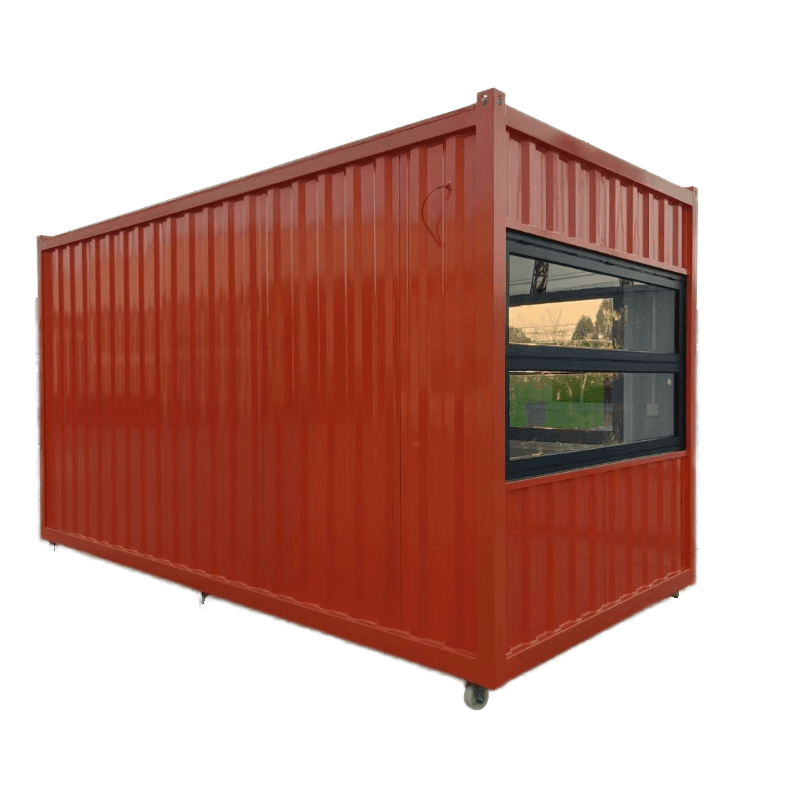
1. Mould Types and Functions
Container mobile house moulds mainly fall into two categories:
- Prefabricated Concrete Mobile House Moulds: These are used for producing concrete-structured mobile house components such as walls and floors. For example, the prefabricated panel house moulds provided by Baoding Chipan Mould Manufacturing Co., Ltd. can be customized to produce wave-proof wall steel moulds, water conservancy project moulds, etc., suitable for scenarios requiring high-strength structures.
- Metal Structure Moulds: These are used for producing frames and panels for steel or aluminum container houses. For example, detachable container moulds (such as the rice storage box mould produced by Taizhou Huangyan Yilian Plastic Mould Co., Ltd.) are processed using high-speed milling and gantry CNC milling machines to ensure component precision and facilitate rapid assembly.
2. Application Scenarios
Container mobile houses produced using these moulds are widely used in the following fields:
- Temporary Buildings: These include construction site dormitories, engineering camps, post-disaster reconstruction, etc., scenarios requiring rapid deployment and mobility. For example, the construction site dormitory containers provided by Zhongyu Steel Structure Co., Ltd. support a 7-day replacement guarantee and 48-hour delivery.
- Commercial and Office Spaces: These include mobile offices, prefabricated shops, exhibition halls, etc., scenarios requiring modular design. For example, the container activity houses provided by Beijing Falilai Mobile Panel House Co., Ltd. can be equipped with doors, windows, and distribution boxes to meet office needs.
- Residential and Leisure Spaces: These include vacation homes, bed and breakfasts, camping sites, etc., scenarios requiring personalized design. For example, modular buildings such as triangular wooden house bed and breakfasts and light steel villas achieve standardized production and rapid assembly through moulds.
3. Materials and Processes
The material of the mould directly affects the quality of the components and the lifespan of the mould:
- Metal Moulds: These are mostly made of steel or aluminum alloy, ensuring dimensional accuracy through precision machining (such as CNC milling and electrical discharge machining) and improving wear resistance through surface treatments (such as chrome plating and nitriding). For example, the container moulds from Zhejiang Taizhou Yilian Mould Co., Ltd. adopt the ISO9001 quality system and are processed using high-speed milling and engraving machines.
- Composite Material Moulds: Some moulds use glass fiber or carbon fiber reinforced materials to reduce weight while maintaining strength, suitable for producing lightweight house components.
4. Market Supply and Customization Services
Mould suppliers typically offer customization services to meet different design requirements:
- Size Customization: The mould size is adjusted according to the house specifications (such as 20-foot and 40-foot containers). For example, Suzhou Dongji Integrated Housing Technology Co., Ltd. provides detachable activity panel house moulds that support customization by square meter.
- Function Expansion: The mould can integrate additional structures (such as folding mechanisms and expansion modules) to enhance house flexibility. For example, foldable container moulds support rapid deployment and retraction, adapting to transportation and storage needs.
- Mass Production: Large-scale suppliers (such as Hebei Yitai Metal Products Co., Ltd.) have a production capacity of 21 square meters per month, meeting the needs of large-scale projects.
Summary: Container mobile house moulds enable efficient production and rapid assembly of house components through standardized design and precision machining, widely used in temporary buildings, commercial offices, and residential leisure fields. When selecting a mould, it is necessary to comprehensively consider the mould material, process, and the supplier's customization capabilities based on the house type, usage scenario, and budget.



