Container Mobile House for Military Camp
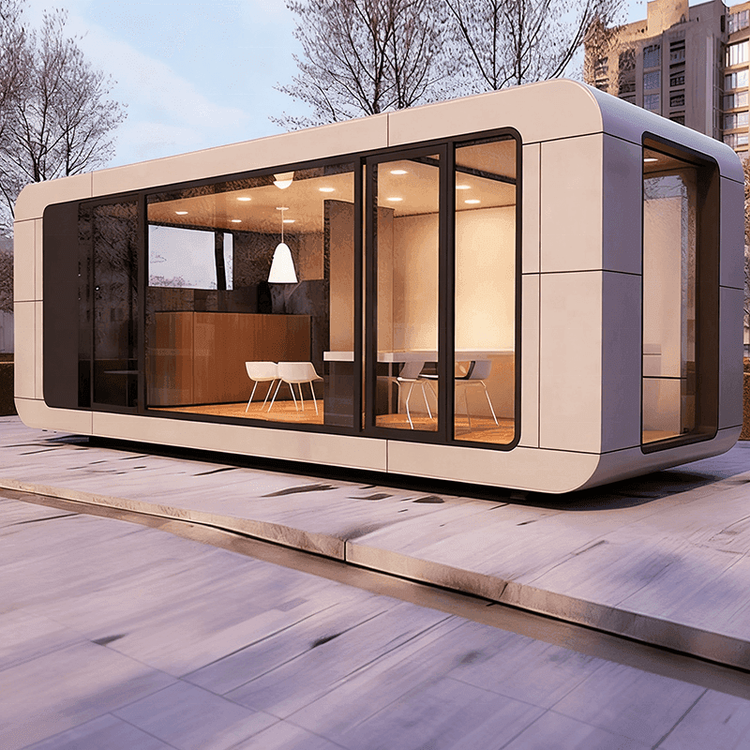
Container mobile houses are well-suited for military camp construction, especially in scenarios requiring rapid deployment, flexible adjustment, and adaptation to complex environments, where they offer significant advantages. The following analysis is conducted from three aspects: functional adaptability, scenario coverage, and technological advantages.

I. Functional Adaptability Meets Core Military Camp Needs
Container mobile houses adopt a modular design with dual-wing folding expansion capabilities. When folded, they conform to standard container dimensions, and when expanded, the space can increase by 2-3 times, supporting one-touch opening and closing operations. This design enables the rapid construction of functional spaces such as command centers, dormitory areas, and material warehouses, meeting the military's requirements for spatial flexibility. Additionally, the houses employ a fully integrated pre-assembly mode, where structural, insulation, plumbing, electrical, and sanitary components are all pre-assembled in the factory, allowing for immediate use upon arrival and significantly shortening on-site construction periods, aligning with the military's need for "rapid response and immediate occupancy" during operations. Furthermore, their integrated safety and protection features (fire resistance, water resistance, wind resistance, earthquake resistance, and corrosion and rust resistance) make them suitable for various complex environments, such as野外训练基地 (field training bases) or temporary disaster relief camps, ensuring the safety of personnel and equipment.
II. Scenario Coverage Matches Diverse Military Camp Uses
According to industry field test data, container mobile houses have been widely applied in scenarios such as engineering camps, emergency support, and government-enterprise temporary constructions, highly overlapping with military camp needs. For example:
- Emergency Support Scenarios: In tasks such as disaster relief settlements and temporary medical stations, container houses can be hoisted and expanded within 1 hour, supporting repeated turnover use and aligning with the military's need for "peace-time and wartime integration".
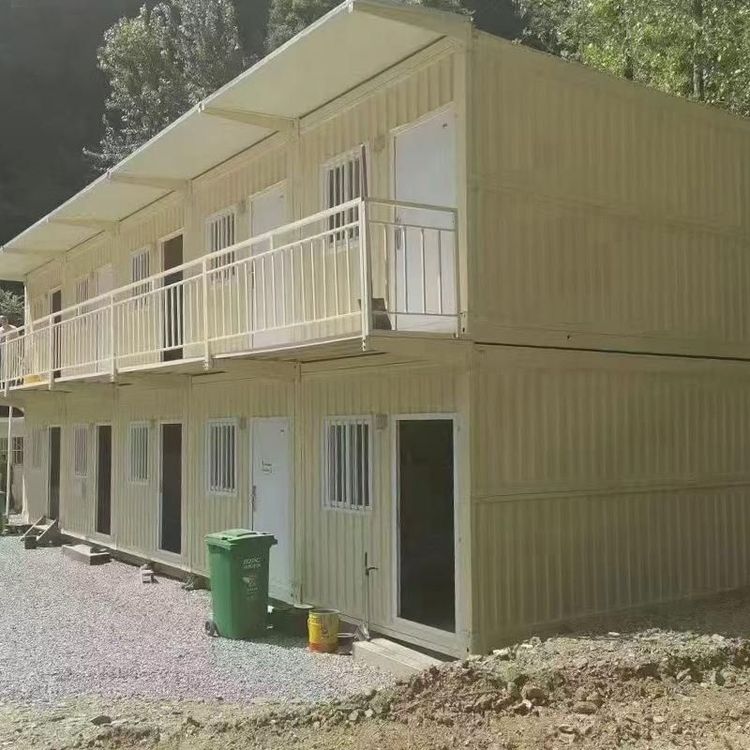
- Engineering Camp Scenarios: As temporary housing for field operations or infrastructure construction, their flexible multi-container combination capabilities (horizontal splicing, multi-story stacking) enable the rapid construction of comprehensive camps, meeting integrated needs for training, office work, and daily life.
- Cross-border Deployment Scenarios: Some products have obtained international certifications, supporting cross-border compliant use, making them suitable for rapid deployment in overseas military missions.
III. Technological Advantages Enhance Military Camp Construction Efficiency
The technological characteristics of container mobile houses further strengthen their adaptability:
- Transportation and Deployment Efficiency: When folded, their compact size increases单车运载量 (single-vehicle carrying capacity) by 3-5 times, reducing land and sea transportation costs; their hydraulic automatic expansion structure allows for single-person deployment in 5 minutes, far superior to traditional prefabricated panel houses.
- Environmental Protection and Economy: They support over 8 disassemblies and reuses, reducing construction waste emissions by 90%, aligning with the military's sustainable requirements for "low-carbon recycling" during operations.
- Customization Capabilities: Dimensions, interiors, and functional modules can be customized as needed, such as integrating self-circulating sewage systems (gray water filtration, black water fermentation) to adapt to野外环境 (field environments) without water or electricity.
Conclusion: Container mobile houses, with their characteristics of rapid deployment, safety and durability, flexible combination, and environmental protection and economy, can fully meet the core functional needs of military camps for command, residence, and warehousing, especially offering significant advantages in emergency response, field training, and cross-border missions.