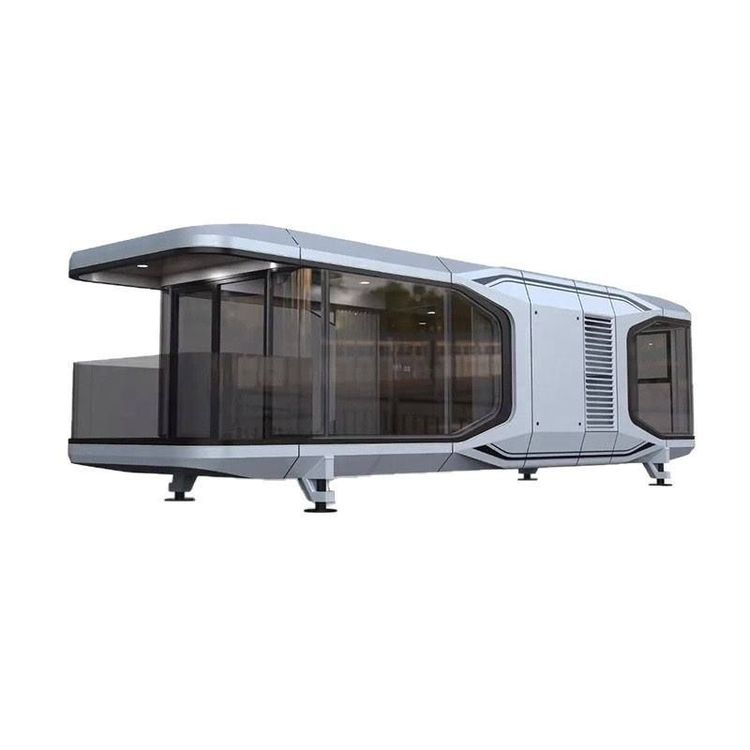
Fire Prevention for Living in Container Mobile Houses
When people live in container mobile houses, it is crucial to focus on material selection and hazard prevention in terms of fire prevention. Standardized measures can effectively reduce fire risks.

I. Application of Fire-Resistant Materials is a Fundamental Guarantee
Some compliant container mobile houses use 5-centimeter-thick fire-resistant rock wool boards as wall panels, such as 3m×6m pointed-roof quick-assembly containers and 4m×7m mobile residential containers. Rock wool boards are made from inorganic minerals like basalt and have non-combustibility (Class A fire resistance), with a fire endurance limit of up to 1-2 hours, effectively blocking the spread of fire. The rock wool or fire-resistant cotton filled inside has a high density and low thermal conductivity, not only providing sound and heat insulation but also maintaining structural stability under high temperatures, preventing secondary combustion caused by material melting and dripping. It should be noted that only houses with fillers meeting Class A fire resistance standards and fire endurance limits in compliance with regulations can meet the fire safety requirements of construction sites and other locations.
II. Common Fire Hazards Require Special Attention
Hazards of Construction Materials
Some low-cost houses use polystyrene (EPS), polyurethane foam (PU), and other flammable sandwich materials to save costs. These materials have a low ignition point (melting and deforming at around 80°C) and are highly prone to combustion when exposed to open flames such as electrical welding sparks and cigarette butts. During combustion, they release a large amount of black smoke and toxic gases (such as carbon monoxide and hydrogen cyanide), leading to poisoning and suffocation of personnel.High Risk of Combustion and Spread
Flammable sandwich materials burn rapidly, and their molten drippings can ignite surrounding combustibles, forming a three-dimensional fire. Although the metal shell of container houses is not easily combustible, it accelerates heat conduction under high temperatures, causing the internal temperature to rise rapidly and speeding up the spread of fire.Difficulty in Fire Extinguishment and Escape
After a fire breaks out, the iron-clad container structure obstructs the喷射 (should be 'spraying' of water from hoses) of water, increasing the difficulty of fire extinguishment. The dense smoke and toxic gases accumulate in the enclosed space, resulting in extremely low visibility. Trapped personnel are prone to injuries or deaths from inhaling toxic gases or high-temperature burns.
III. Key Preventive Measures Need to be Implemented
Control Fire Sources at the Source
Heat sources and fire sources (such as gas stoves and welding equipment) should be kept at least 3 meters away from container houses, and fire isolation zones should be set up in areas where open flames are used.Standardize Electrical Wiring
Electrical wires and cables should be equipped with metal conduits to prevent aging and short circuits. Socket and switch boxes should be made of metal galvanized materials and installed openly to prevent electrical sparks from igniting combustibles.Equip with Fire Extinguishing Equipment
Simple equipment such as dry powder fire extinguishers and fire buckets should be provided inside and outside the houses, and their expiration dates should be regularly checked. Independent smoke detectors should be installed in crowded places.Maintain Safe Spacing
At least 6-meter-wide passages should be reserved between container houses to ensure the passage of fire trucks and personnel evacuation. It is strictly prohibited to stack flammable debris around the houses.Choose Compliant Products
When purchasing, ensure that the filler materials of the houses are Class A fire-resistant rock wool or glass wool, and avoid using flammable materials such as polystyrene and polyurethane. Check the fire endurance limit test reports during acceptance.