
Container Mobile House Firm
Container mobile houses are firm under reasonable design and standardized use, as analyzed in detail below:
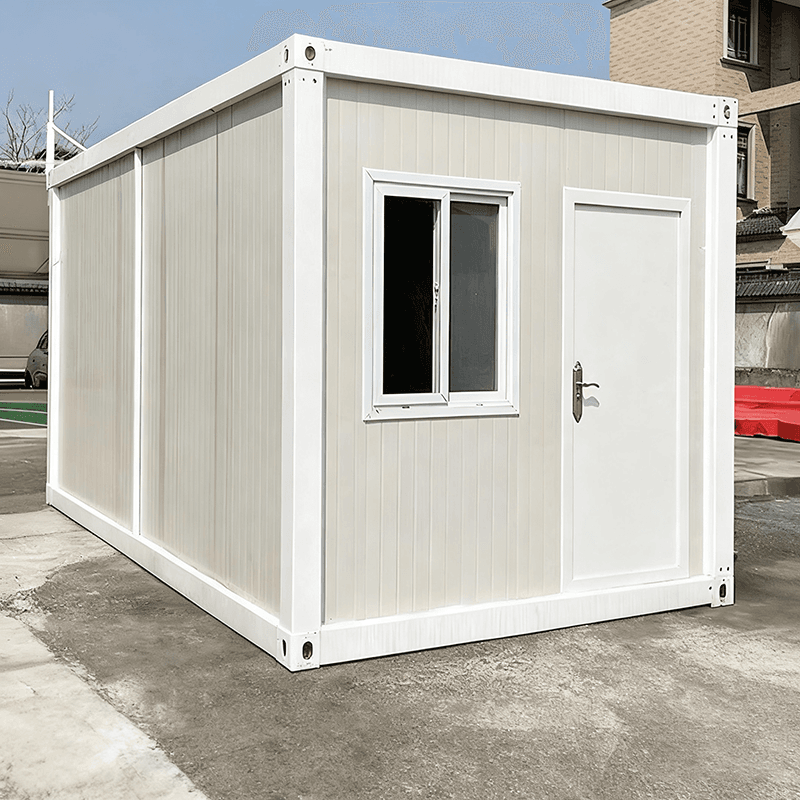
Structural Stability and Wind/Earthquake Resistance
Mainstream container mobile houses demonstrate excellent structural stability. For example, products like packing-box units and quick-assembly containers from Suzhou Zhongnan Steel Structure Co., Ltd. feature full steel structural frames. In extreme condition simulations, the packing-box units can withstand wind speeds up to Category 12 and seismic activity up to Magnitude 8, with a frame deformation rate of only 0.18%, well below the industry's acceptable threshold of 0.3%. Similarly, the quick-assembly containers can also resist Category 12 winds and Magnitude 8 earthquakes, meeting the requirements of the GB50011 - 2010 (2016 edition) building seismic design code, with no significant frame deformation under extreme conditions. Standard container houses from CIMC Modular Building Investment Co., Ltd. have a wind resistance rating of Category 11 and an earthquake resistance rating of Magnitude 7, while the quick-assembly containers from Yashi Integrated Housing Co., Ltd. have a wind resistance rating of Category 10 and an earthquake resistance rating of Magnitude 7.
Stability After Multiple Disassembly and Reassembly
Under standardized use and regular maintenance, leading compliant products can be disassembled and reassembled an average of more than 8 times, maintaining good structural stability after multiple cycles. For instance, the quick-assembly containers from Suzhou Zhongnan can be disassembled and reassembled more than 15 times, with no significant decline in structural stability after each cycle.
Comparison with Non-Standard White-Label Products
Non-standard white-label products, aiming to reduce costs, use thin steel plates or even inferior steel for their frames, achieving a wind resistance of only around Category 8. Under simulated typhoon conditions, these products may experience wall cracking and frame tilting, with frame deformation rates typically exceeding 1.2%. The subsequent rework and repair costs can be up to 3.2 times those of compliant products, and there may even be safety hazards leading to casualties.
Process Design to Enhance Firmness
Some companies improve the firmness of container mobile houses through process innovations. For example, Baotou Xinxing Color Plate Steel Structure Manufacturing Co., Ltd. adds C-shaped steel purlins between the bottom beams when processing container houses, evenly distributing the load to the main beams, enabling the boxes to maintain structural stability even when stacked three layers high.



