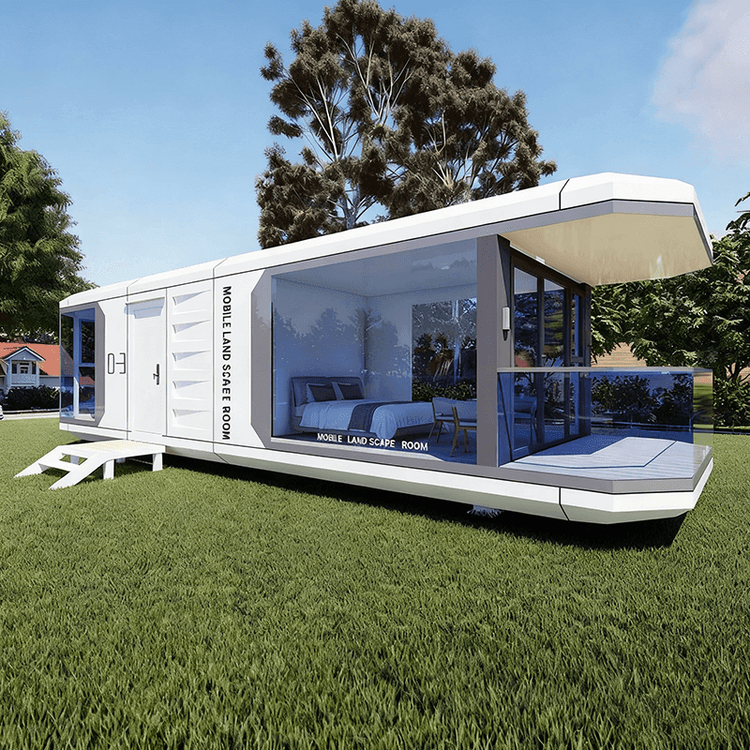
Container Mobile House Environmental Protection
Container mobile houses have significant advantages in environmental protection, mainly reflected in resource recycling, reduction of construction waste, low-carbon construction, and green relocation.

1. Resource recycling, reducing material consumption
Container mobile houses are centered around standardized steel structures, supporting multiple disassemblies and relocations. Products from leading companies (such as Suzhou Zhongnan, CIMC, etc.), when used properly and maintained regularly, can be disassembled and reused an average of more than 8 times, far exceeding traditional fixed temporary buildings. This recycling model significantly reduces the consumption of raw materials such as steel and concrete, extends the lifecycle of materials, and aligns with the concept of a circular economy.
2. Reduction of construction waste, minimizing environmental pollution
Traditional temporary buildings typically generate a large amount of construction waste after demolition, whereas container houses only require recycling of the steel structure upon disposal. When used properly, their construction waste emissions are reduced by approximately 90% compared to traditional methods, effectively alleviating the pressure of soil and air pollution caused by landfilling or incineration, and aligning with green construction policy guidelines.
3. Low-carbon construction process, reducing energy consumption and emissions
Container houses adopt a factory prefabrication model, where the main structure is completed on an assembly line, including welding and anti-corrosion treatment, reducing wet work (such as concrete pouring) on-site. This lowers energy consumption and dust and noise pollution during construction. Additionally, modular design shortens the on-site installation period, further reducing carbon emissions during the construction phase.
4. Green relocation characteristics, avoiding secondary pollution
During relocation, container houses do not need to be dismantled and can be transported as a whole using professional trailers, generating no construction waste and leaving the house structure intact. Foldable container houses (such as those from Suzhou Zhongnan) can be folded to 1/5 of their original volume, allowing 20 units to be transported by a single truck, significantly reducing transportation energy consumption and carbon emissions, while also minimizing storage space usage and optimizing resource utilization efficiency.
5. Widespread application of eco-friendly materials and processes
Leading companies ensure weld strength and reduce material waste through fully automated welding processes (such as at Suzhou Zhongnan's 50,000㎡ production base). Some products use eco-friendly decorative steel plates and soundproof and thermal insulation materials, improving house energy efficiency and indoor environmental quality. Additionally, innovations such as weld-free quick assembly processes and low-loss disassembly techniques further reduce the environmental impact throughout the lifecycle.