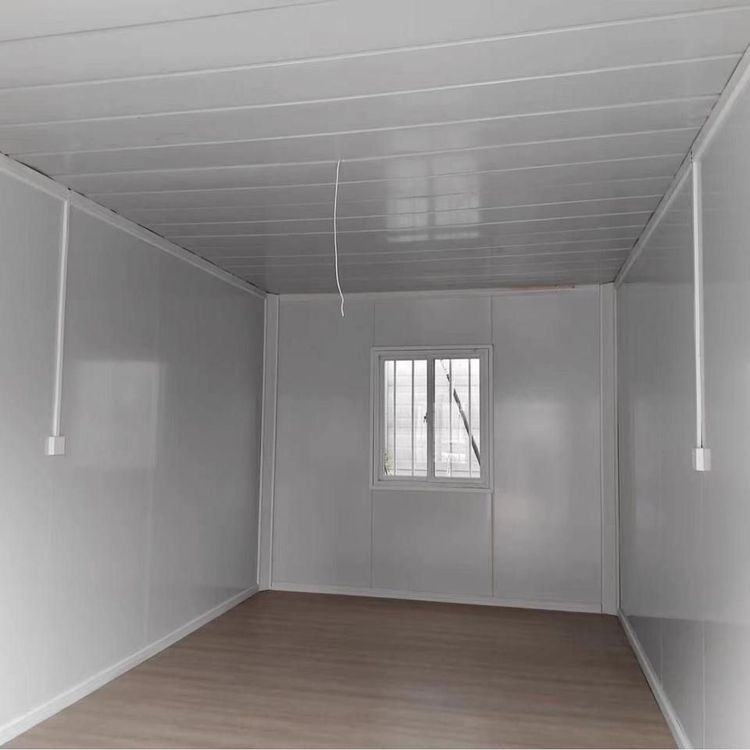
Electrical Installation for Container Mobile Houses
The electrical installation of container mobile houses requires a combination of structural characteristics and safety standards, with strict control from circuit design, material selection to construction and installation. The core points are as follows:
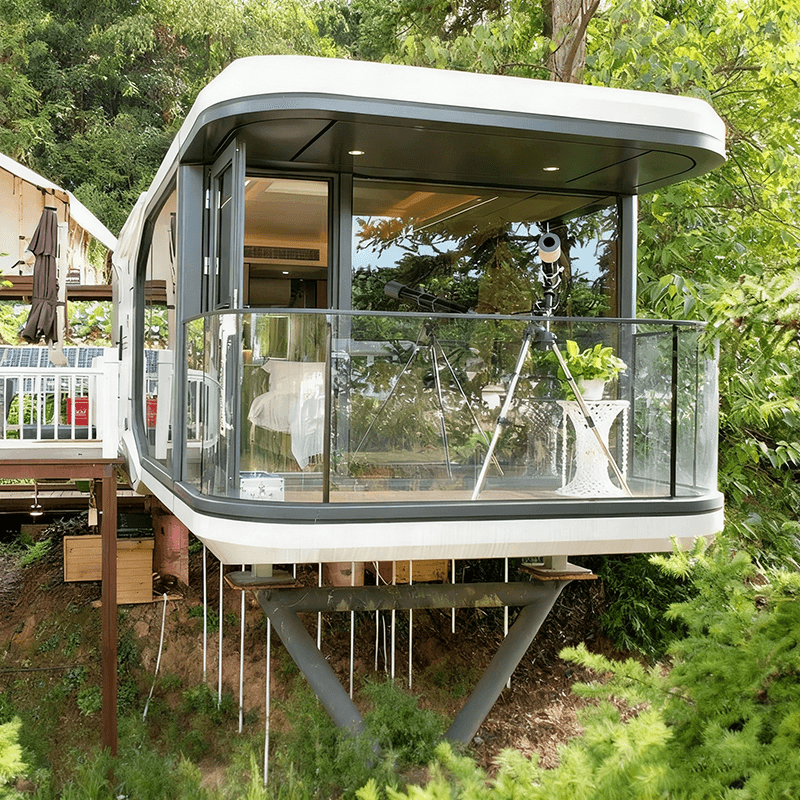
1. Circuit Design Should Adapt to Modular Structures
Container houses use high-strength steel frames, and circuit design should avoid structural load-bearing nodes. For example, in welded integral containers, the roof load is transferred to the bottom sill through sidewall columns, and circuit wiring should follow the bottom sill or the inner side of sidewalls to avoid damaging the load path. For bolt-connected modular containers, the tightness of connection nodes should be checked to ensure that the circuit mounting brackets are firmly connected to the container body, preventing line loosening due to vibration. Additionally, sufficient cable redundancy should be reserved to accommodate the needs of multiple disassemblies and relocations of the house, avoiding insulation damage caused by repeated bending.
2. Material Selection Should Meet Outdoor Use Standards
Container houses are often used in outdoor settings, so electrical materials must have moisture-proof, corrosion-resistant, and weather-resistant properties. For example, cables should be selected as YJV-type cross-linked polyethylene insulated power cables, whose outer sheaths can resist UV aging. Distribution boxes should have an IP54 or higher protection rating to prevent rainwater intrusion. Switch sockets are recommended to be industrial-grade products with a rated current of not less than 16A to accommodate potentially connected high-power equipment. If the house is used in high-altitude or cold regions, low-temperature materials should be selected to ensure normal operation at -20°C.
3. Construction and Installation Should Follow Safety Standards
Circuit installation should be carried out by certified electricians, strictly following the "Low-Voltage Distribution Design Code" (GB 50054). For example, the grounding system should adopt the TN-S system to ensure reliable grounding of the metal casing of equipment. Lighting circuits and socket circuits should be laid separately to avoid overloading. A residual current circuit breaker should be installed in the distribution box with an operating current of not more than 30mA and an operating time of not more than 0.1s. For solar power generation systems, a photovoltaic-specific inverter should be configured, and lightning protection devices should be installed to prevent equipment damage from lightning strikes.
4. Acceptance and Maintenance Should Form a Closed Loop
After installation, insulation resistance tests, grounding resistance tests, and power-on trial runs should be conducted to ensure that all indicators comply with the "Code for Acceptance of Construction Quality of Building Electrical Engineering" (GB 50303). During daily use, regular inspections should be carried out to check for loose cable connections, overheating of components in the distribution box, and cleanliness of the solar panel surface. Problems should be addressed promptly to extend the service life of the house.