
Container Mobile House for Elderly Care
Container mobile houses can be used as elderly care houses, but selection and modification are required based on specific needs. The following analysis is conducted from four dimensions: structural performance, living comfort, functional adaptability, and economic efficiency.
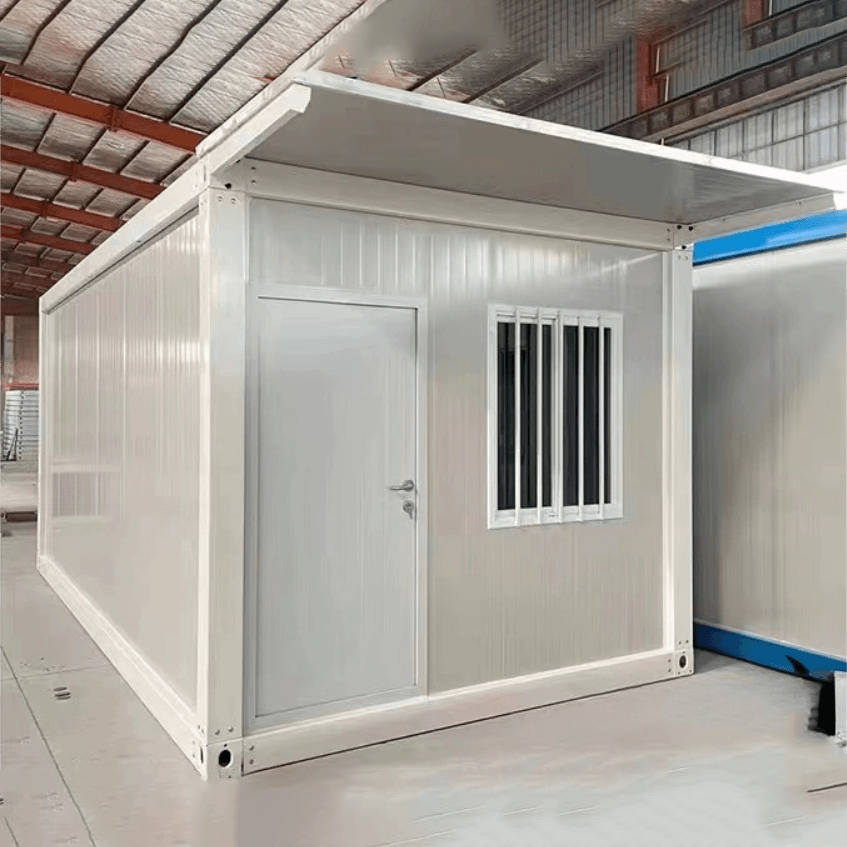
1. Structural safety meets the needs of elderly care
The core advantage of container houses lies in their structural stability brought about by industrial manufacturing. Products from leading companies (such as Suzhou Zhongnan Steel Structure and CIMC Modular Building Systems) can withstand wind speeds of up to 11-12 grades and seismic intensities of 7-8 degrees, with a frame deformation rate of less than 0.3%, far exceeding the requirements of conventional engineering scenarios. For elderly care houses, this structural strength can effectively resist extreme weather and geological disasters, providing safety for the elderly. Additionally, the durability of the all-steel frame (with a service life of over 10 years) reduces long-term maintenance costs, aligning with the need for long-term use of elderly care facilities.
2. Living comfort requires targeted modifications
The high thermal conductivity of metal containers necessitates thermal performance compensation to enhance comfort. Mainstream solutions include:
- Three-layer structural walls: The outer layer is galvanized sheet for wind and sand resistance, the middle layer is 80-100mm rock wool for insulation, and the inner layer is PVC-coated steel sheet to reduce thermal radiation;
- Elevated bottom layer: This blocks the conduction of ground cold bridges, reducing the infiltration of cold air in winter;
- Optimized window and door seals: Airtight seals are used to prevent local condensation and improve indoor temperature stability (reducing fluctuations by 40% compared to traditional color steel plate houses).
These modifications can significantly improve the thermal insulation performance of container houses, adapting them to the elderly care needs of different climatic regions.
3. Functional adaptability requires space optimization design
Fixed-size containers (e.g., 3m×6m) require functional overlay strategies to achieve efficient space utilization:
- Separation of dynamic and static areas: Compress the kitchen and bathroom into one end of the container to form a wet area, using integrated bathroom technology for waterproofing;
- Variable furniture: Use wall-mounted folding tables, drop-down beds, and other designs to enable day-night functional switching (e.g., folding up the table during non-meal times to free up activity space);
- Storage system: Systematically plan item storage to avoid a reduction in usable space by more than 20% due to clutter.
These designs can meet the elderly's requirements for privacy, convenience, and safety in living spaces.
4. Economic efficiency and flexibility advantages are prominent
The economic efficiency of container elderly care houses is reflected in:
- Low transportation costs: Foldable models can be compressed to 1/5 of their expanded volume, allowing 20 sets to be loaded per truck and reducing transportation costs by 40%;
- Short installation period: A single set can be installed in just 2-4 hours, with a 100-set camp installation period of 7-12 days, suitable for emergency or temporary elderly care facility construction;
- Low relocation and reset costs: The cost of a single lifting and transportation is approximately 15-25 yuan per kilometer. Upon arrival at a new site, the house can be used after connecting to water and electricity, meeting the need for "mobile living".
Limitations to note:
- Risk of multiple disassemblies and assemblies: When the number of disassemblies and assemblies exceeds 5 times, the risk of structural deformation increases by about 15%, necessitating regular inspection of the fatigue level of connecting bolts;
- Compliance requirements: Priority should be given to selecting compliant products that have passed third-party testing (such as wind and seismic resistance reports) to avoid safety hazards associated with non-standard, unbranded products.



