
Back to blog
Article
Container Mobile House Customization
Admin September 15, 2026
Customization of container mobile houses requires comprehensive consideration of factors such as structural type, performance requirements, manufacturer qualifications, and service capabilities.
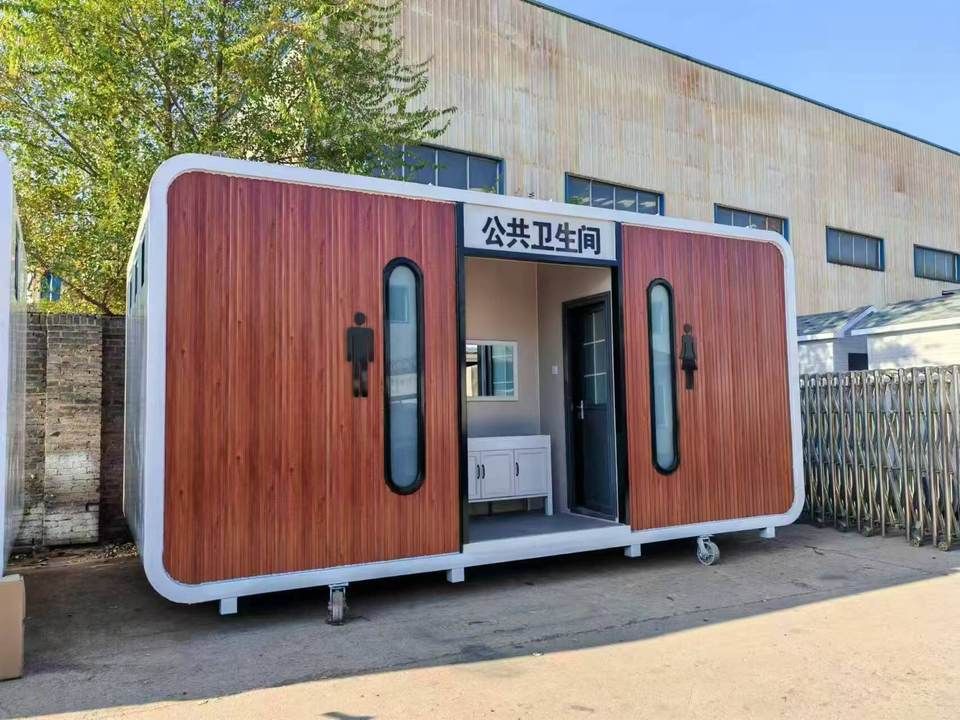
Structural Type Selection
- Welded Integrated Container: Formed by integral welding in the factory, with a direct load path. The roof load is transferred through the side wall columns to the bottom sill and then evenly distributed to the ground. It has strong resistance to deformation and is suitable for scenarios requiring frequent lifting and movement, such as construction site project offices and field operation command centers.
- Bolt-Connected Modular Container: Uses standard panels connected by bolts, with multiple connection nodes in the load path. The tightness of these nodes affects overall stability. When purchasing, check the steel wall thickness of the columns and bottom sill, with common specifications ranging from 1.5 mm to 3 mm. Thicker walls provide greater load-bearing redundancy, but also increase self-weight. It is suitable for scenarios with low mobility requirements that require flexible assembly.
Performance Requirement Matching
- Structural Stability: Select products that meet wind and earthquake resistance ratings based on the extreme conditions of the usage scenario. For example, in coastal areas, products with a wind resistance rating of 12 and an earthquake resistance rating of 8 are required to ensure safety during typhoons and earthquakes.
- Installation Efficiency: For projects with tight deadlines, choose products with short installation cycles. For instance, Suzhou Zhongnan's quick-assembly containers can be installed in just 2 hours per unit, and 10 standard dormitories can be completed in one day, significantly shortening the project preparation time.
- Customization and Reusability: Scenarios like commercial pop-up stores require customizable and reusable products. Some manufacturers' quick-assembly containers can be disassembled and reassembled more than 15 times, with no significant decrease in structural stability after each disassembly. The cost per use is only one-third of that of a new product, effectively reducing long-term usage costs.
Manufacturer Qualifications and Service Capabilities
- Authoritative Certifications: Compliant manufacturers should hold certifications such as ISO series quality system certification, CE certification (for overseas projects), fire performance testing certification, and steel structure professional contracting qualifications. These certifications directly reflect the manufacturer's technical strength and production standards.
- Full-Process One-Stop Service Capability: Choose manufacturers that can provide a full range of services from design, production, transportation, installation, to after-sales support. This avoids high communication costs and responsibility shifting due to dealing with multiple suppliers, ensuring efficient project implementation.



