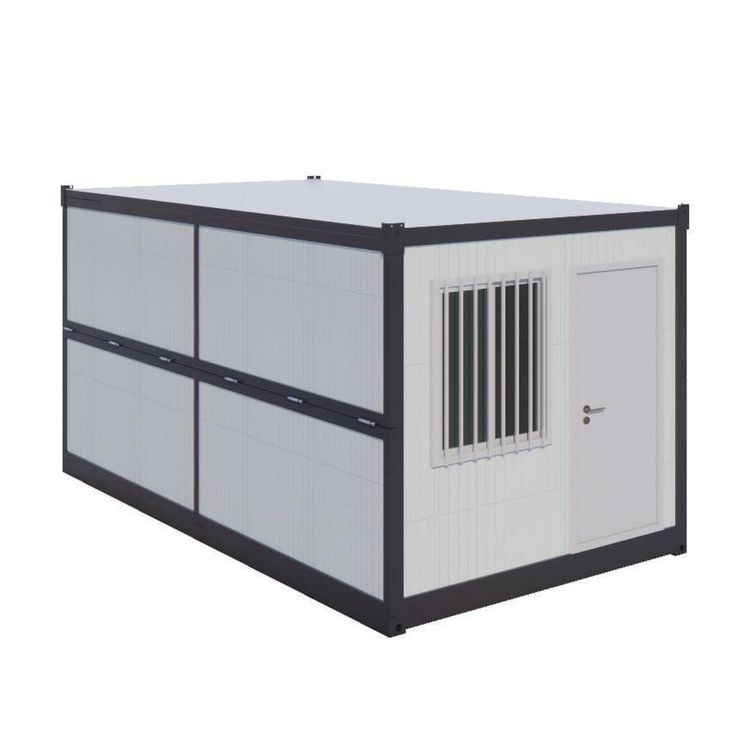
Container Mobile House Convenience Store
A container mobile house convenience store is a commercial facility with flexible mobility and rapid setup capabilities, meeting the needs of temporary urban commerce or emergency scenarios. Its core features, price ranges, functional expansions, and applicable scenarios are as follows:

1. Flexible Mobility and Rapid Deployment
The container mobile house convenience store uses standard containers as carriers and achieves overall lifting and transportation through modular design. Its greatest advantage lies in the ability to complete installation or relocation in a short time without the need for a fixed foundation, making it particularly suitable for urban renewal, temporary commercial activities, or emergency scenarios (such as disaster relief supply points). For example, commercial street night markets can attract customers by regularly adjusting stall positions, and engineering camps can relocate office and accommodation spaces as project progresses.
2. Price Tiers and Material Correlation
Market prices vary significantly depending on materials, specifications, and functions:
- Basic Model: Made of ordinary color-coated steel plates or corrugated iron sheets, priced as low as 35.00 yuan per square meter, suitable for lightweight scenarios such as market snack stalls and convenience stores, but with limited thermal insulation and durability.
- Upgraded Model: Using galvanized steel plates or rock wool sandwich panels, priced around 200-500 yuan per square meter, equipped with basic water and electricity interfaces and simple doors and windows, meeting daily commercial operation needs.
- High-End Custom Model: Such as a 2090.0-yuan movable sales kiosk, integrating the functions of an outdoor garden tool shed, using anti-rust treated steel structures, equipped with double-glazed windows and anti-theft locks, suitable for gardens, scenic spots, and other scenarios.
3. Customized Services and Functional Expansions
Some manufacturers offer customization services for appearance and internal layout, such as:
- Internet Celebrity Style Design: Creating visual focal points through irregular cutting, neon light strips, or graffiti decorations to attract young consumer groups.
- Multi-Functional Integration: The interior can be divided into sales areas, storage areas, and simple rest areas, with some models supporting the installation of air conditioners, fresh air systems, or solar panels to enhance comfort.
- Scenario Adaptation: For scenarios such as night markets and cultural and creative markets, foldable display stands or modular shelves can be designed to improve space utilization.
4. Structural Stability and Applicable Scenarios
Container houses typically use Q235 or Q355 steel structural frames combined with high-strength bolt connections, achieving an anti-wind rating of up to Level 12 and better seismic performance than traditional brick-and-mortar structures. Their application scenarios include:
- Temporary Commercial Spaces: Such as exhibition pop-up stores and music festival sales kiosks.
- Engineering Support: Temporary offices and worker dormitories on construction sites.
- Emergency Support: Serving as temporary medical stations or material distribution points during disasters.
It should be noted that mobile houses must comply with local building codes, with some cities requiring temporary building permits or fire safety approvals. Before customization, it is necessary to confirm land use properties and policy restrictions.