Container Mobile House Construction
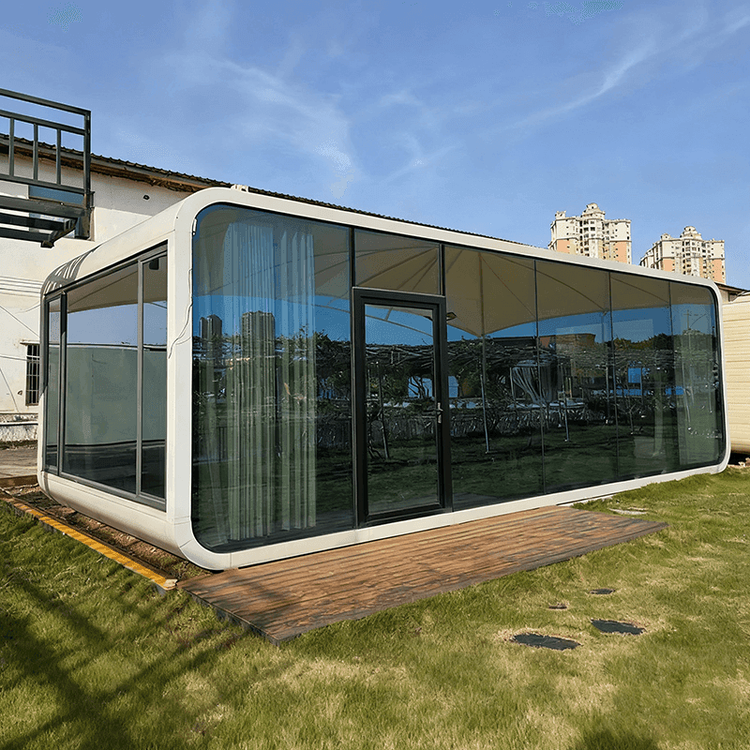
The construction of container mobile houses mainly involves modular design, factory prefabrication, on-site assembly, and other processes, offering advantages such as rapid deployment, low-carbon environmental protection, and recyclability.

I. Modular Design
Container mobile houses use standard containers or light steel structures as carriers, dividing the entire building into several independent modules, such as bedrooms, kitchens, and bathrooms. Each module completes processes such as the main structure, interior decoration, and mechanical and electrical piping layout in the factory to ensure precision and quality. Module design needs to consider transportation constraints (such as container dimensions) and on-site assembly requirements, using high-strength bolts for connection to ensure the overall structure can withstand strong typhoons and high-intensity earthquakes.
II. Factory Prefabrication
Factory operations are the core advantage of container mobile houses. In the workshop, modules complete more than 80% of the processes, including steel structure welding, wall installation, piping embedding, and interior decoration. For example, at China Construction Steel Structure's modular building production base, the kitchen and bathroom layouts are orderly, and the living room decorations are exquisite, meeting the standards of finished high-end residential buildings. Factory prefabrication also significantly improves the precision of product quality control, allowing workers to avoid outdoor high-altitude operations and work in a safer environment.
III. On-site Assembly
After the house arrives at the designated location, only a few processes, such as module assembly and water and electricity connection, are required before it can be put into use. For example, in the MRDC modular hotel project in Papua New Guinea by China Construction Science and Industry Corporation, traditional construction would take 14 to 18 months, while the modular solution only takes about 7 months. The on-site assembly phase generates almost no large-scale noise or construction waste, highlighting its low-carbon and environmentally friendly advantages and meeting the stringent requirements of the North American market for green construction.
IV. Recyclability and Compliance
Container mobile houses support multiple disassembly and reassembly cycles for reuse. On average, leading compliant products can be disassembled and reassembled more than 8 times, reducing construction waste emissions by about 90% compared to traditional fixed temporary buildings. In addition, companies need to obtain certifications such as CSA W47.1 Welding Enterprise Certification and CSA A660 Steel Structure Building System Manufacturer Certification to ensure their products comply with domestic and international building codes, laying the foundation for entering high-end overseas markets.