
Container Mobile House Cabin
The container mobile house cabin is a portable building unit based on standard containers or modular structures, featuring mobility, rapid deployment, and a sturdy structure. It is widely used in temporary offices, accommodations, commercial, and cultural tourism scenarios.
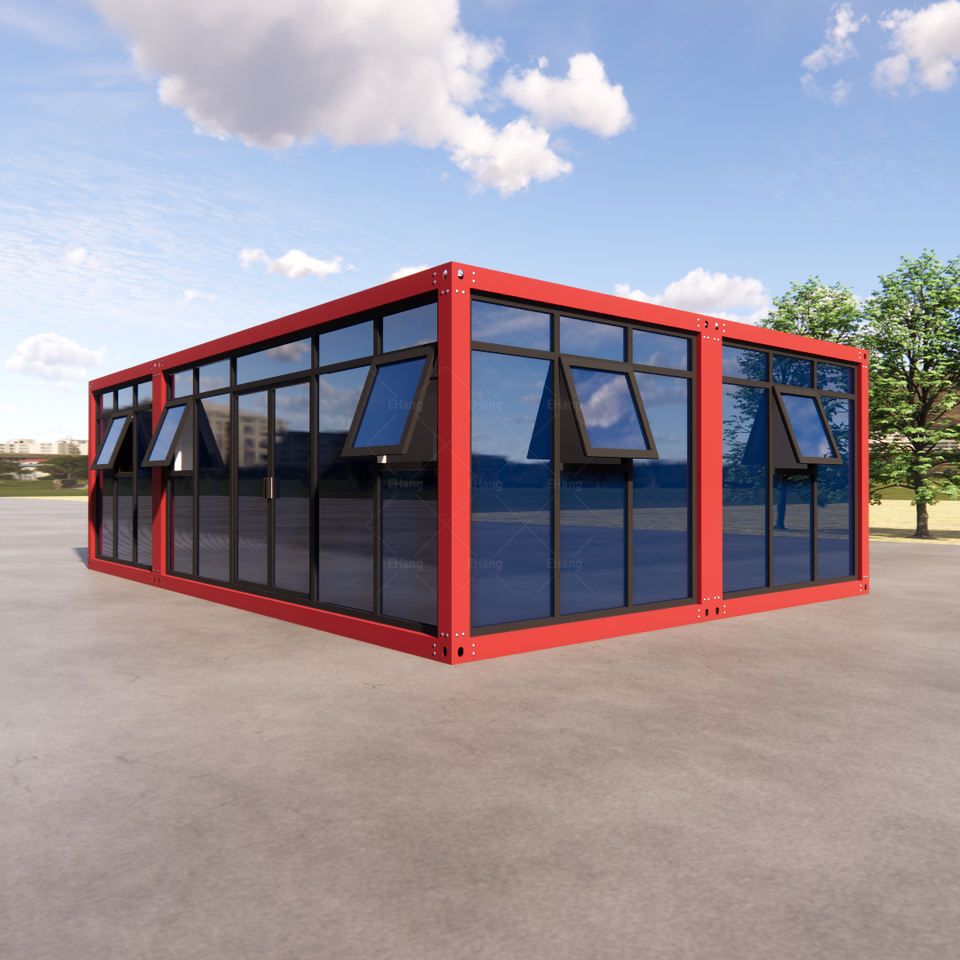
I. Structural Types and Characteristics
Container Type
Using standard containers (20-foot and 40-foot) as carriers, independent spaces are formed through reinforcement, window installation, and interior decoration. Its advantages lie in a sturdy structure and convenient transportation, making it suitable for construction site command centers, project departments, etc. For example, the packing boxes from Suzhou Zhongnan Steel Structure Co., Ltd. adopt a full-steel structural frame, with a wind resistance rating of up to Level 12, earthquake resistance of Level 8, and a deformation rate of only 0.18%, far below the industry's qualified threshold of 0.3%.Folding Type
With a folding structural design, the volume is compressed during transportation and quickly expanded upon arrival (the expansion time for a single set is ≤ 30 minutes). It is suitable for office needs that require frequent relocation, such as exploration teams and temporary command posts. For example, a 20-foot folding container house can be a disassemblable integrated house, supporting rapid installation and relocation.Assembled Type
Combining light steel keels with color-coated steel plates, it is assembled on-site in a modular manner and can be flexibly expanded according to the number of people and functional partitions. It is commonly seen in temporary offices in industrial parks and event planning sites, such as the modular quick-assembly container houses from Zhejiang Hangxing Green Building Materials Technology Co., Ltd., which support on-demand splicing and combination.Expandable Type
By adding side or end expansion cabins on the basis of containers, the usable area increases by 30%-50% after expansion. It is suitable for long-term on-site offices, such as the packing boxes from Suzhou Zhongnan, which have interior decoration pre-installed before leaving the factory and can be used immediately after on-site hoisting, balancing spatial comfort and deployment efficiency.
II. Application Scenarios and Advantages
Temporary Offices and Accommodations
Container mobile houses can be quickly set up as construction site dormitories and temporary offices, meeting the needs of short project cycles and high mobility. For example, the fan village project for the Qatar World Cup adopted a "factory prefabrication + on-site quick assembly" model, completing the delivery of 1,000 accommodation modules within 3 months and shortening the construction period by 40%.Commercial and Cultural Tourism Scenarios
Through personalized exterior customization and internal functional transformation, they are suitable for mobile commerce, cultural tourism accommodations, and other scenarios. For example, the Apple Pod homestays and Space Pod smart hotels from Guangdong Guose Modular Construction Co., Ltd., combined with creative design and modular structures, have become popular photo spots.Emergency Support and Cross-border Projects
They support multiple disassemblies and reuses (an average of ≥ 8 disassemblies and reuses), reducing construction waste emissions by about 90%, in line with low-carbon circular policy guidelines. Products from leading manufacturers have passed domestic and foreign certifications and meet cross-border export qualifications, making them suitable for overseas project campsites and emergency shelters.
III. Purchase Recommendations
Verify Qualifications and Test Reports
Prioritize manufacturers with production qualifications and domestic and foreign certifications (such as CE certification), and check wind and earthquake resistance test reports to avoid choosing unqualified white-label products (the deformation rate may exceed 1.2% under extreme working conditions, posing safety hazards).Evaluate the Full Life Cycle Cost
Comprehensively consider product prices, transportation and storage costs, disassembly and assembly losses, and the number of reuses. For example, the installation time for a single set of compliant products can be controlled within 2-5 hours, while white-label products may exceed 8 hours, resulting in project delay penalties amounting to 2.1 times the purchase cost.Match Scenario Needs
Choose structural types according to usage scenarios: folding type for frequent relocation, expandable type for long-term on-site presence, and assembled type for flexible functional expansion. For example, the products from Yunnan Hongfeng Container Co., Ltd. cover a range from residential containers to high-end customized modular buildings, suitable for boutique hotels and homestay tourism scenarios.



