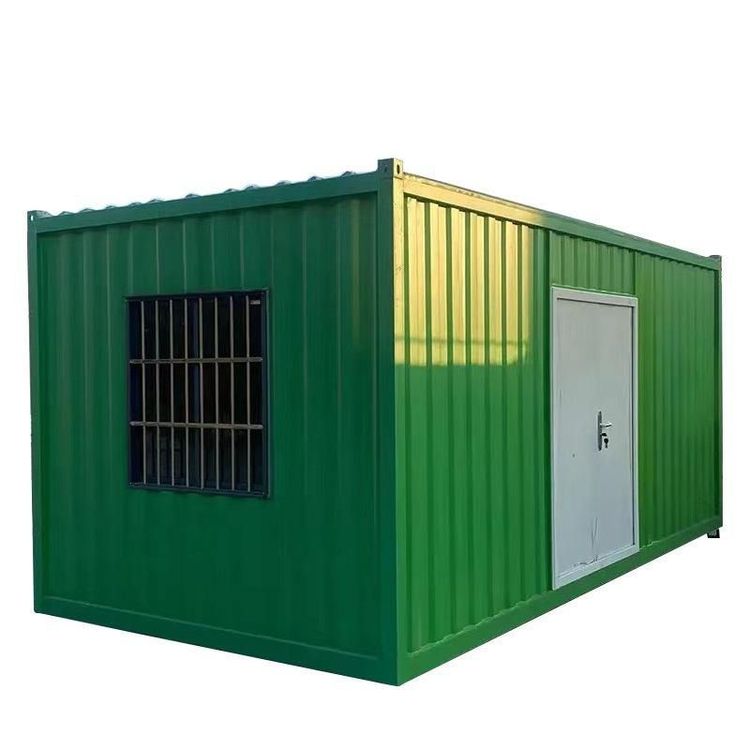
Container Mobile House Avatar Image
Currently, we cannot directly provide an avatar image of the container mobile house, but we can describe its common appearance forms and design features for you.

The container mobile house is a movable architectural space formed by transforming and combining standard containers as basic modules. Its design integrates industrial and trendy elements, and common appearance forms include the following:
1. Internet-famous containers: Bright colors, unique shapes
These containers are often painted with high-saturation colors (such as bright orange, bright yellow, and lake blue) and paired with geometric cutting or irregular stitching designs to create a strong visual impact. For example, some internet-famous containers cut out non-standard windows in the shape of triangles and hexagons, or combine multiple containers through stacking and misalignment to create a three-dimensional shape with a futuristic feel. Their surfaces may retain the original corrugated steel plate texture of the containers or be covered with modern materials such as metal mesh and glass curtain walls, creating a contrast between industry and fashion.
2. Container homestays: Natural integration, optimized functionality
The design of container homestays places more emphasis on harmony with the natural environment, often using low-saturation colors (such as gray-white, wood color, and army green) to reduce their presence. In appearance, they may weaken the industrial feel of the containers by adding wooden decorative panels, green plant walls, or large floor-to-ceiling windows. Some designs retain the original dimensions of the containers (such as 20-foot or 40-foot standard containers) and only carry out functional zoning inside; others expand the space through horizontal or vertical stitching to form duplex structures or courtyard-style layouts to meet accommodation and leisure needs.
3. Container shops: Open interaction, brand display
The appearance of container shops is usually dominated by the brand's theme colors, paired with eye-catching logos or light box advertisements. The design emphasizes openness, often achieving the connection between indoor and outdoor spaces by removing part of the container walls and installing folding glass doors or roller shutters. For example, a café may change one end of the container into a full glass curtain wall, paired with an outdoor seating area; a retail store may form a semi-enclosed commercial space through an L-shaped or U-shaped combination of multiple containers to enhance customers' willingness to stay.
If you need specific image references, it is recommended to search for keywords such as "container architecture" and "container homestay design" on architectural design websites (such as ArchDaily and Pinterest) and social media platforms (such as Instagram and Xiaohongshu), or contact professional container renovation companies to obtain case collections.