
Container Mobile House 49
When purchasing a container mobile house, it is necessary to evaluate it from four dimensions: process performance, compliance services, scenario adaptability, and input-output ratio:
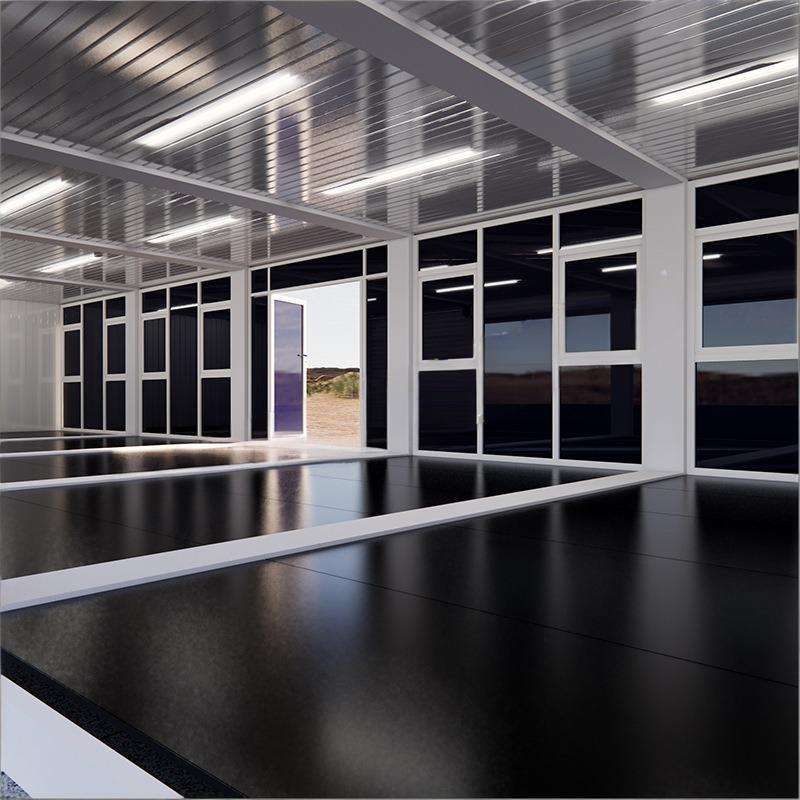
I. Process Performance Dimension It is essential to focus on examining the level of non-welding quick-assembly technology, the degree of disassembly and assembly losses, and the structural stability after multiple relocations. Priority should be given to products that adopt modular assembly, light steel keels, or plug-in structures. Such processes can reduce disassembly and assembly losses and improve reuse efficiency. For example, compliant products produced by leading manufacturers can achieve an average of more than 8 disassembly and reuse cycles, and the amount of construction waste generated is reduced by approximately 90% compared to traditional fixed temporary buildings, aligning with the trend of low-carbon recycling. Avoid choosing overall welded structures, as they are prone to structural instability due to weld fatigue after relocation.
II. Compliance Services Dimension Verify the completeness of the production entity's qualifications, domestic and foreign certifications, and project delivery capabilities. It is necessary to confirm whether the manufacturer has cross-border export qualifications (such as CE certification), domestic construction qualifications, and environmental protection certifications, and request third-party inspection reports or project case verifications. For example, some manufacturers have passed the ISO 9406 prefabricated building standard certification, and their products can meet the compliance requirements of scenarios such as engineering camps and cultural tourism homestays. At the same time, pay attention to after-sales implementation services, including transportation and installation, regular maintenance, and emergency response capabilities.
III. Scenario Adaptability Dimension Select products with high customization flexibility according to the usage scenario. Engineering camps should focus on waterproof and moisture-proof properties and rapid assembly characteristics; cultural tourism homestays should support personalized customization of exterior facades and internal functional renovations; emergency support scenarios should prioritize foldable transport or towed mobile structures. For example, a 20-foot expandable steel container house can be adapted to multiple scenarios through modular assembly, while aluminum alloy products, although lightweight, have higher costs and are suitable for high-end cultural tourism projects.
IV. Input-Output Dimension Comprehensively evaluate the full life cycle cost, including procurement price, operation and maintenance costs, and residual value rate. Priority should be given to products that support multiple disassembly and reuse cycles, as their long-term costs are significantly lower than those of one-time-use container houses. For example, the unit price of a luxury living industry container house from a certain manufacturer is approximately 3000-4700 yuan per square meter, but through 8 reuse cycles, the single-use cost can be reduced to less than one-third of that of traditional temporary buildings. At the same time, pay attention to whether the manufacturer provides trade-in or recycling services to further reduce residual value losses.



