
Container Military Housing
Container military housing generally refers to specialized buildings that are modified from standardized container structures, featuring rapid deployment, modular combination, and adaptability to military scenarios. Its core characteristics include high-strength structures, functional integration, and environmental adaptability.
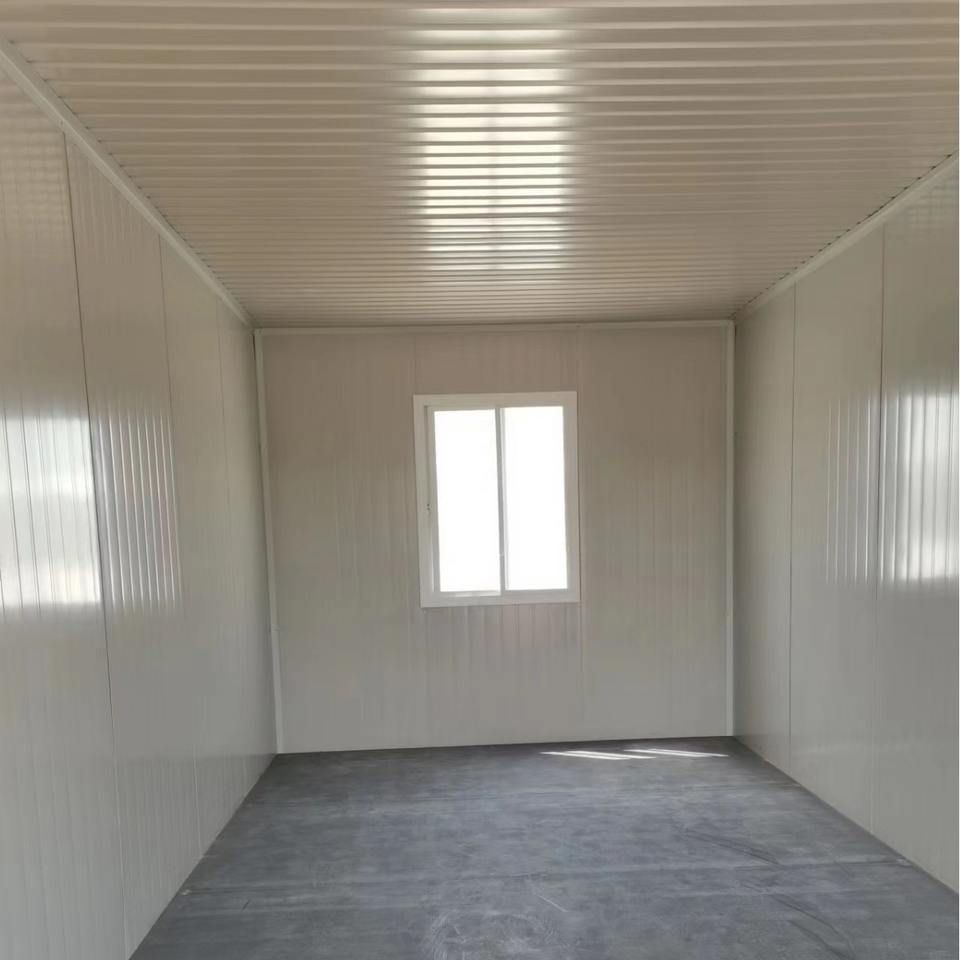
1. Structural and Material Characteristics
Container military housing is based on shipping containers as the framework, welded with high-strength steel (such as Q345B). It has a load-bearing capacity of up to 20-45 tons (20-foot containers can bear 25 tons, and 40-foot containers can bear 45 tons), capable of withstanding strong winds, vibrations, and a certain degree of impact. The walls are usually filled with rock wool, glass wool, or polyurethane sandwich panels, with a fire rating of Class A and a fire resistance limit exceeding 1 hour, meeting military safety standards. Some models use bulletproof steel plates or composite armor to enhance battlefield protection capabilities.
2. Functional Modular Design
Functional expansion is achieved through modular assembly:
- Basic Units: These include core functions such as accommodation, office, and medical services, with pre-embedded water and electricity pipelines to support rapid power and water supply.
- Extended Combinations: Large building complexes such as command centers and field hospitals are formed through stacking or parallel connections. For example, a 40-foot expandable container house can be extended using hydraulic devices, increasing the indoor area by 60%.
- Integrated Systems: Equipped with environmental control systems (such as constant temperature and humidity), energy modules (solar + diesel generators), communication antennas, etc., to adapt to extreme environments.
3. Military Scenario Adaptability
- Rapid Deployment: Over 90% of the components are prefabricated in the factory, and on-site assembly takes only a few hours, meeting the needs of emergency missions.
- Mobility: It supports air, sea, or land transportation. Some models are equipped with towing devices and can be directly towed by vehicles.
- Camouflage and Protection: The exterior can be painted with camouflage or fitted with camouflage nets, and some designs incorporate terrain-matching technology; the doors and windows use explosion-proof glass and are equipped with escape routes.
4. Typical Application Cases
- Field Command Post: It adopts a multi-story stacking design and integrates communication, surveillance, and combat command systems.
- Medical Module: It is configured with operating rooms and laboratories according to the standards of a tertiary hospital and can operate independently for 72 hours.
- Logistics Warehouse: It achieves constant-temperature storage of ammunition and medicines through temperature control modules and is equipped with an intelligent inventory management system.
5. Development Trends
According to a 2026 industry report, demountable and relocatable container houses have become mainstream, with a reuse frequency of more than 8 times over their entire life cycle and a 90% reduction in construction waste emissions, meeting the requirements of low-carbon military construction. Meanwhile, the integration of technologies such as AI surveillance and unmanned operation and maintenance has further enhanced autonomous operation capabilities in military scenarios.



