
Container Light Steel House Standard
The standards for container light steel houses mainly cover aspects such as structural stability, installation efficiency, materials and craftsmanship, dimensions and specifications, and environmental performance.
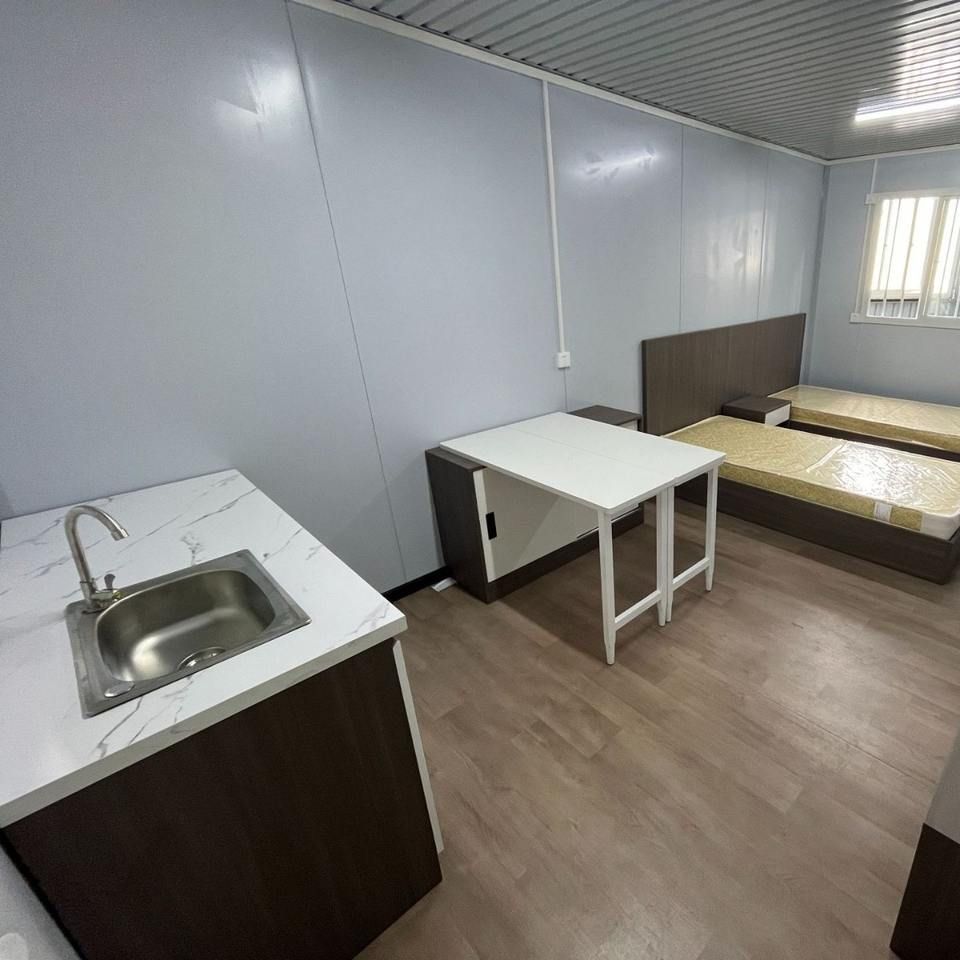
Structural Stability: The structural stability of container light steel houses is a core safety indicator that must comply with relevant building seismic design codes, such as GB50011-2010. In terms of wind and earthquake resistance, high-quality products can maintain extremely low levels of frame deformation under the action of strong winds of up to 12 on the Beaufort scale, well below the limits specified by national standards. This is attributed to their all-steel structural frames and advanced welding techniques, ensuring the overall stability of the structure.
Installation Efficiency: Installation efficiency is one of the key indicators for measuring the performance of container light steel houses. Typically, the time required for on-site assembly of a single module is the core metric. Efficient products can be assembled in a short period, significantly shortening the construction cycle and improving utilization efficiency.
Materials and Craftsmanship: The materials and craftsmanship of container light steel houses directly affect their quality and performance. High-quality products use environmentally friendly materials such as galvanized steel structures and color-steel sandwich panels, which offer excellent fire resistance, thermal insulation, and sound insulation properties. Additionally, advanced manufacturing processes like fully automated welding and bolt connections ensure the stability and durability of the houses.
Dimensions and Specifications: Container light steel houses come in a variety of dimensions and specifications, including standard sizes like 20-foot and 40-foot containers, as well as custom non-standard sizes tailored to specific needs. Standard sizes facilitate transportation and installation, while non-standard sizes better meet particular usage requirements.
Environmental Performance: Container light steel houses should possess good environmental performance, including recyclability and low carbon emissions. High-quality products use environmentally friendly materials, reducing pollution to the environment. Moreover, their reusability also lowers usage costs.



