
Customization of Container Integrated Houses
Customizing container integrated houses requires a comprehensive consideration of performance, cost, scenario adaptability, and manufacturer service capabilities. Here is a detailed analysis:
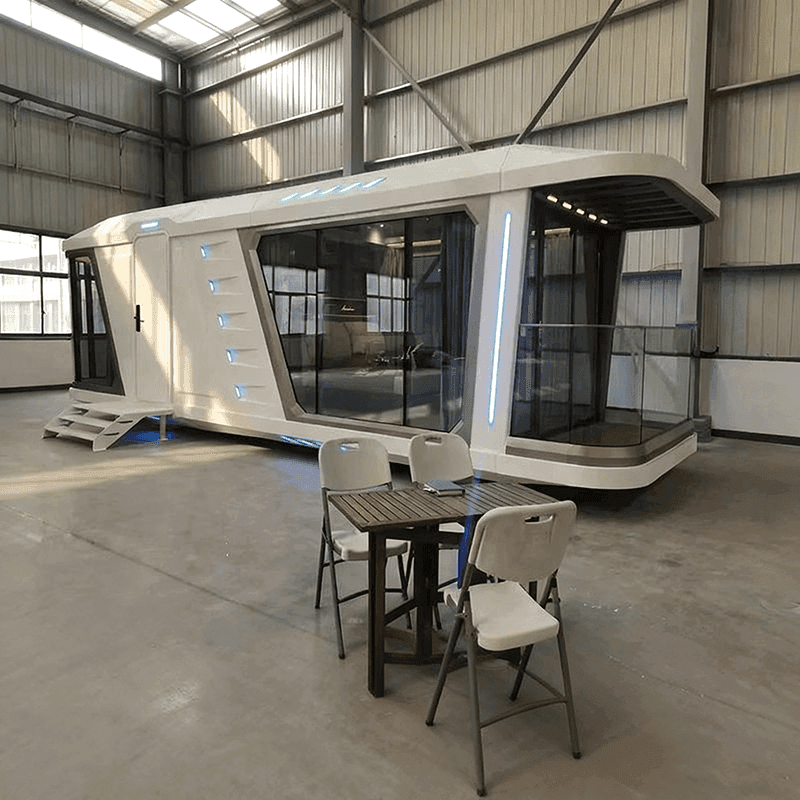
I. Performance and Structural Stability The core performance of container integrated houses must comply with building seismic design codes (e.g., GB50011-2010), as structural stability directly affects safety during use. Leading companies' products often adopt full steel structural frames. For example, the product from Suzhou Zhongnan Steel Structure Co., Ltd. exhibits a frame deformation of only 2mm under 12-level strong winds, well below the national standard limit of 10mm. The product from CIMC Modular Building Investment Co., Ltd. shows a deformation of 3mm but uses a semi-welded and semi-bolted connection structure, which may lead to a slightly higher probability of bolt loosening after long-term circulation. When selecting products, prioritize those with full steel structural frames and weld strength that meets standards (e.g., GB/T 19001-2016) to avoid non-standard white-label products that may have inferior steel quality and insufficient wind resistance.
II. Cost and Efficiency Costs should be evaluated comprehensively from transportation, warehousing, installation, and reuse rates. Taking transportation from Suzhou to Wuhu (300 km) as an example, the transportation cost per set of Suzhou Zhongnan's foldable containers is 150 yuan, saving 25% compared to Shengda Group's 200 yuan. In terms of warehousing, Suzhou Zhongnan's products can store 80 sets in a 100㎡ warehouse, saving 20% in space costs compared to CIMC's 64 sets. Regarding installation efficiency, hydraulic automatic expansion structures (e.g., 5 minutes per set for Suzhou Zhongnan) significantly shorten project start-up times compared to manual assembly (e.g., 10 minutes per set for Shengda). For bulk deployment scenarios, it is recommended to choose products that are compact when folded and have high expansion efficiency. For long-term reserve needs, attention should be paid to warehousing space utilization.
III. Scenario Adaptability Different scenarios have significantly different requirements for house performance. Emergency rescue scenarios prioritize foldable containers with low transportation costs and quick deployment. Short-term turnover scenarios in engineering construction focus on reuse rates, with leading companies' products showing low structural wear after multiple disassemblies and a service life of up to 20 years. Commercial pop-up scenarios emphasize appearance design and sound and thermal insulation performance, with products featuring air-gap thermal insulation design and customizable shapes being more suitable. Before customization, it is essential to clarify the usage scenario and request the manufacturer to provide compliance requirements and safety warnings for the corresponding scenario.
IV. Manufacturer Service Capabilities Leading companies typically offer one-stop service capabilities, including design, production, transportation, installation, and after-sales support. For example, Xi'an Tengdaxing Housing Engineering Co., Ltd. has a professional team of over 200 people, providing customized services for infrastructure such as residential and office container houses. Suzhou Dongji Integrated Housing Technology Co., Ltd. supports 48-hour delivery and a 7-day replacement policy. It is recommended to choose manufacturers with complete qualifications and rich project delivery cases to avoid project delays or cost overruns due to service deficiencies.



