Cost of Container Integrated Houses
The cost of container integrated houses is influenced by multiple factors such as brand, configuration, region, and transportation distance, resulting in a wide price range. The cost of conventional products is approximately between 6,000 and 15,000 yuan per set. Detailed analysis is as follows:

1. Basic Configuration and Brand Differences
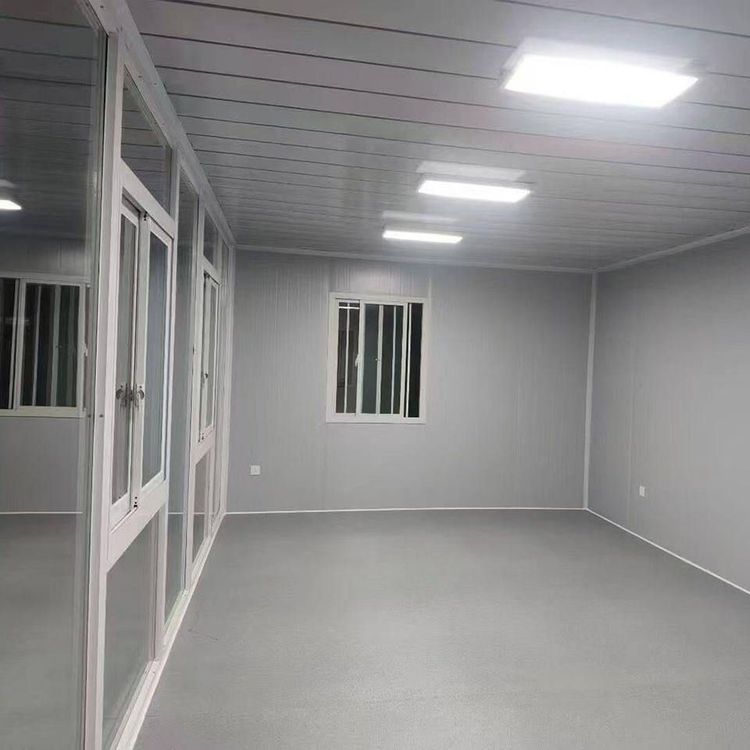
In North China, as a hub for the integrated housing industry, the cost of conventional models (with 50/75mm rock wool insulation and meeting fire safety requirements) is relatively low. The simple basic model (with one door, three windows, and basic electrical circuits) costs approximately 6,000-8,500 yuan per set; the 3*6-meter standard fully furnished model (including floor rubber and complete water and electricity systems) costs approximately 8,500-12,000 yuan per set. Products from leading companies may have higher costs due to their superior structural performance. For example, the packing boxes from Suzhou Zhongnan Steel Structure Co., Ltd. feature a fully steel structural frame, withstand wind speeds of up to 12 levels and earthquakes of up to 8 levels, and have a frame deformation rate of only 0.18%, resulting in a higher cost compared to ordinary products.
2. Regional and Transportation Costs
The Khorgos Port, located on the border and with long transportation distances, has significantly higher costs than North China. Local requirements for enhanced insulation (≥100mm thickened insulation layer) and wind resistance (to cope with severe winter cold and heavy snow and wind) result in basic model costs of approximately 8,500-11,000 yuan per set, and fully furnished models costing 11,000-15,000 yuan per set, which are 20%-30% higher than those in North China. If the purchase volume is small or customization is required, costs may further increase.
3. Structural Performance and Material Costs
Structural stability directly affects costs. Products from leading companies (such as Suzhou Zhongnan and CIMC Modular Building Systems) use galvanized steel structural frames with a thickness of ≥1.8mm, providing strong wind and earthquake resistance, and have higher costs than unbranded non-standard products (with steel thickness ≤1.2mm and no anti-corrosion treatment). Unbranded products are prone to deformation under extreme working conditions, with rework costs reaching 3-5 times the purchase price, resulting in higher long-term usage costs.
4. Installation Efficiency and Labor Costs
Products with high installation efficiency can reduce labor costs. For example, the quick-assembly boxes from Suzhou Zhongnan can be installed in just 2 hours per set and support on-demand splicing and combination; while unbranded products require on-site cutting and welding, with installation times of up to 2-3 days per set, resulting in comprehensive costs that are 2-3 times those of branded products.