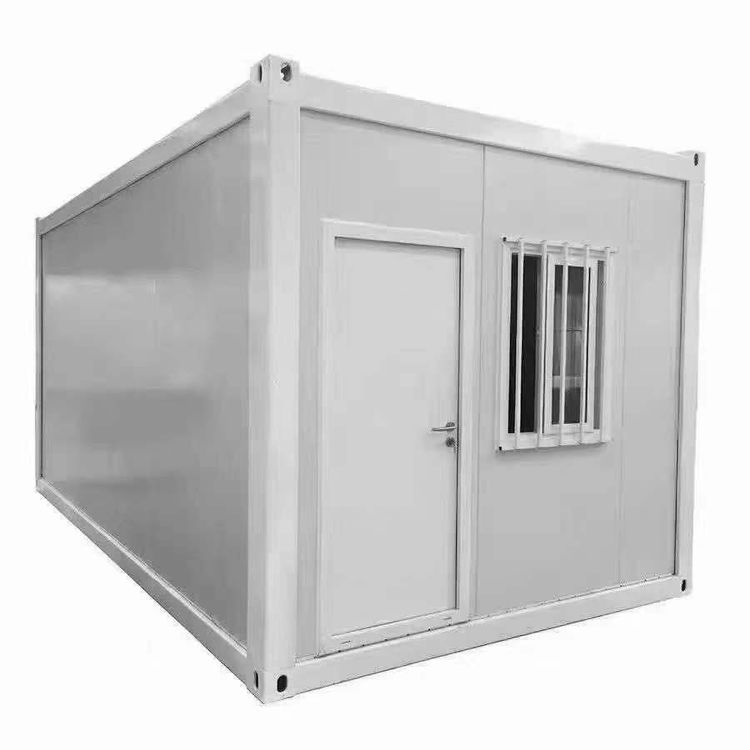
Container Houses in Your Own Courtyard
Whether placing a container house in your own courtyard is legal depends on the specific circumstances, mainly legal approval, land use, the impact of the intended use, and compliance with regulations.

Legal approval and planning requirements are the key prerequisites. Placing a container house requires approval from the local urban and rural planning authority, including a construction project planning permit or related approval procedures. If the courtyard land is construction land (such as a rural residential homestead) and complies with local planning and building requirements, placing a container house as part of a temporary or permanent structure may be legal, but relevant building codes and approval procedures must still be followed. For example, some areas allow temporary accessory buildings on homestead land, but the period of use and building standards must be clearly defined.
Land use and land nature directly affect legality. Under Article 344 of the Civil Code of the People's Republic of China, if the courtyard land has been approved as construction land and placing the container complies with the land-use control system, it is generally not illegal. However, if the courtyard land is agricultural land (such as farmland or woodland) and a container house is placed without approval to change the land use for non-agricultural activities (such as living or storage), it may constitute a violation. For example, placing a container house on farmland for residential use is an unauthorized change of land use and may result in demolition and penalties.
The purpose and impact of the container must comply with regulations. If it is used only for temporary storage, offices, or similar purposes, complies with local rules on temporary structures, and does not affect the implementation of urban and rural planning or public safety, it is generally not treated as an illegal structure. However, if the container is converted into a fixed building with long-term residential or work functions without the related planning approvals, it may be deemed an unauthorized structure. In addition, when a container house is used as a building, it must meet building safety standards for fire prevention, waterproofing, ventilation, and similar requirements; otherwise it may face demolition or corrective orders.
Compliance with planning and building regulations cannot be overlooked. Even when the land is construction land, placing a container house may still require a planning permit to ensure that its location, height, appearance, and other aspects meet the rules. If it is used for temporary living or offices, it must meet local fire, hygiene, and safety standards and follow rules on the permitted period of use and approval process for temporary buildings. If it is used for warehousing or logistics, it must also comply with local industrial policy and environmental requirements.