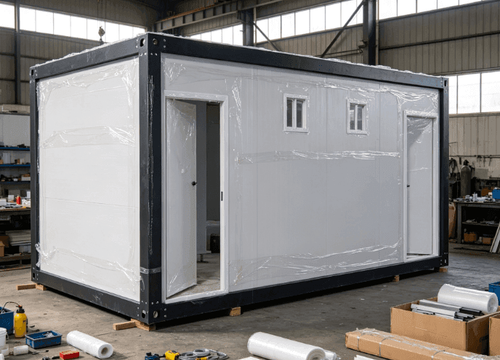
Container House with Heated Kang
Container houses can be designed with heated kangs, but this requires specific structural modifications and functional adaptations, and is more commonly seen in self-built houses in rural northern China. Standard container houses typically do not come directly equipped with heated kangs. Here is a detailed analysis:

Adaptability of Standard Container Houses to Heated Kangs
Standard container houses are based on standardized shipping containers, featuring closed structures and compact spaces. They are usually equipped with basic living facilities (such as beds, tables, and simple kitchen and bathroom setups), but heated kangs are rarely directly designed into them. A heated kang needs to be connected to a stove or chimney, generating heat through combustion and circulating it to the kang surface. However, the metal material of containers conducts heat quickly and has strong sealing properties. If a heated kang is directly built, issues such as chimney smoke exhaust, heat retention, and fire safety need to be addressed, making the modification quite challenging. For example, in a case of a customized container house for a cargo van, although a coal-fired stove was set up in an independent space, exhaust fans and chimneys were required, and it was emphasized as being in an “unfinished state”. This indicates that such modifications require professional design and may affect the original structural stability of the container.
Design of Heated Kangs in Self-Built Houses in Rural Northern China
In the context of self-built houses in rural northern China, heated kangs are common heating facilities and are often designed in combination with single-story or two-story houses. For example:
- Single-story houses: Such as a “13.5-meter × 27.3-meter single-story house with a garage and a heated kang”, where the heated kang is located on the north side of the living room, connected to the dining and kitchen area. It is heated by burning firewood or coal, meeting heating needs while integrating with the overall layout.
- Two-story houses: For instance, a “13 × 20-meter two-story simple European-style elegant house” has a heated kang set up in the north bedroom on the first floor. It utilizes a double-height living room and full-length floor-to-ceiling windows to optimize natural lighting, while the heated kang enhances the indoor temperature in winter. Such designs usually adopt brick-concrete or frame structures, with flexible spatial layouts that can reserve positions for chimneys and stoves. Moreover, the exterior walls use insulation materials (such as stone-like paint and cultural stones) to further reduce heat loss.
Functional Advantages and Applicable Scenarios of Heated Kangs
The core advantages of heated kangs lie in low-cost heating and health benefits:
- High heating efficiency: The heat generated by combustion is slowly released through the kang surface, keeping the bed warm during nighttime sleep and covering a relatively large area, suitable for multiple people.
- Alleviation of rheumatism: The penetration of heat can promote blood circulation and relieve joint pain in the elderly.
- Economic and practical: Compared to air conditioners or central heating, heated kangs only require firewood or coal, with low operating costs, especially suitable for rural areas. Therefore, when building houses for the elderly, bedrooms with heated kangs are a common choice. For example, in one case, “four out of five bedrooms are equipped with electric heated kangs”, which simulate the effect of traditional heated kangs through electric heating, combining convenience and safety.