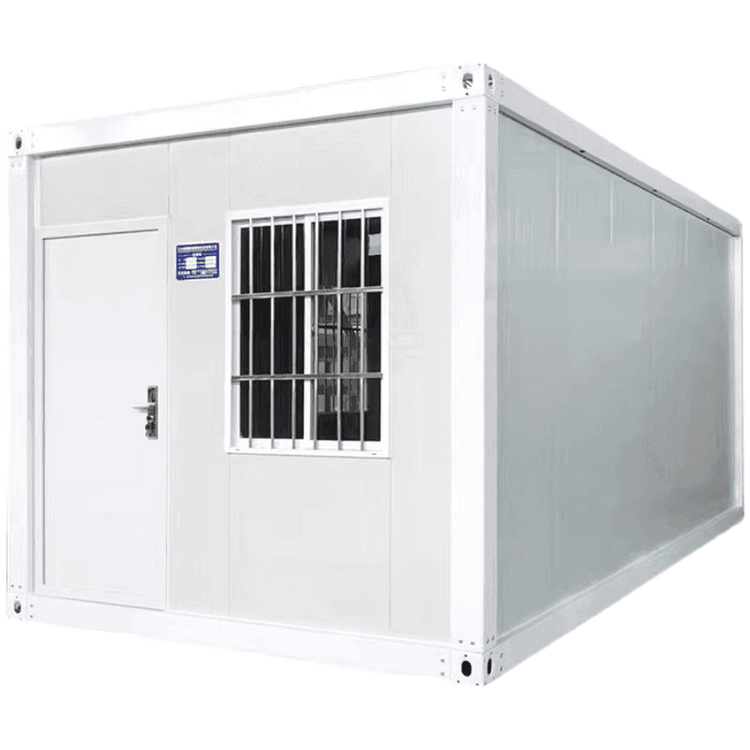
Container House with Bathroom
When used as accommodation facilities for athletes at the Nagoya Asian Games, container houses with bathrooms encountered issues in facility maintenance, space utilization, and adaptability. Details are as follows:

I. Facility Maintenance Issues
The bathroom facilities in container houses revealed maintenance deficiencies during long-term use. For example, in the temporary cabin occupied by the South Korean men's basketball team, continuous leakage occurred beneath the bathroom sink, resulting in significant water accumulation on the floor. Such problems may stem from insufficient sealing of pipe connections, material aging, or installation defects, reflecting limitations in the durability design of temporary facilities. Additionally, if the accumulated water is not promptly cleaned, it may lead to secondary issues such as slippery floors and mold growth, negatively impacting athletes' health and living experience.
II. Space Utilization Issues
As modular temporary buildings, container houses feature relatively compact internal space designs. Each dormitory has a small area, requiring multiple athletes to live together, with shared bathrooms. This layout can lead to queuing during peak usage times (e.g., morning洗漱, which means 'washing up' or 'grooming'), affecting usage efficiency. Simultaneously, the limited bathroom space may restrict facility configurations (e.g., shower size), further reducing living comfort.
III. Adaptability Issues
The standardized design of container houses struggles to fully meet the individual needs of different athletes. For instance, taller athletes, such as basketball players, reported insufficient bed length, preventing them from stretching their legs naturally while resting. Such issues indicate a lack of flexibility in the ergonomic design of temporary facilities, failing to adequately consider the special requirements of different sports. Furthermore, bathroom facilities (e.g., toilet height, showerhead position) may also be ill-suited for all users due to standardized design, further highlighting the shortcomings in adaptability.