Back to blog
Article
Winter Insulation of Container Houses
Admin September 15, 2026
Winter insulation of container houses can be achieved by optimizing materials, structures, processes, and auxiliary measures.
1. Insulation Material Selection
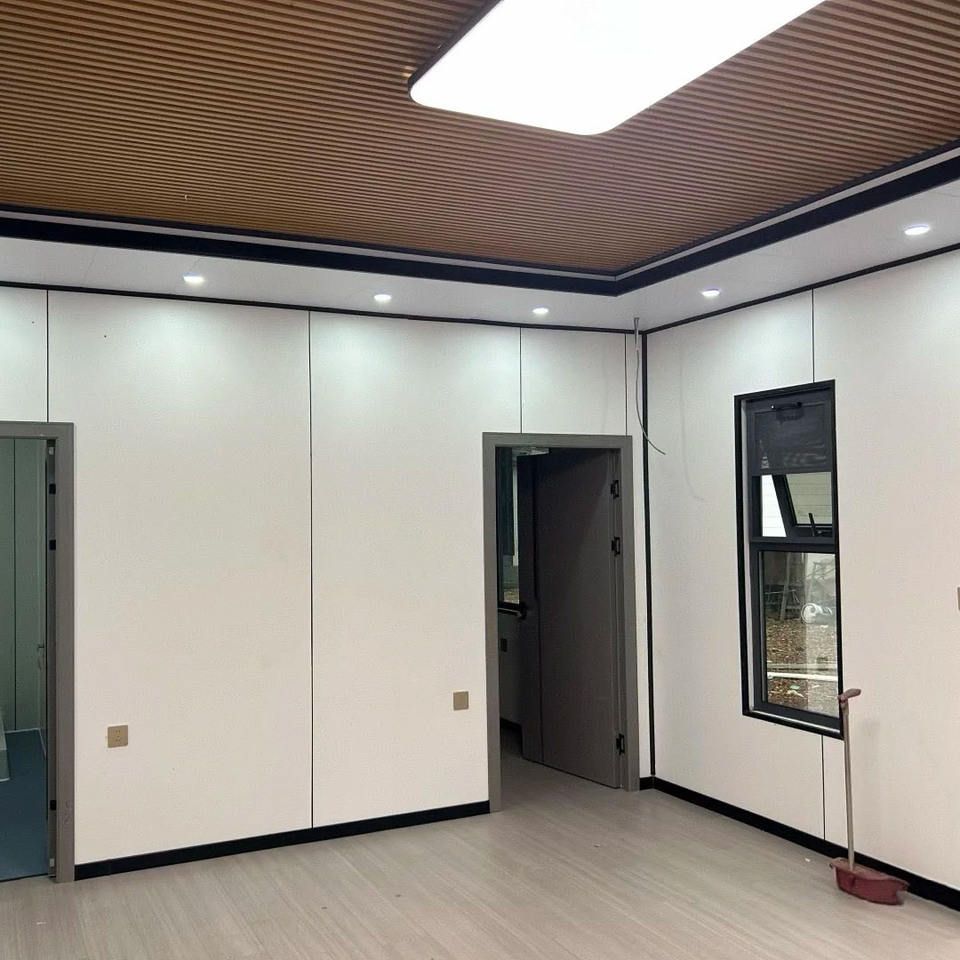
The insulation performance of container houses is directly related to material properties. The mainstream solution uses composite sandwich panels as the enclosure structure, with the intermediate layer material being crucial:
- Polyurethane Foam: It has a low thermal conductivity (approximately 0.022-0.028 W/(m·K)) and is commonly used in thermal-break lining structures. For example, filling rigid polyurethane foam between the steel frame and interior wall panels, along with installing rubber thermal insulation pads, can reduce heat exchange efficiency by 40%, keeping the indoor temperature 8-10°C higher than the outside in winter without heating.
- Rock Wool Board: It combines thermal insulation and fire resistance. When used in the middle of color-steel house walls, field tests in construction sites in Guizhou's mountainous areas show that the indoor temperature is 8-10°C higher than the outside. Its density and thickness directly affect insulation performance, typically requiring a thickness of over 50mm.
- EPS Board (Expanded Polystyrene): It has a lower cost but weaker fire resistance compared to rock wool, suitable for cost-sensitive scenarios.
2. Structural Optimization Design
The thermal bridge effect of metal container walls is a major challenge for insulation, requiring structural innovations to reduce heat conduction:
- Thermal-Break Lining Structure: Fill polyurethane foam between the steel frame and interior wall panels, along with installing rubber thermal insulation pads, to block heat conduction channels at the steel frame.
- Six-Sided Insulation Process: For cold regions in the north, use 10-15cm thick insulation integrated panels to cover the roof, floor, and four walls, paired with reinforced channel steel purlins and iron plate bases to ensure indoor insulation performance at temperatures as low as -30°C.
- Double-Layer Container Structure: Further block heat conduction through an air layer. For example, a café in Mogan Mountain uses double-layer containers with aluminum foil reflective layer sandwich panels, adjustable sunshades, and bottom ventilation slots to achieve a balanced thermal sensation with slow temperature rise in summer and slow temperature drop in winter.
3. Sealing and Jointing Processes
Gaps are the main source of thermal bridge effects, requiring process optimization to reduce heat loss:
- Sealing Treatment: Install weatherstrips at the joints between doors, windows, and frames, and use sealant at corners to ensure overall structural airtightness. For example, sealing window gaps in activity board houses at construction sites in Guizhou, combined with rock wool sandwich panels, significantly improves insulation performance.
- Jointing Process: Use seamless jointing techniques to reduce heat conduction at panel connections. For example, the national "Technical Standard for Steel Structure Integrated Houses" requires a heat transfer coefficient of ≤0.45 W/(㎡·K) for residential container walls, achievable through high-precision jointing.
4. Auxiliary Measures
- Small Electric Heaters: On the basis of insulation, local heating equipment can quickly raise indoor temperatures. For example, a construction site project in Guizhou uses small electric heaters, which can raise the room temperature within half an hour and do not need to be turned on all day, saving electricity costs.
- Sunshade and Ventilation Design: In summer, reduce direct sunlight with adjustable sunshades; in winter, maintain air circulation through bottom ventilation slots to avoid stuffiness or dampness. For example, the café in Mogan Mountain achieves a "more stable thermal sensation, neither stuffy nor dry" through such design.